Diggin’ In

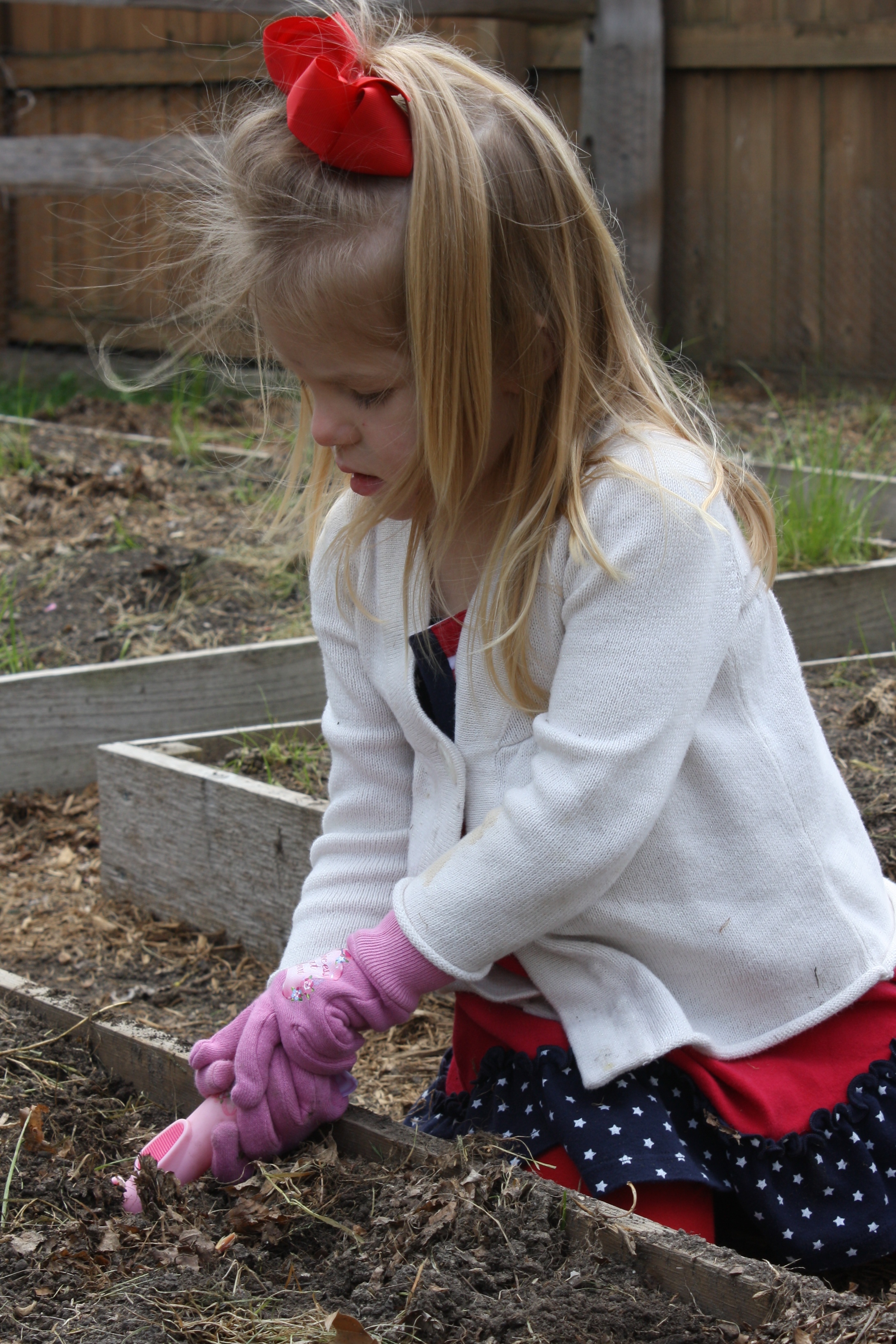
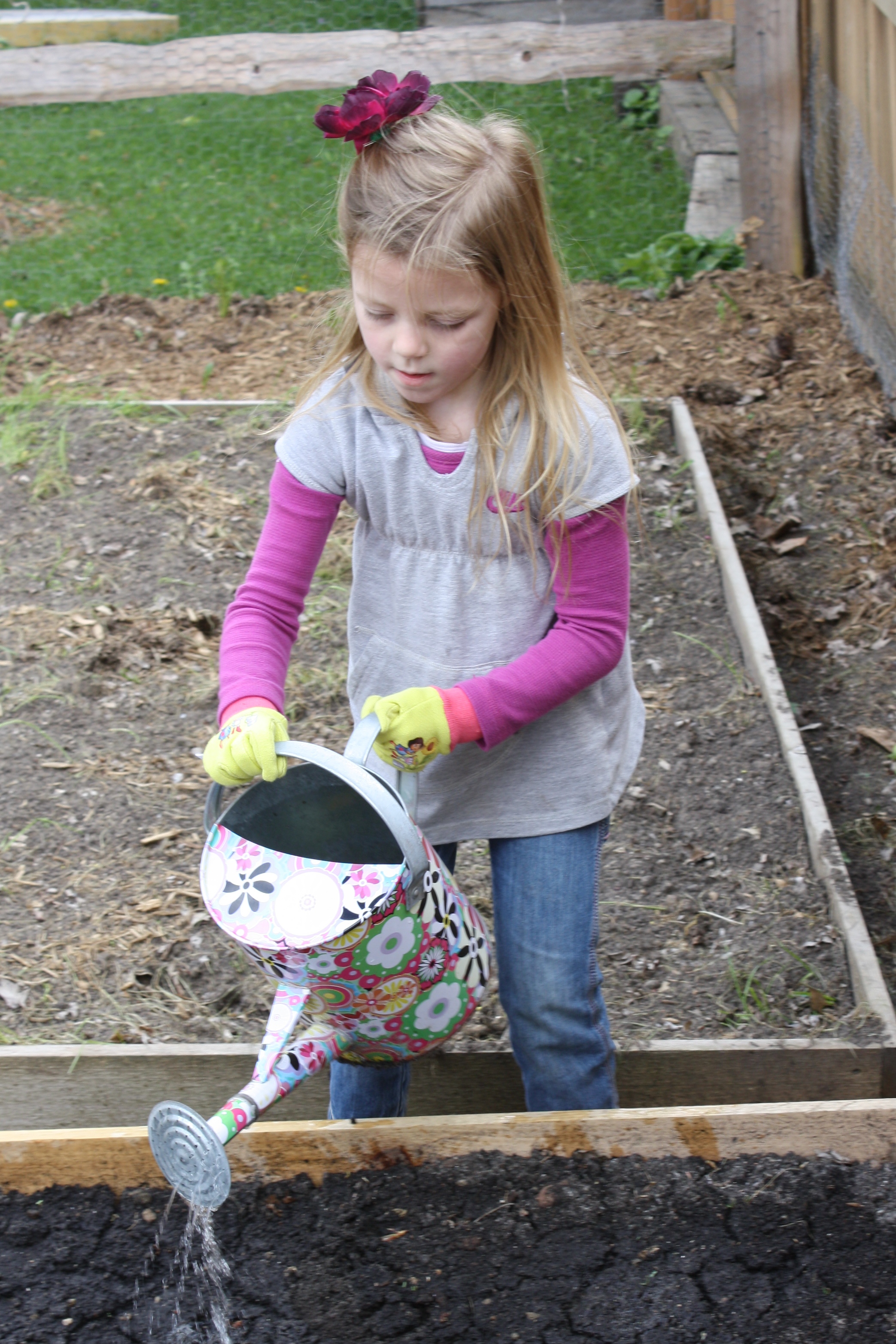
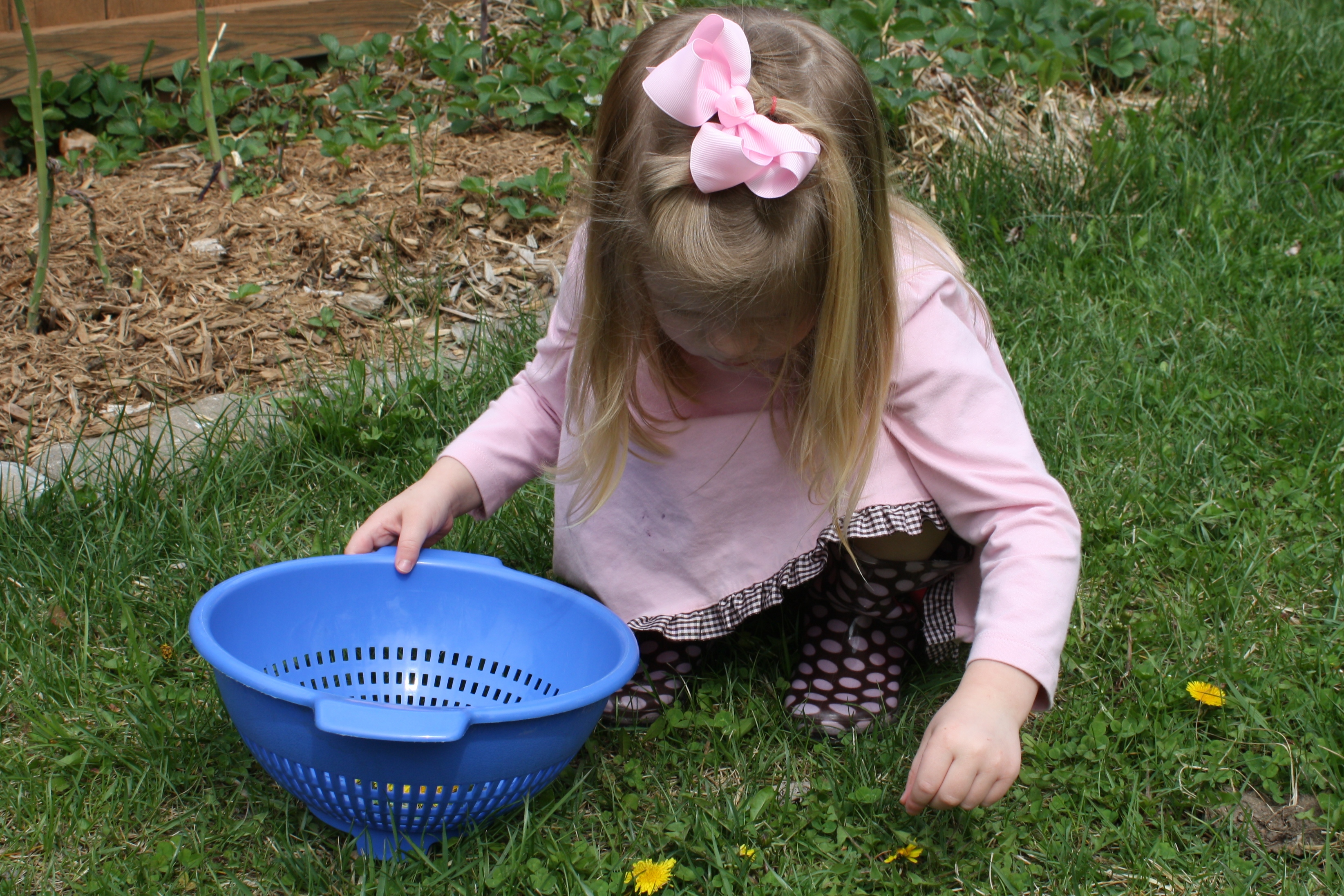
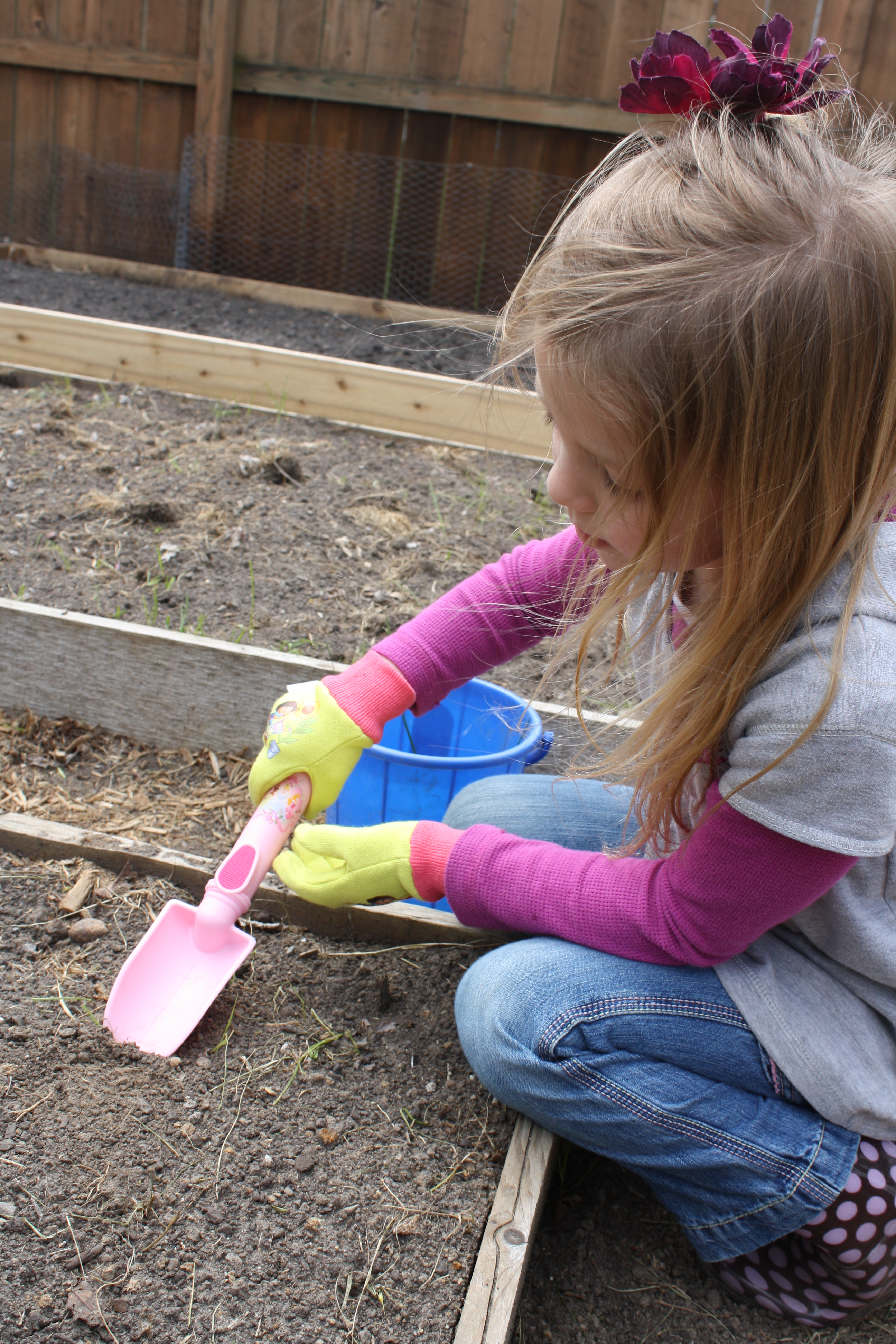
This week the girls and I have been out working in the garden planting beets, carrots and lettuce.  We are trying some different heirloom varieties this year, so we are all excited to see how they work out.  We have ordered all of our seeds from The Seed Savers Exchange the past two years and have been thrilled with the results!

For beets we planted Early Blood Turnip and Detroit Dark Red

For carrots we planted Dragon (This one we have planted in the past and my girls love it because the outside of the carrot is a deep purple and the inside of the vegetable is a brilliant orange!) and St. Valery.

For lettuce this year we ordered the Seed Savers Heirloom Lettuce Collection which contains Amish Deer Tongue, Bronze Arrowhead, Crisp Mint, Forellenschuss, Red Velvet, and Susan’s Red Bib.

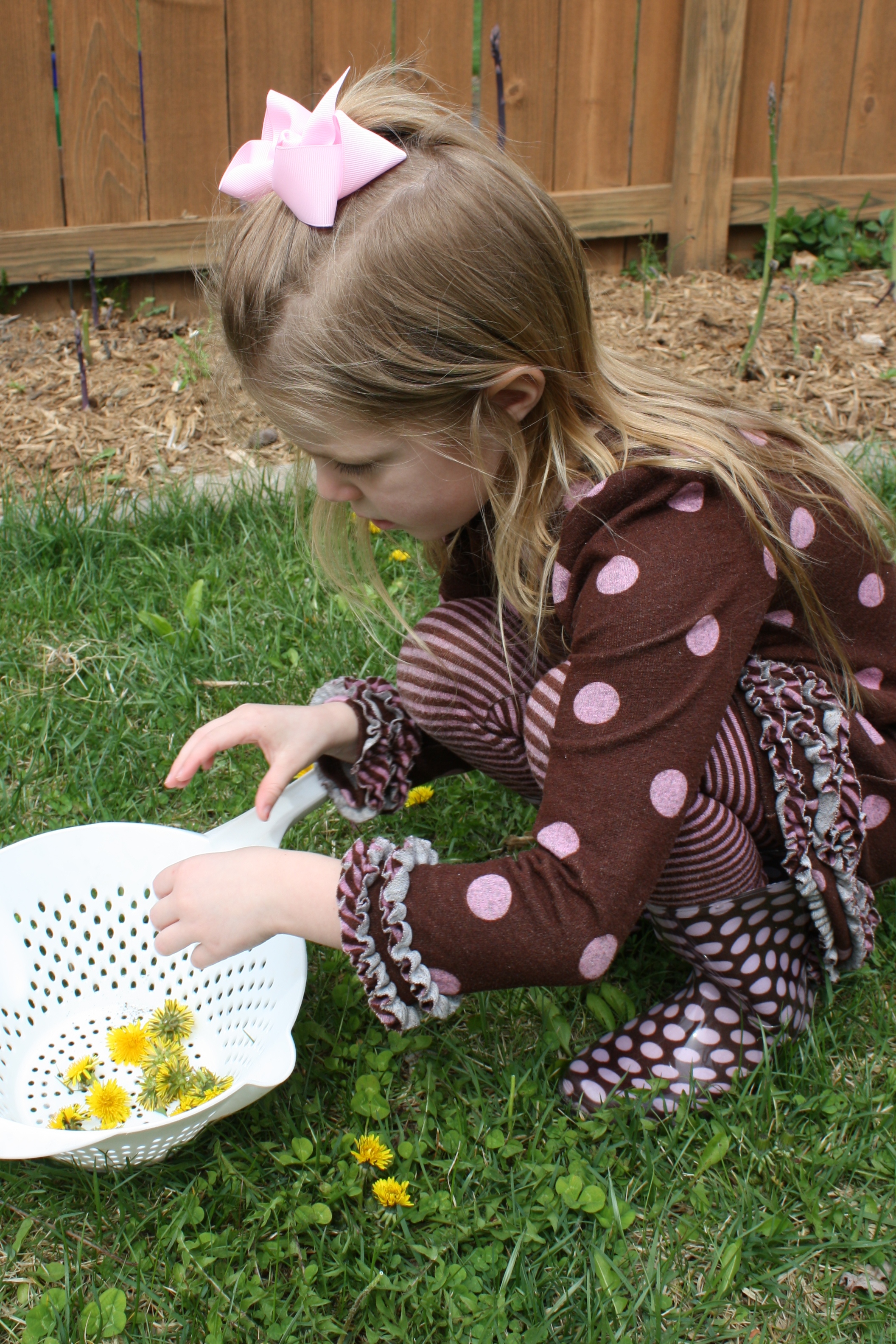
(A quick side note on “Gardener Number 2″…She is currently only wearing dresses because she said that jeans are not “girl clothes” 🙂  This summer should get quite interesting with all of the gardening this gal loves to do.  Love her.)


Organization Station

When we moved into our house, the room that I missed most from our previous home was our mud room.  Our mud room had been the catch-all of our house, and without one in our current home, it seemed that our kitchen had become the place where everything was dropped:  coats, shoes, bags, papers, purses, keys, the works.

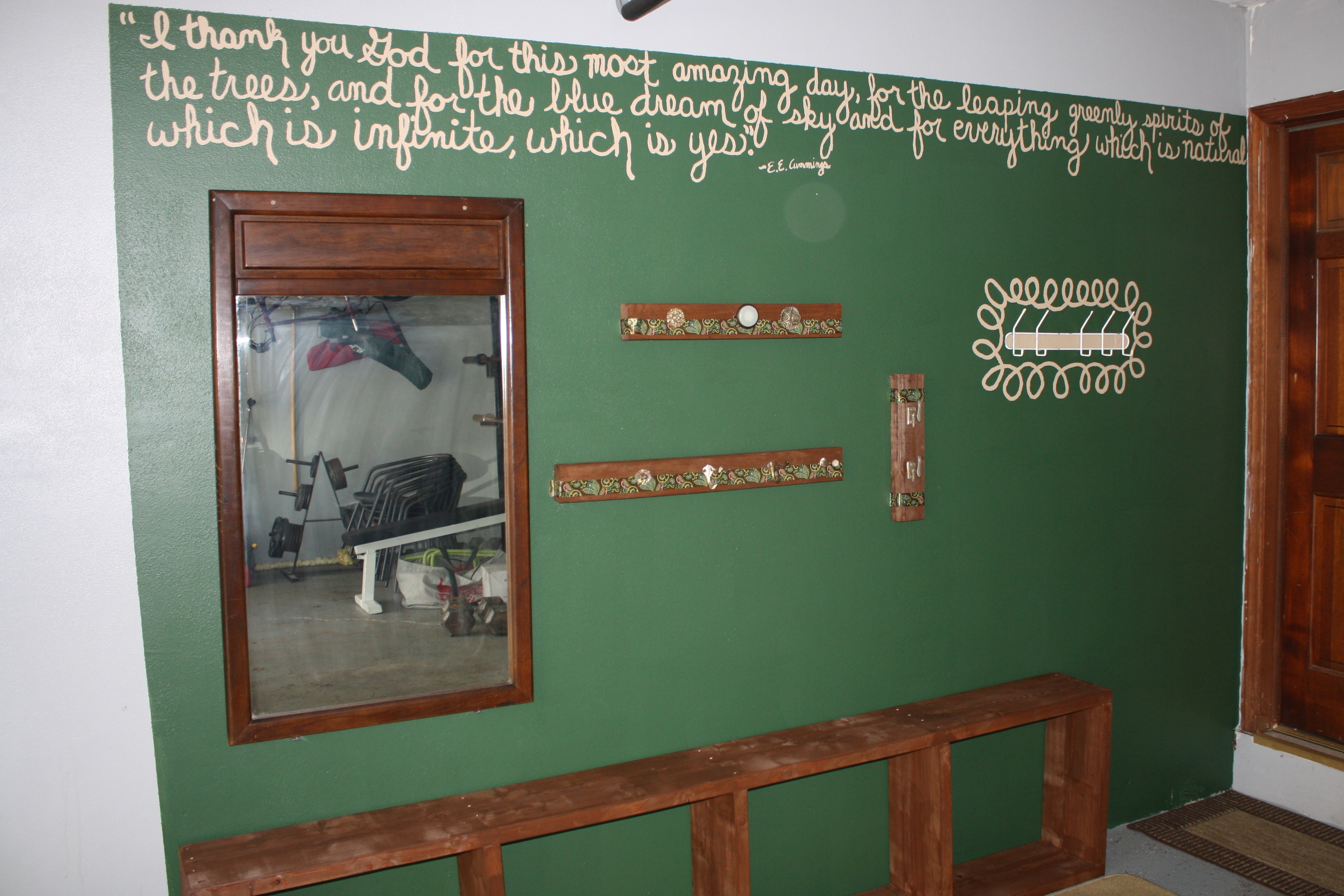
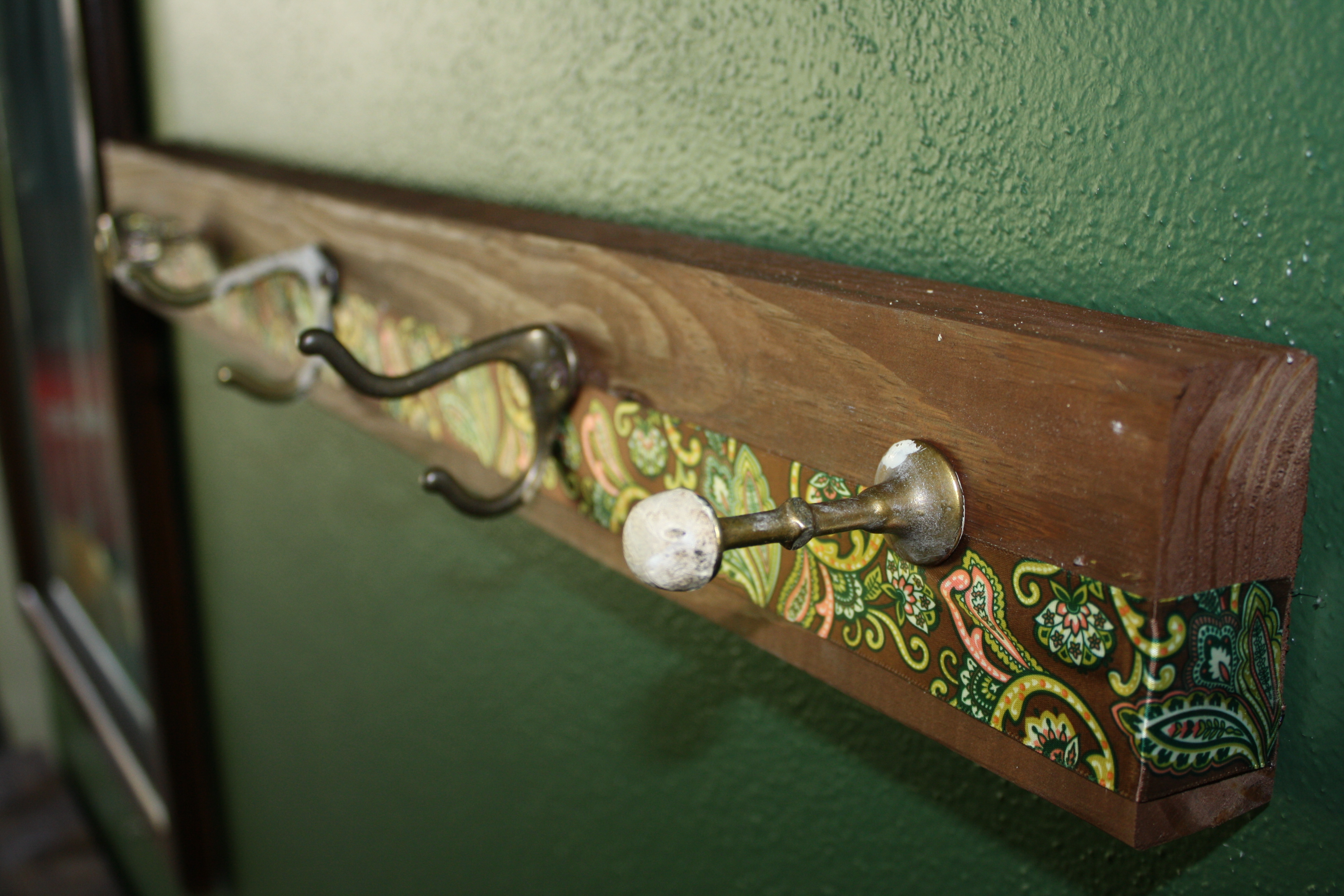
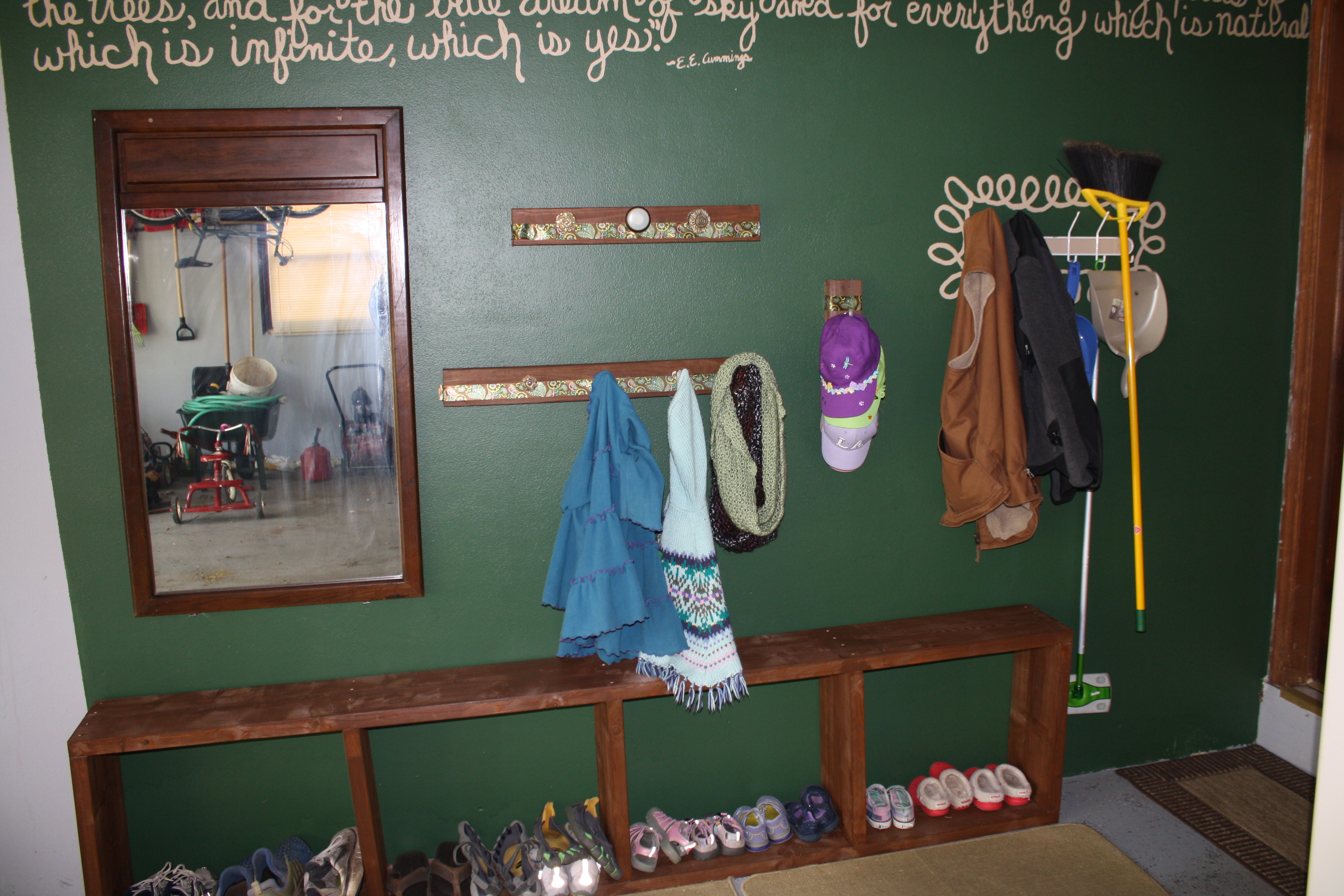
Well, after nearly four years I finally have my own make shift mud room!  Last summer my husband’s grandmother gave me an antique mirror and I had been desperately trying to find a home for it with no luck whatsoever.  Finally I came up with the idea to create a “mud room wall” in our garage, featuring the mirror as the focal point.  After a bit of carpentry work by my hubby, a little paint, and a quick visit to an antique mall, the project is complete.

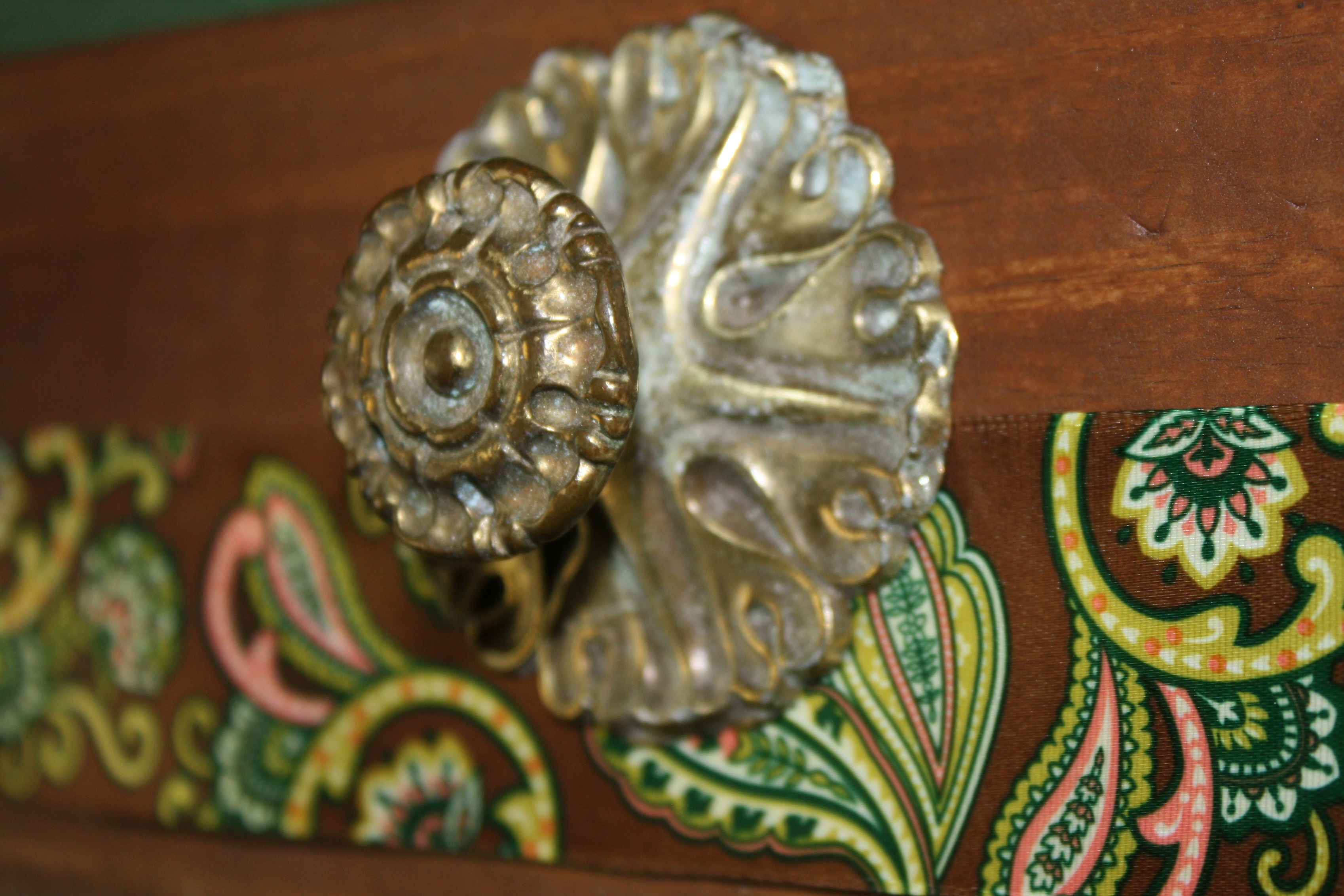
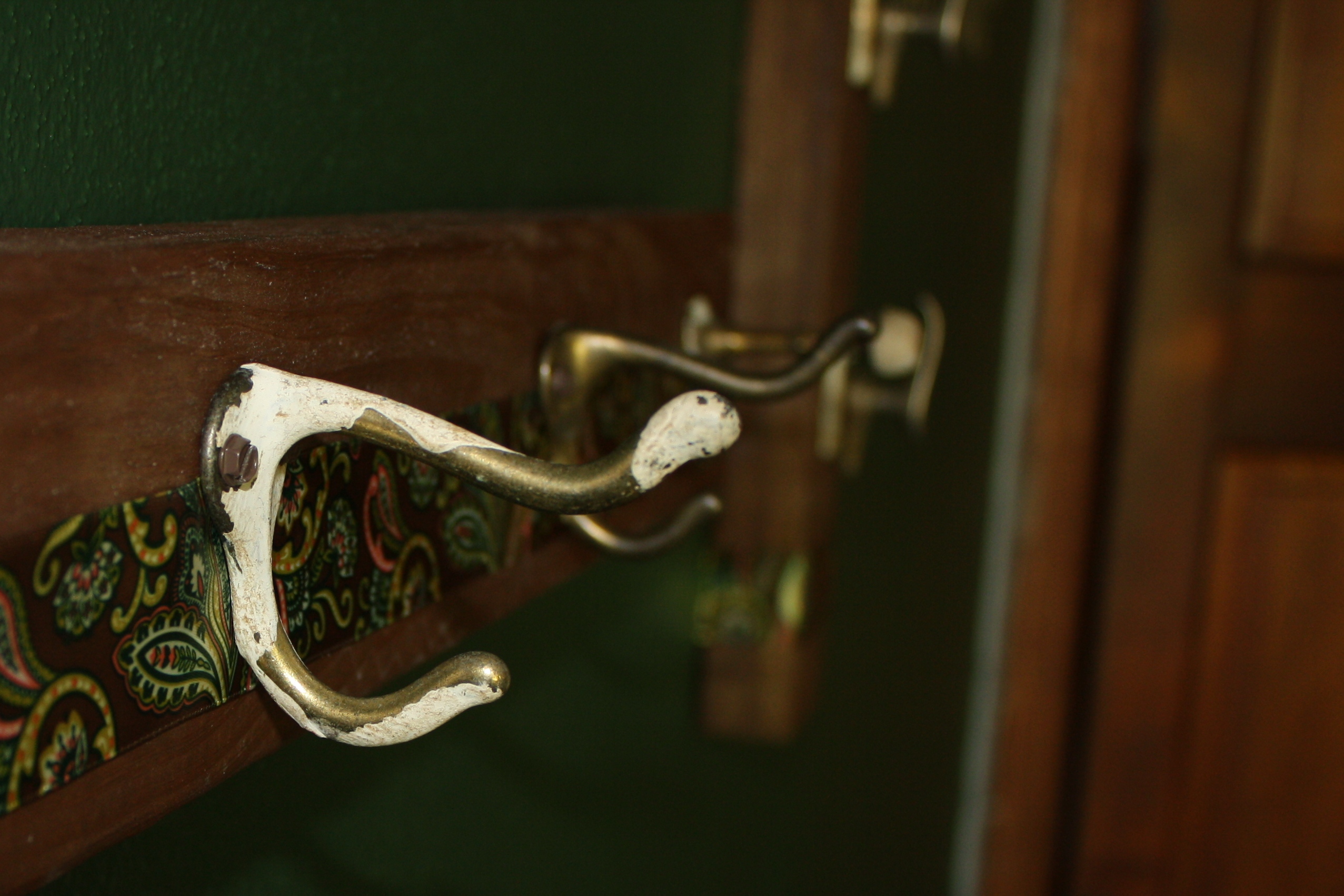
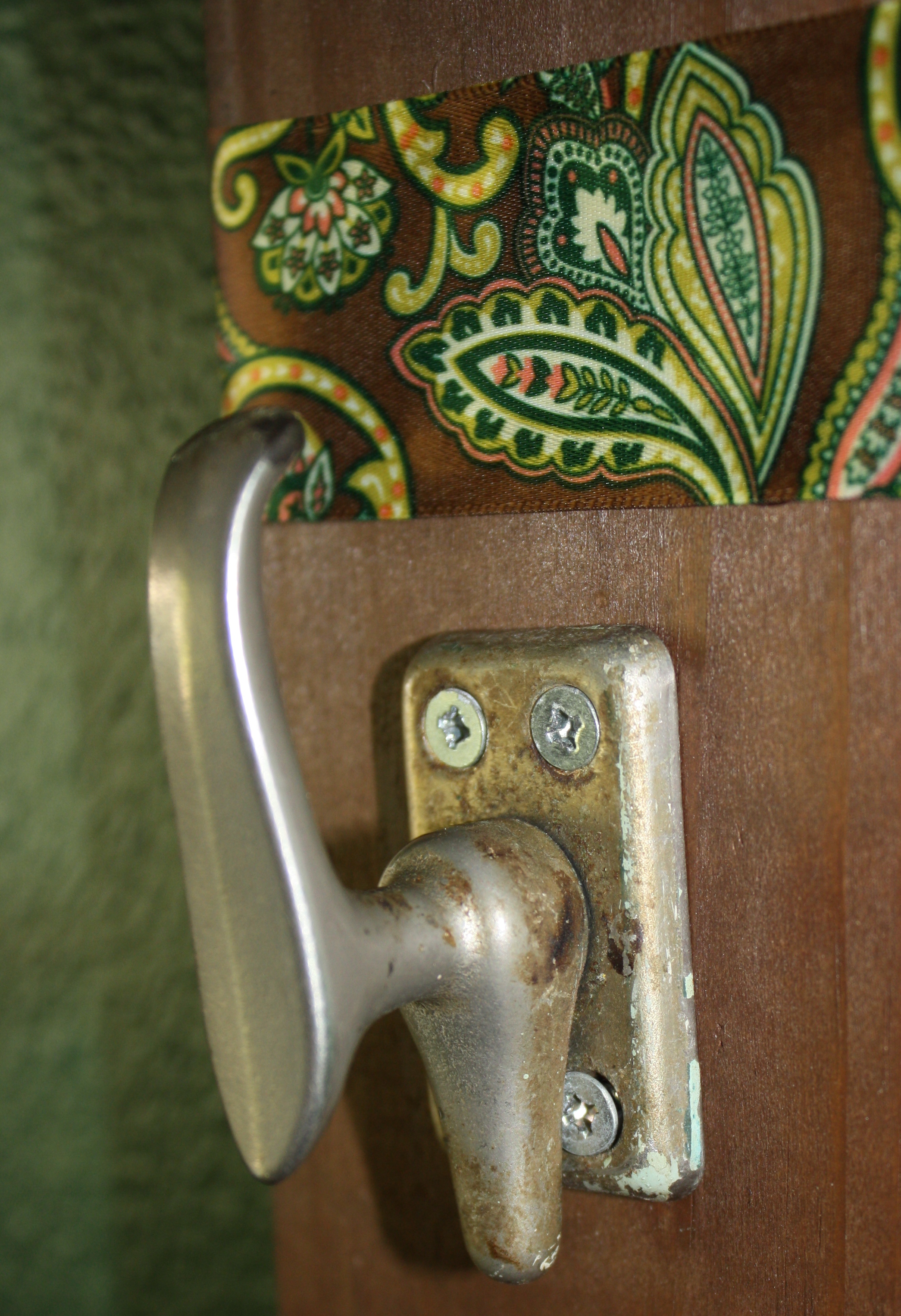
I kept some existing hooks because they were so well fastened to the wall studs, but I needed some extra places to hang all of those coats that seem to accumulate so I used some antique pull-knobs, cabinet latches, a door knob and even a door stop to create a few more “hooks.”

I call my new creation my “Organization Station” 🙂

Soapmaking

There were many things my husband and I use to do sans children, and one of those is make our own soap.  We loved everything about the entire process:  finding the recipes, making the soap while sipping wine and watching reruns of Friends on our computer, and giving the finished soaps as gifts to our family and friends.

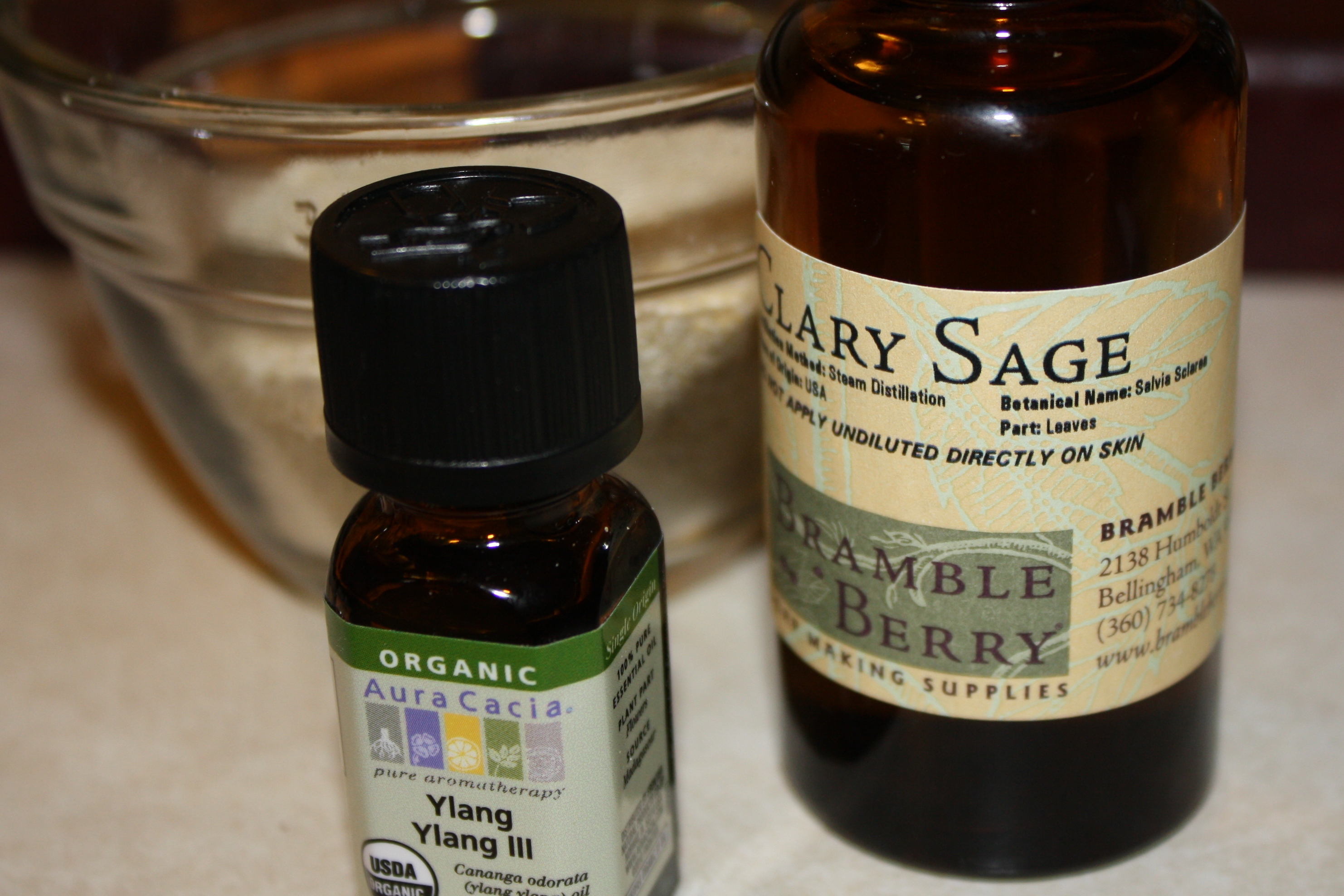
Needless to say once we had kids, our soap making and wine sipping days quickly came to a halt.  But now that the little ones are getting bigger, we have brought it back!  We picked up our oldie but good book, Natural Soapmaking by Marie Browning, gathered a few needed supplies from Brambleberry.com and we were good to go.

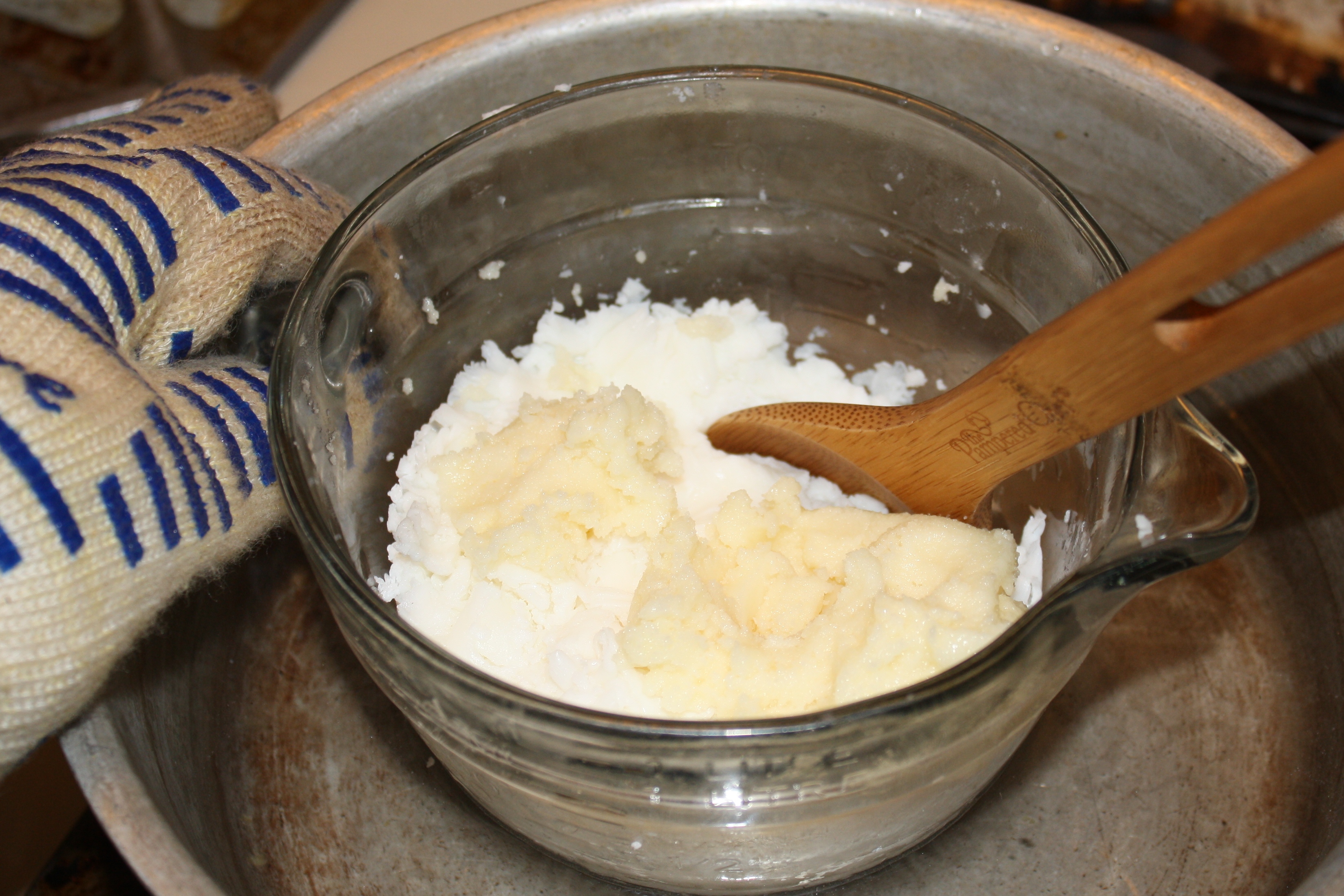
Now I must be clear that we have not ventured into the true soap making realm of making our own lye, although we would like to make that jump in the near future. Instead, we start with a natural soap base that we purchase through Brambleberry and go from there.

The process is so fun and even the tiniest of the family is asking Mommy, “When do I get to make my orange and cinnamon soap.”  I love it 🙂

Old Things

Many years ago (I believe I was in junior high), my extended family gathered at my grandma and grandpa’s home for our annual Easter celebration.  My grandma, who was always filled with creative ideas, told each member of the family sit in a circle in the family room.  She and my grandpa then proceeded to hand each of us a plastic Easter egg.  Once everyone had two eggs each, one from my grandma and one from my grandpa, we were told to open the egg.  Inside each egg was a tiny slip of paper.  On each slip was written one thing that my grandma and grandpa found to be unique to each of us.

To this day, I have not forgotten what Grandpa “Dit” wrote on my slip of paper:  “You like old things.”  Those four words could not be more fitting to describe me.  I have worn vintage clothes from thrift stores since seventh grade, love old music, enjoy antiquing, and I have been especially obsessed with refurbishing old pieces of furniture since I has in high school.

Over the course of the past several weeks I felt that itch again.  The itch to take something old and unique and make it new again.  So while my husband was on spring break last week and he spent his hours relishing in the time he could spend with the girls, I got to work on some projects.

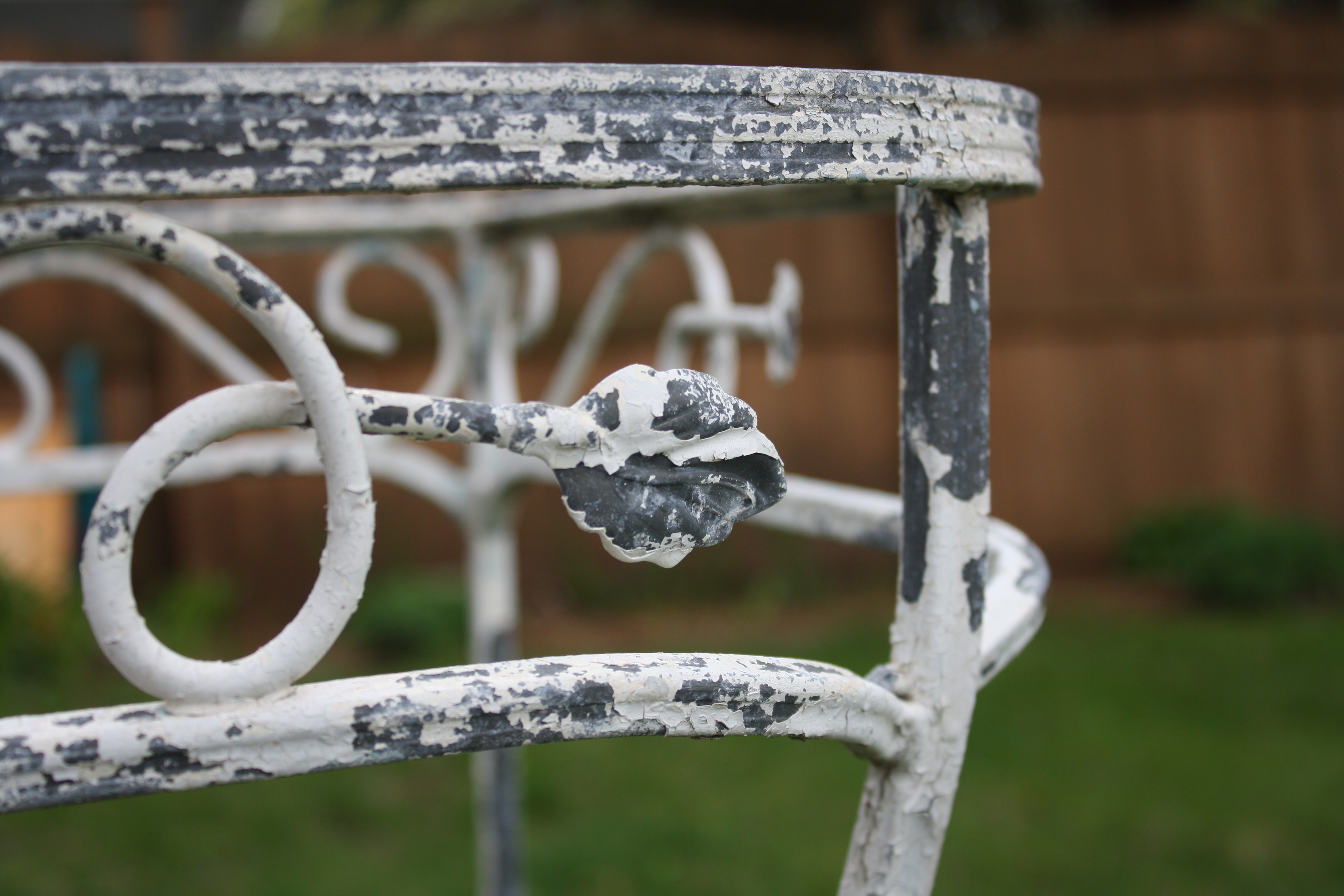
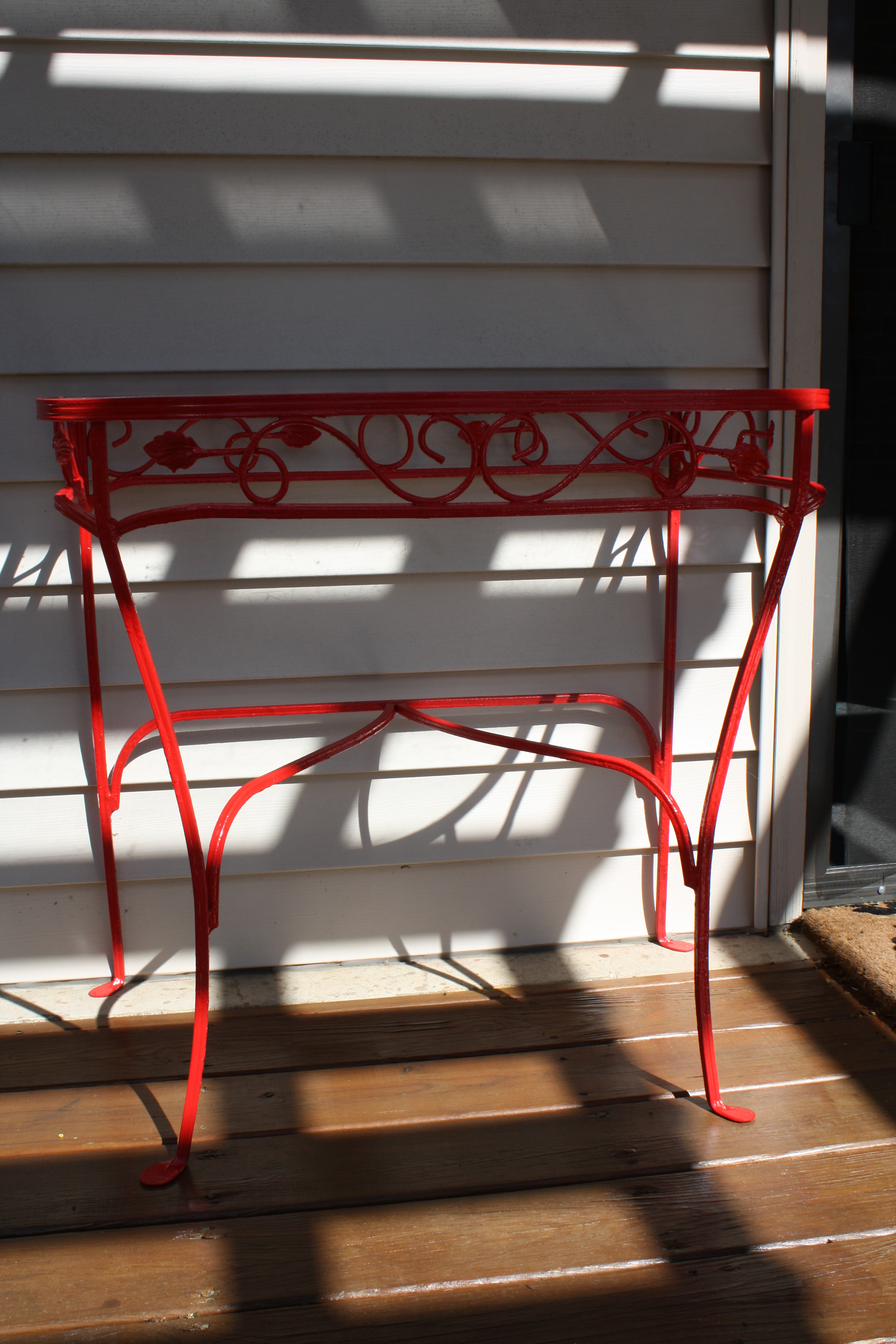
For some time now, I have been wanting to find antique pieces to refinish and then use to redecorate our outdoor space.  We spend almost every waking moment out there come summer time, and I felt like the area needed a bit of sprucing up.  My husband’s grandmother, gave me a beautiful iron garden table that I stripped and then repainted.

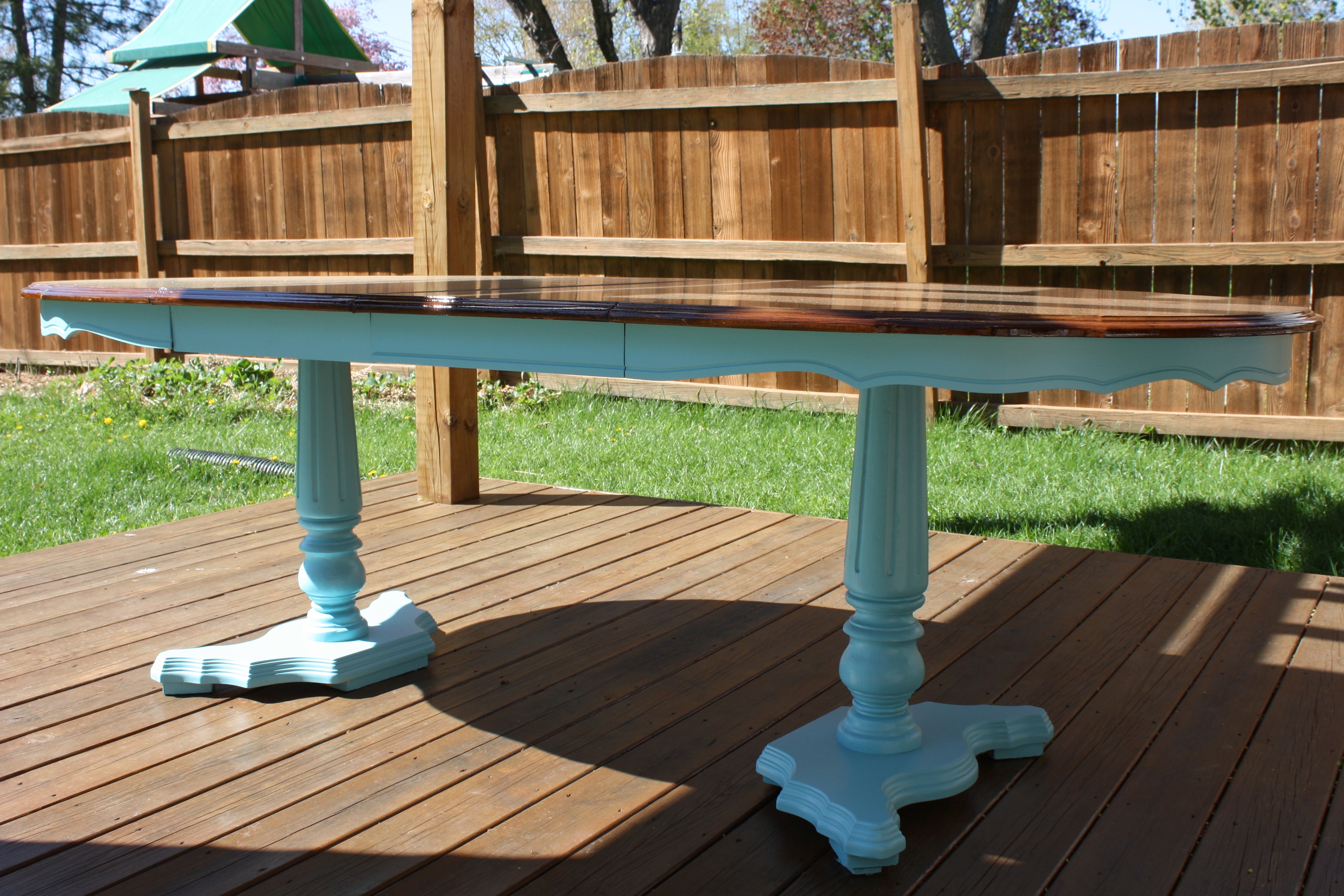
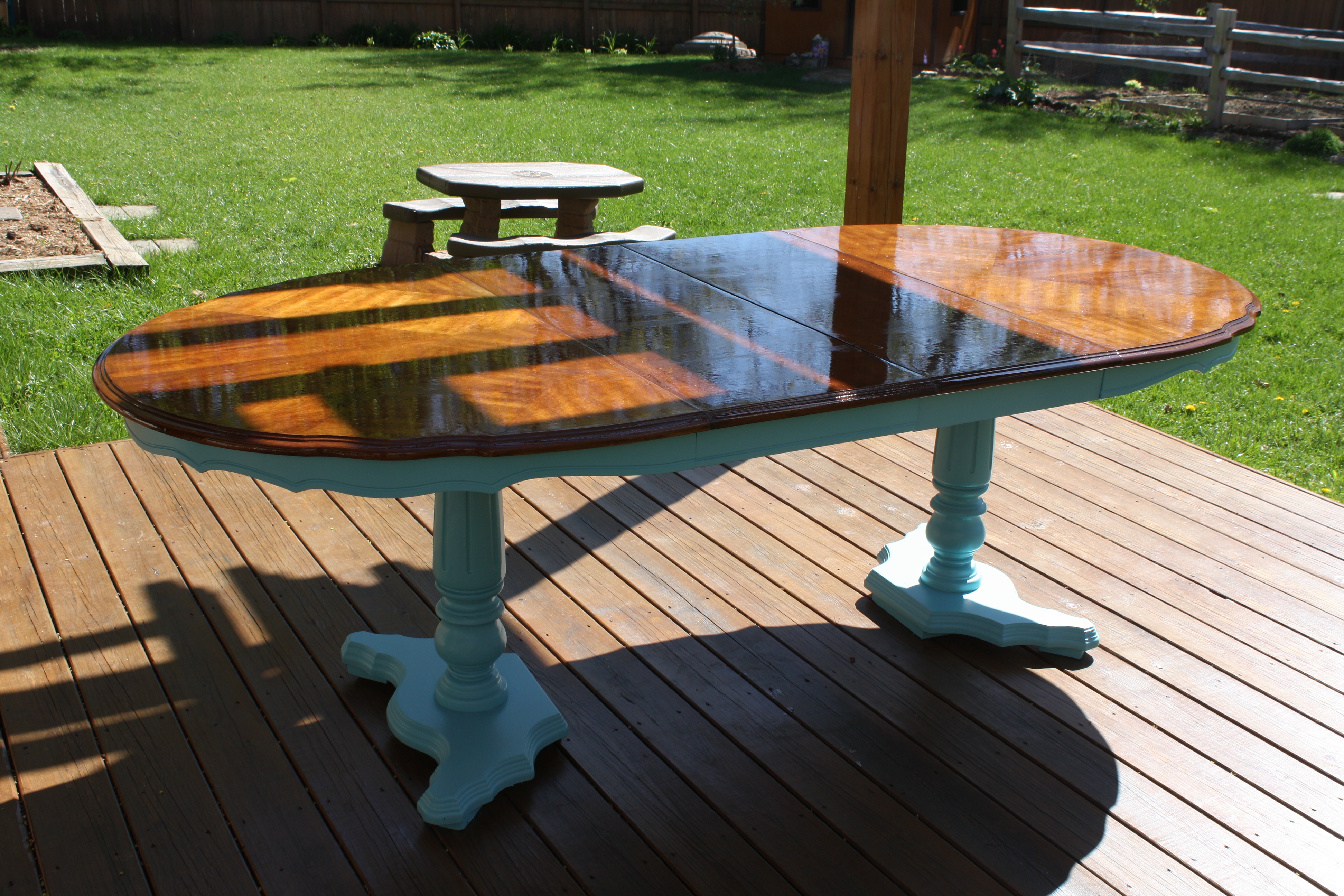
I then went to every thrift store and antique mall in the city (and my husband will attest that there are MANY in our area), and finally came upon a fabulous dining room table that had two additional leaves that could be added.  With a little tender loving care I knew it would be the perfect table for our many outdoor summer gatherings with family and friends.  I repainted the bottom portion of the table, my husband fastened the leaves together so that it would stay together permanently, and I then put several layers of outdoor polyurethane on the table top to add some extra protection.

I have a few more projects in the works, so stay tuned…

Fuasa—Italian Easter Bread

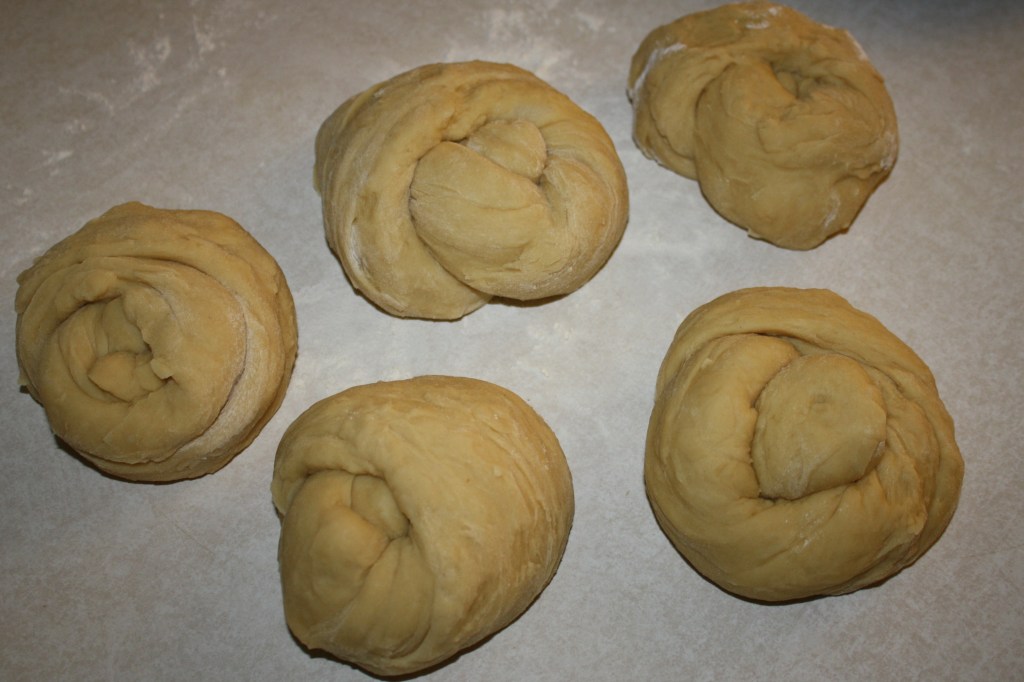
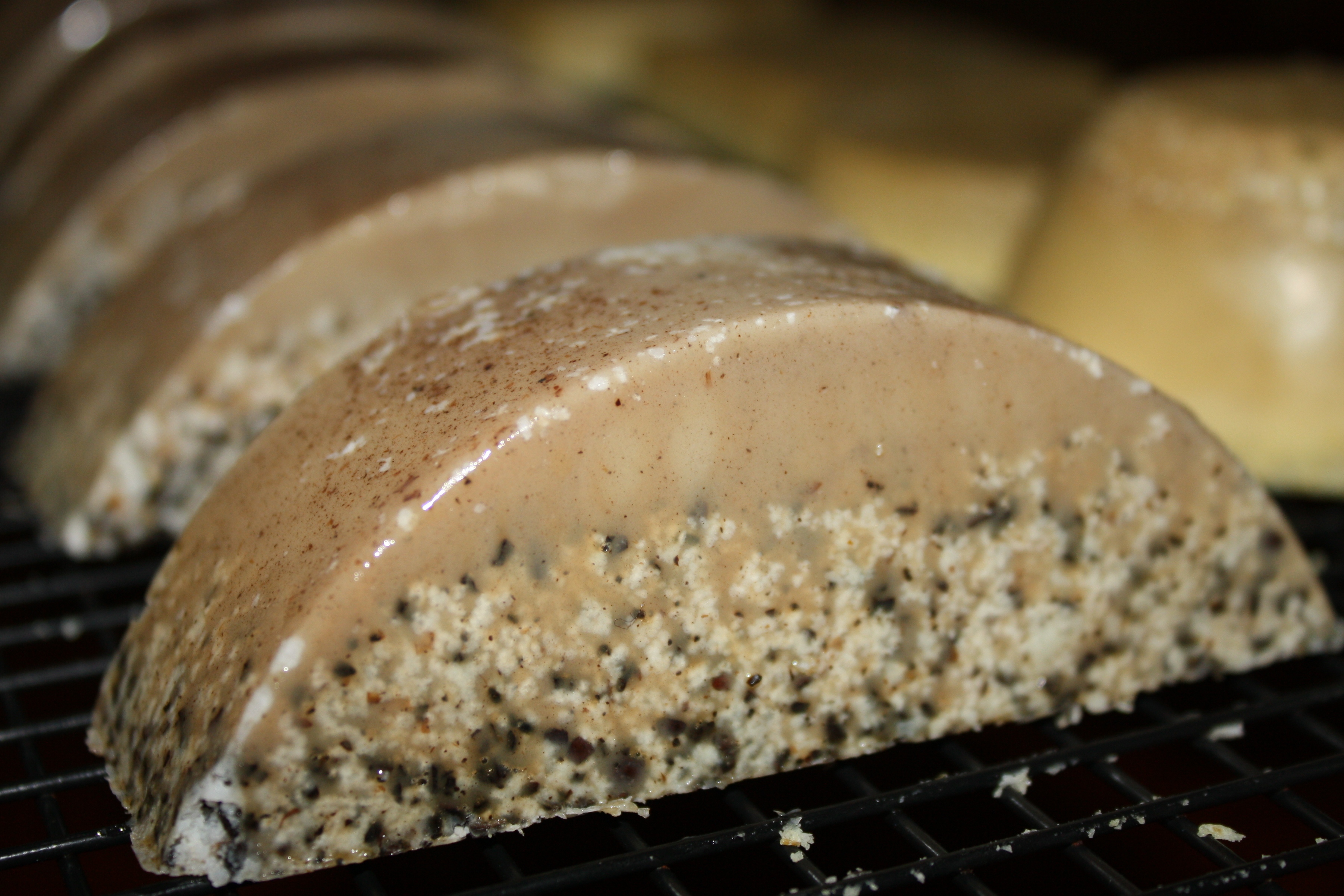
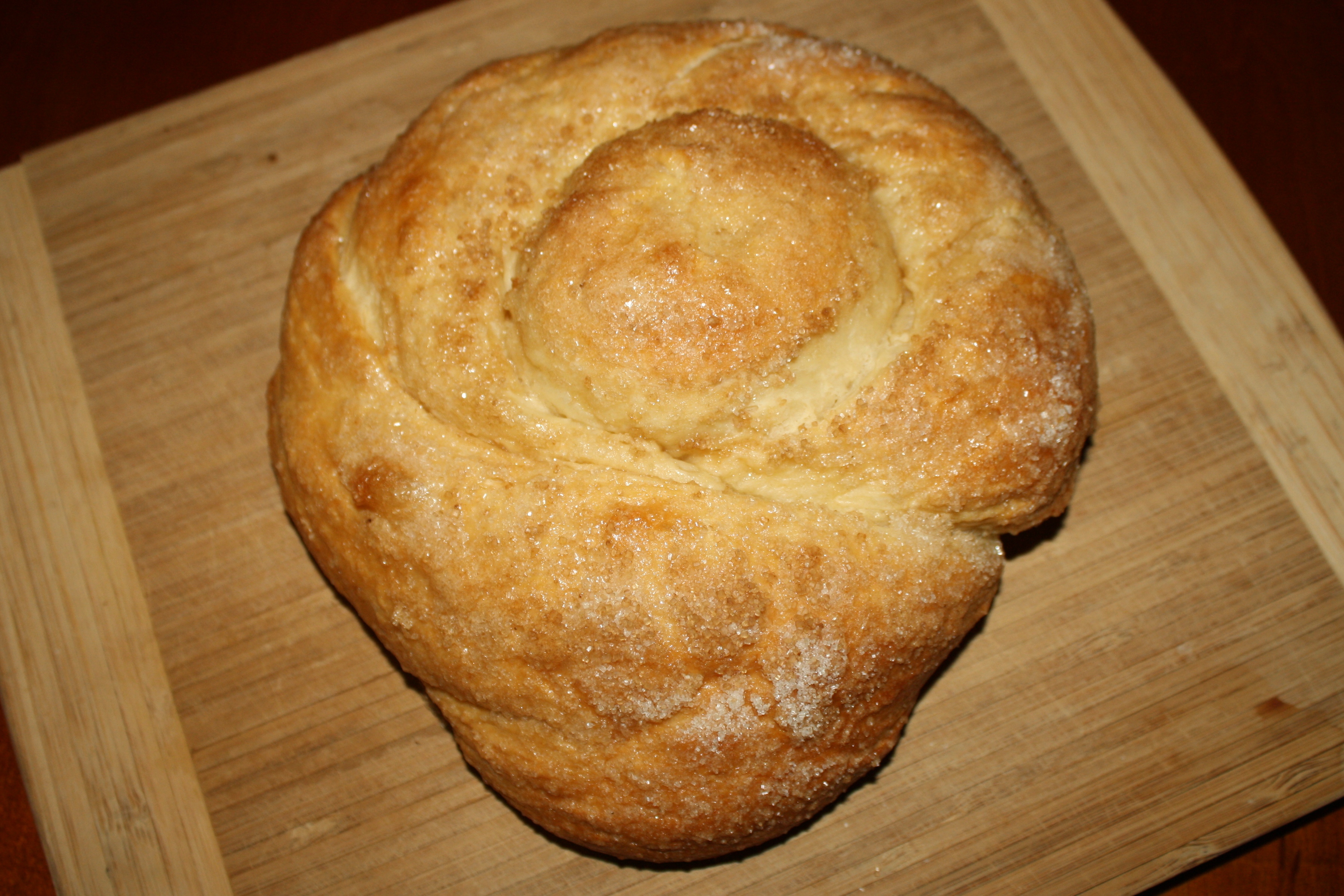
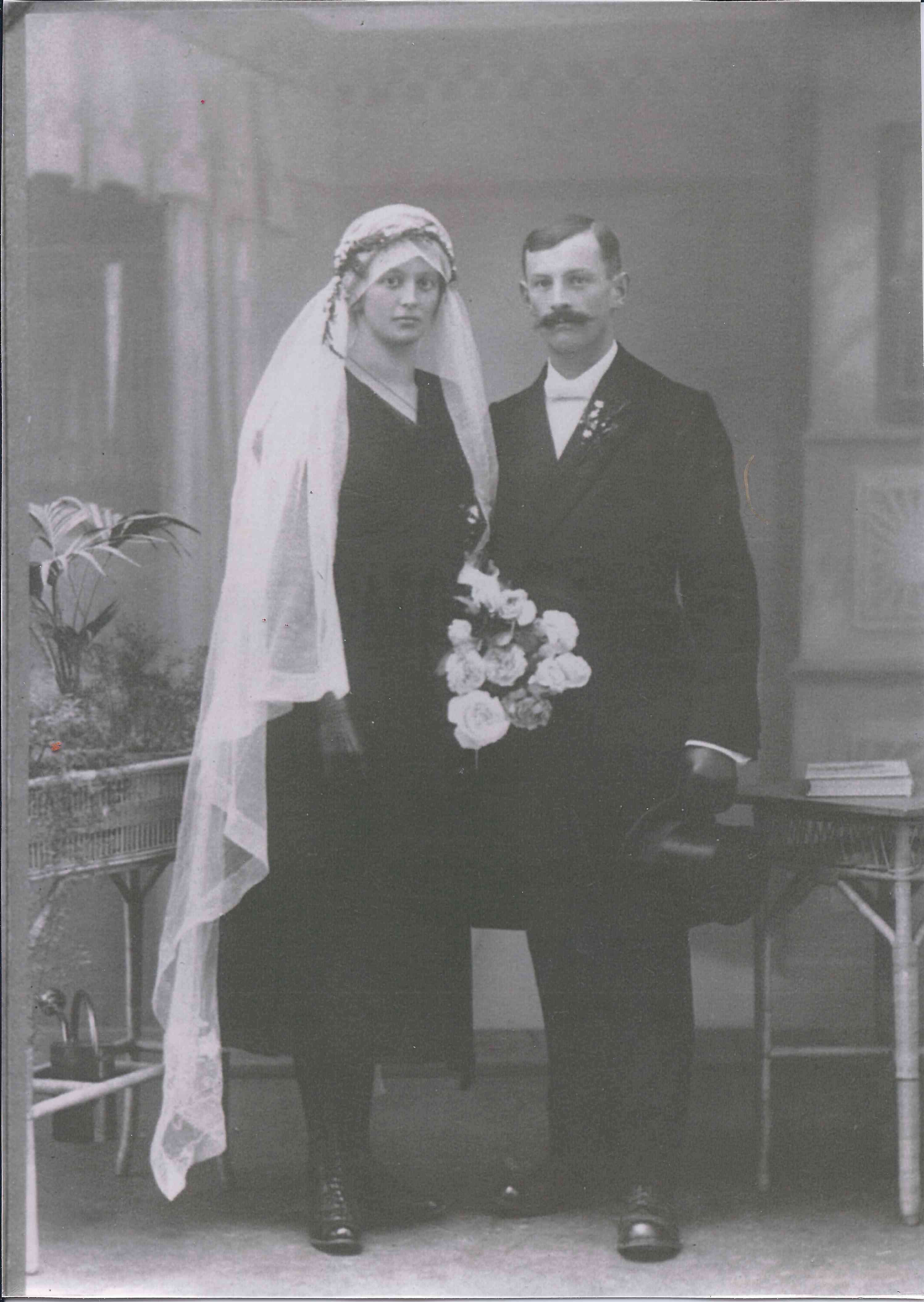
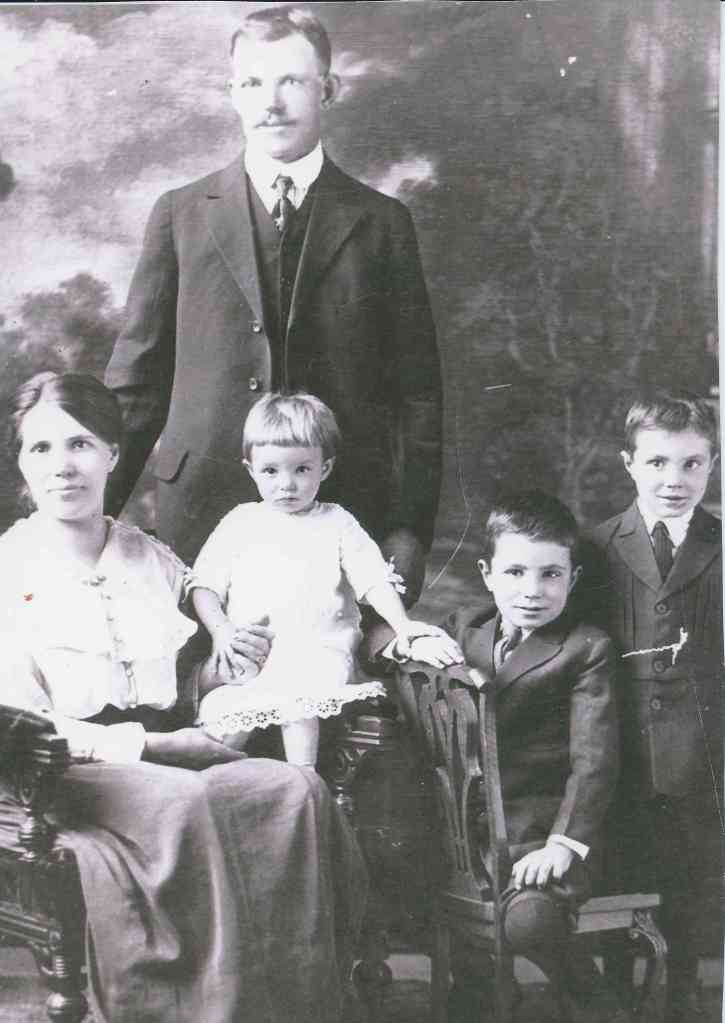
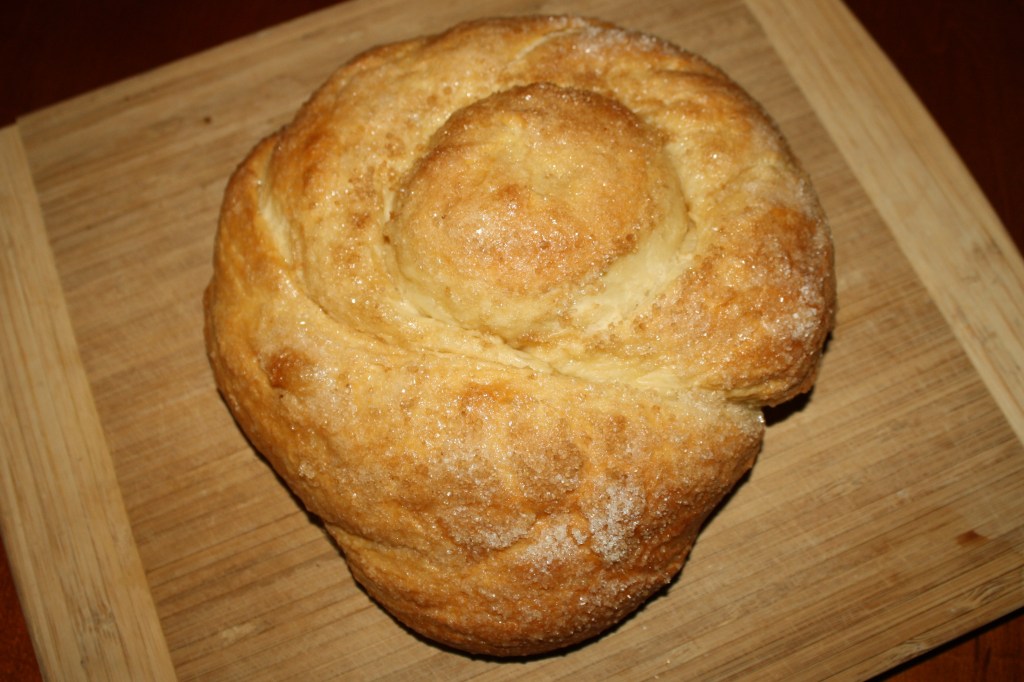
We have many food traditions in our house, but the one that reigns supreme is my Nona’s fuasa recipe.  My nona, Madeline Zanocco (the woman in the photograph on the left), emigrated to the United States from Vicenza, Italy.  She had five children, the forth of which was my grandfather.  My grandpa, Angelo Zanocco, decided to take on the role of rebel child in the family because he was only one of Madeline’s five children to marry a non-Italian.  This is why I always chuckle when I think about the fact that it was my German grandmother, Adeline (in the photograph below), who taught me to bake her fuasa recipe, and thus carry on the family tradition of making Italian Easter Bread every spring 🙂

I have been making (and eating) fuasa on Easter Sunday from as far back as I can remember.  The sweet crunchy goodness of the bread is synonymous in my mind with the holiday celebration.  Now that both Nona and my grandmother Addie have both passed on, I have made a point of continuing with the fuasa tradition each Easter.  I have made fuasa with my girls from the first year of their lives (My oldest can be seen in the picture below from 2007, making fuasa for the first time when she was only six months old.), because I find so much value in passing on our family food culture to the next generation.

And when I say I will make fuasa each year without fail, I always think of the year when I decided to triple the fuasa recipe (that means I was making 15 loaves of bread), and my oven broke.  I frantically called around to our friends in the area, but all were already away for the holiday weekend.  So, I packed up by 15 loaves of dough, my hubby, and my 18 month old and drove to Illinois State University where my sister was attending college.  From there I went to her friend’s apartment to bake.  Yes, I was baking 15 loaves of bread, with a toddler, in a college kid’s apartment…while he was having a party!  I’m not sure I was their favorite person that night 🙂  But the fuasa got done none the less.

It has been so fun to see the girls take on more of an active role in the baking of the fuasa each year.  It is truly my hope that they continue this tradition and pass it on to their little ones some day.

Nona’s Fuasa Recipe

2 yeast packets

2 cups milk (scalded then cooled)

1 1/2 cups sugar

2 teaspoons salt

8 egg yolks (save the whites to use on the tops of the loaves before baking)

1 1/2 sticks butter (melted)

9 cups flour

2 teaspoons vanilla

1 teaspoon almond extract

Stir yeast into warm milk.  Set aside.  Beat egg yolks, add sugar, salt and flavoring.  Then add the melted butter.  Next add the flour and milk mixture, alternating between each.  Beat until smooth.  Place on floured board and knead.  Place in a large bowl, butter the top of the dough, cover with a damp towel and let rise until double in size.  Knead dough again.  Divide into five pieces, roll out and knot.  Place in greased pans, butter the top of the dough, cover with a damp towel and let rise until double in size.

Beat the egg whites.  Baste the top of each loaf with egg whites, then sprinkle with sugar.  Bake each loaf for 20 minutes at 350 degrees and 15 minutes at 250 degrees.  Enjoy!
I wish each of you a very blessed Easter weekend!
Foraging

Have you ever peered into your cupboard to find nothing inspiring to bring to the dinner table?  Can you imagine being in such a situation and then realizing you are able to literally go into your very own backyard to find it brimming with life, just waiting to be consumed on your dinner plate?  I’m not talking about your annual vegetable garden here.  I am referring to those plants that are often viewed by mainstream culture as being a nuisance, something that needs to be sprayed, pulled, or plundered so that our lawns and backyards can look “good.”

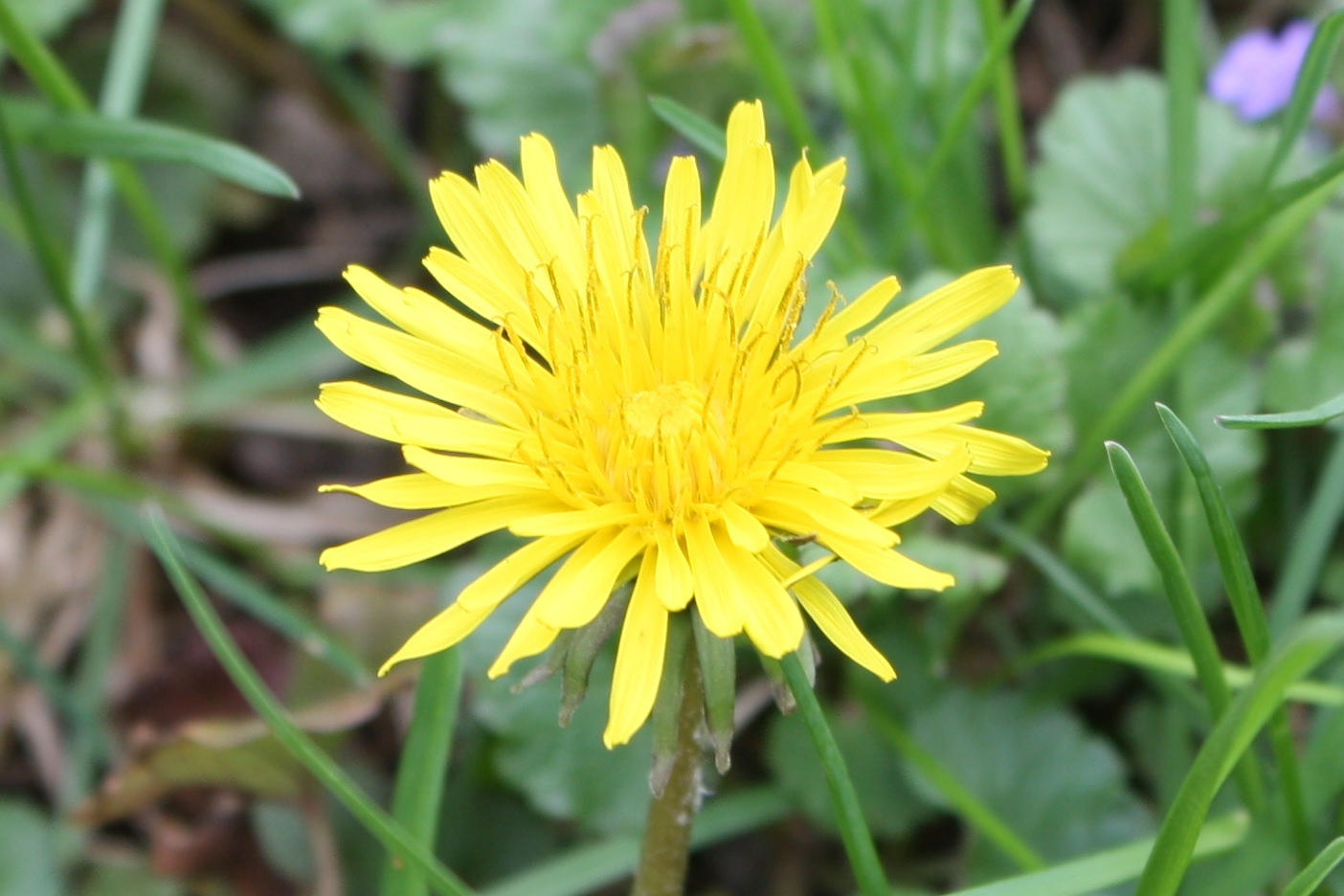
I have recently been reading up a bit on backyard foraging.  I gained inspiration from this blog, The Rhythm of Family, and Many Paths, One Journey to Health for simple recipes that incorporate those bits of vegetation that almost anyone can find in their very own backyards!

**A note:  You must be sure that you are only foraging in an area that you know for sure has not been sprayed with weed killers, insecticides, etc.  We stick to our own yard only.  I don’t even let the girls pick those edibles near the road way, just in case some “yucky stuff” made its way to the plants via a passerby.

Pastaless Lasagna

Now, I know you are all reading this and wondering, “What the heck is this crazy lady talking about?  Lasagna without pasta.  Madness!”  And honestly, the Italian in me is saying the very same thing.

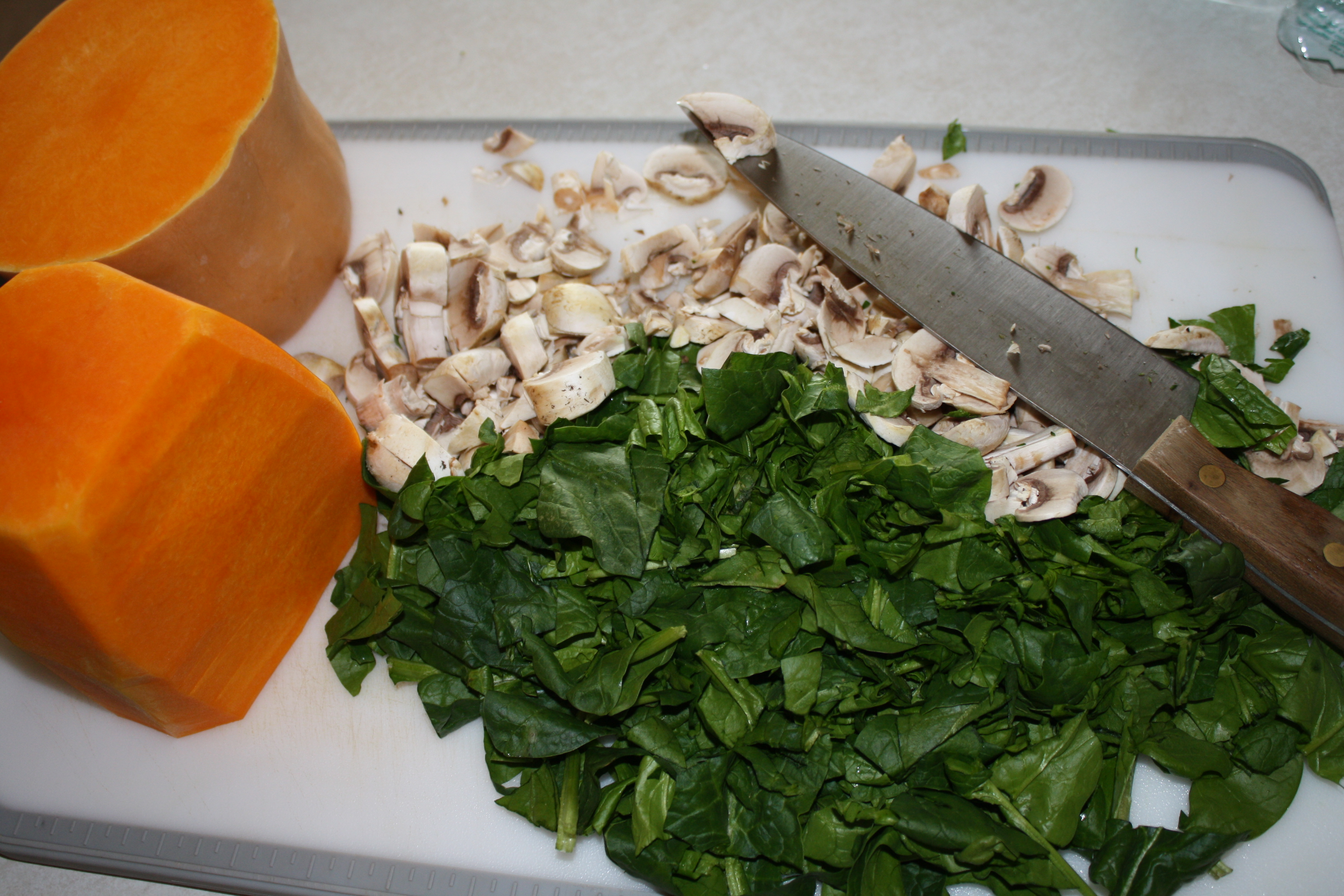
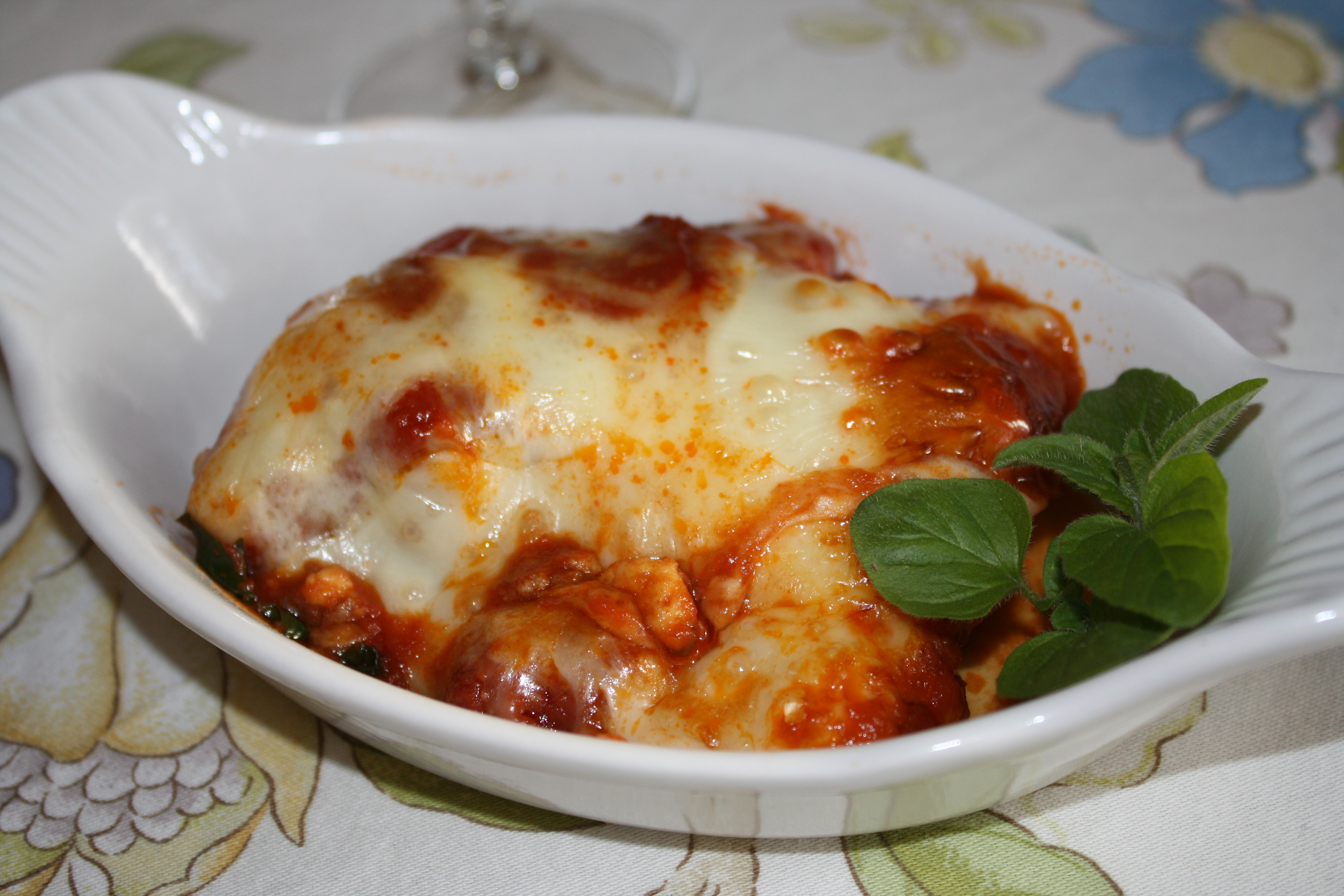
Recently, my husband has been trying to significantly reduce the amount of refined carbohydrates that he consumes.  And truthfully, this new eating style has placed quite the strain on my dinner-making abilities.  Yesterday though, I was struck with a moment of genius!  I got an idea to use butternut squash, sliced very thin, as the “pasta” element in normal lasagna recipe.  I tested the dish out last night and I unequivocally say that the venture was a success!

Here is the recipe:

2 quarts tomato sauce (I used sauce I had frozen back in August when our tomato plants were the size of the ones in The Godfather!)

1 large butternut squash

1 yellow onion (chopped)

2 cloves garlic (chopped)

1 lb. grass-fed ground beef

1 lb fresh, local spinach (chopped)

1 lb mushrooms (chopped)

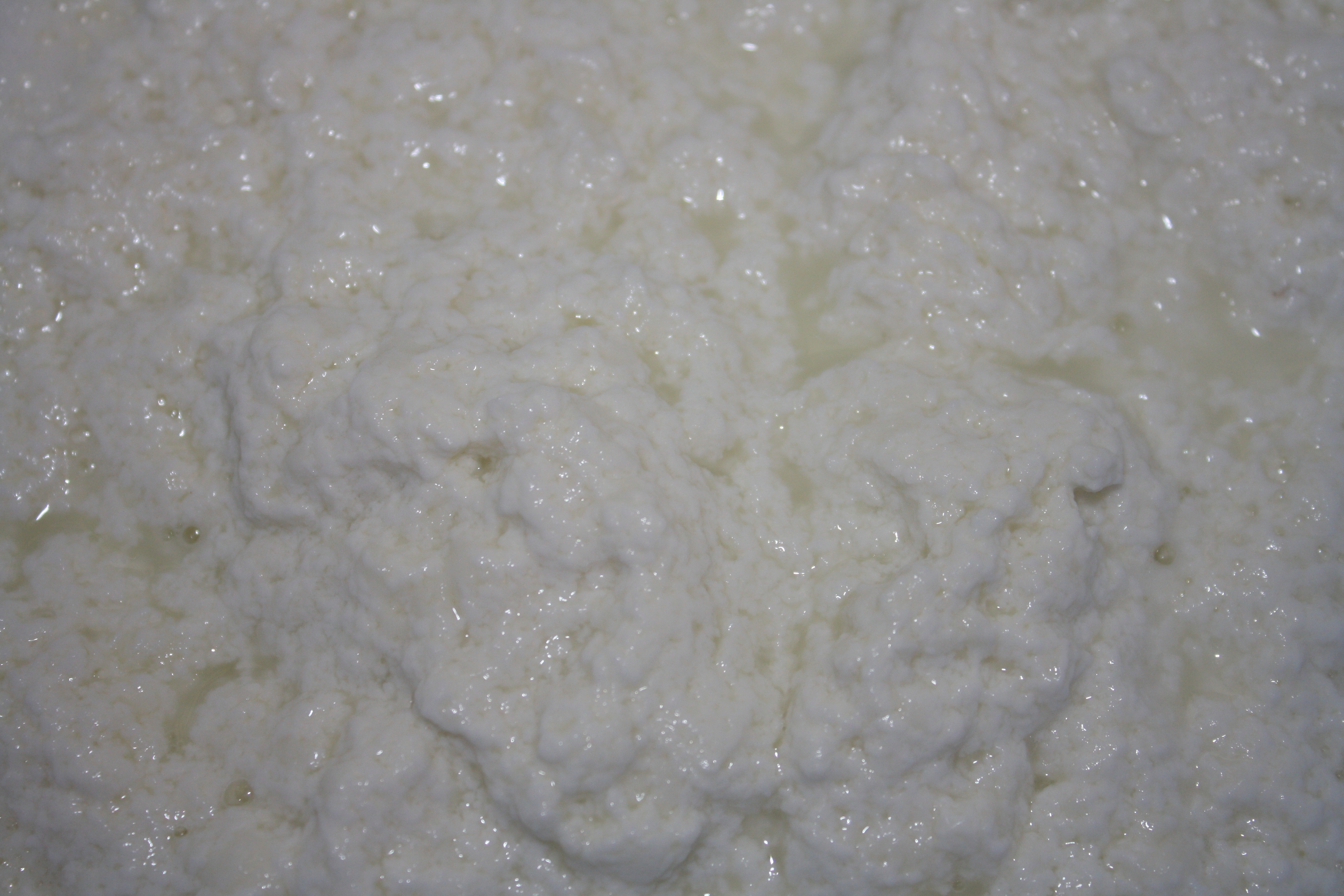
1 lb ricotta cheese (I used the fresh ricotta we made last week.)
1 lb mozzarella (Again, I used the cheese we made last week.)
I first took a 13 X 9 baking dish, drizzled it with olive oil and then coated the bottom of the pan with a layer of sauce.

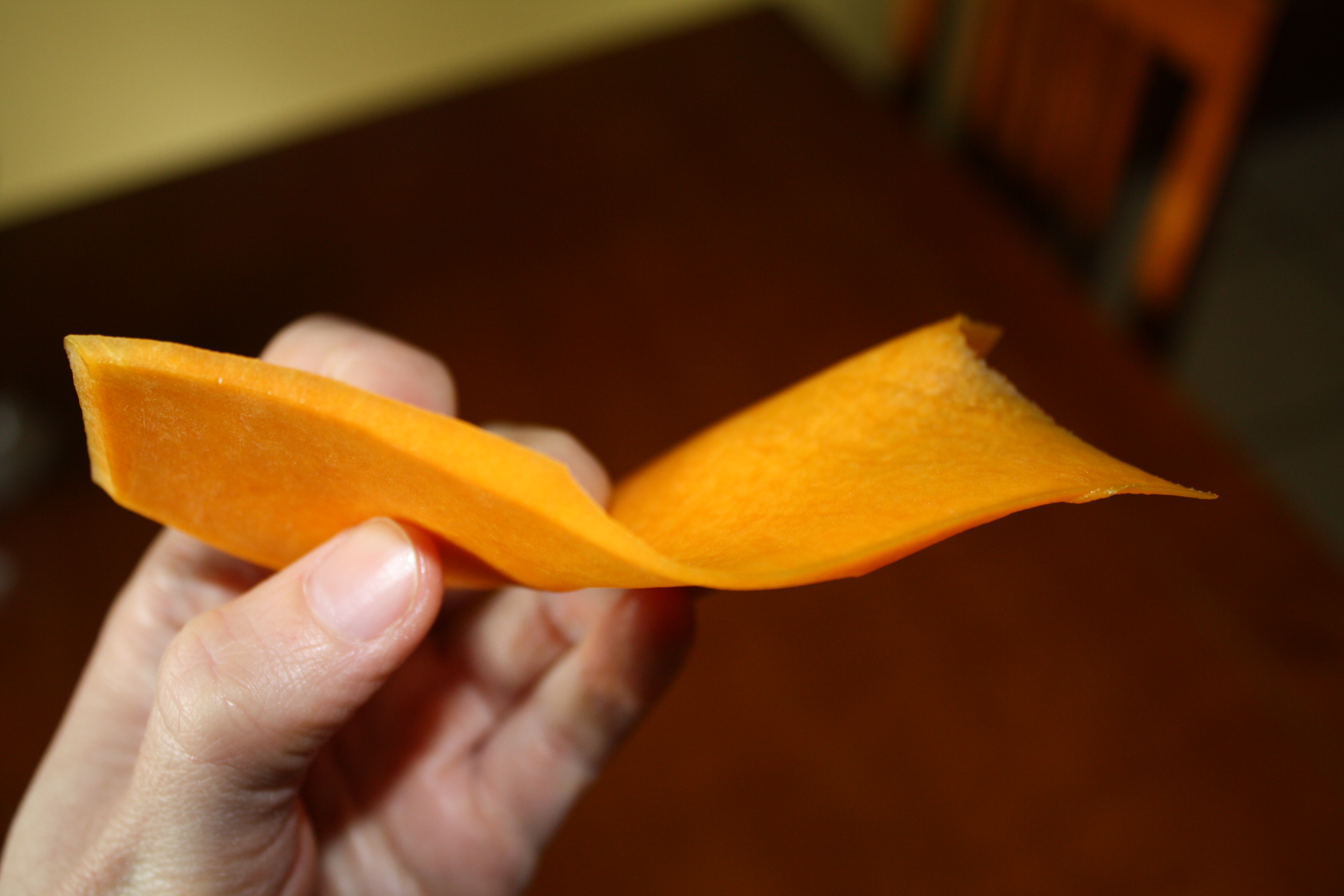
Then I shaved the top portion of the butternut squash very thinly like this:

I then layered the pan with the sliced butternut squash.  Then I added a layer of ricotta.  Then sauce again, followed by another layer of squash.

Then I cooked up the onion, garlic, spinach and mushrooms in a bit of olive oil.  Once the meat was cooked through and the veggies tender and wilted, I added that to the lasagna pan, followed by more sauce and another layer of squash.

Then I finished it off with a final layer of sauce and topped it with sliced, fresh mozzarella.

I then covered the pan with a metal cookie sheet (you could use foil as well).  I baked it at 375 degrees for 35 minutes.  Then I took the cook sheet off and baked it for another 15 minutes, or until the cheese begins to brown.

Enjoy!

I would also like to apologize for my absence yesterday.  We have a ton of projects going in our house right now, many of which I will be sharing with all of you over the course of the next few days 🙂

I hope all of you have a marvelous week!

It’s In My Blood

My great-grandfather, Hans Jacob Untersee, arrived in The United States from Bern, Switzerland on June 8, 1922.  Upon his arrival, he made his way to northern Illinois  to find work so that he could send for his wife and children, who still remained in Switzerland.  It was in northern Illinois that he established himself as a successful cheese maker, and was able to save enough money so that his family could join him in America.

Ever since my youth, I have been drawn to all aspects of my heritage.  I love connecting to my ancestors, whether it is admiring old photographs, thinking of my grandfather while in my garden, or cooking family heirloom recipes.

About three years ago I stumbled upon Animal, Vegetable, Miracle by Barbara Kingsolver, and I must admit that that read greatly impacted my life.  Her discussion of food as a connection to our ancestry drew me in like I never thought possible.  It was while reading this book that I began to think of my Great Grandpa Untersee.  He was a cheese maker by trade, why couldn’t I become a hobby cheese maker?

I used Barbra Kingsolver’s references in the back of her piece, and found Ricki Carroll’s website.  I never looked back.

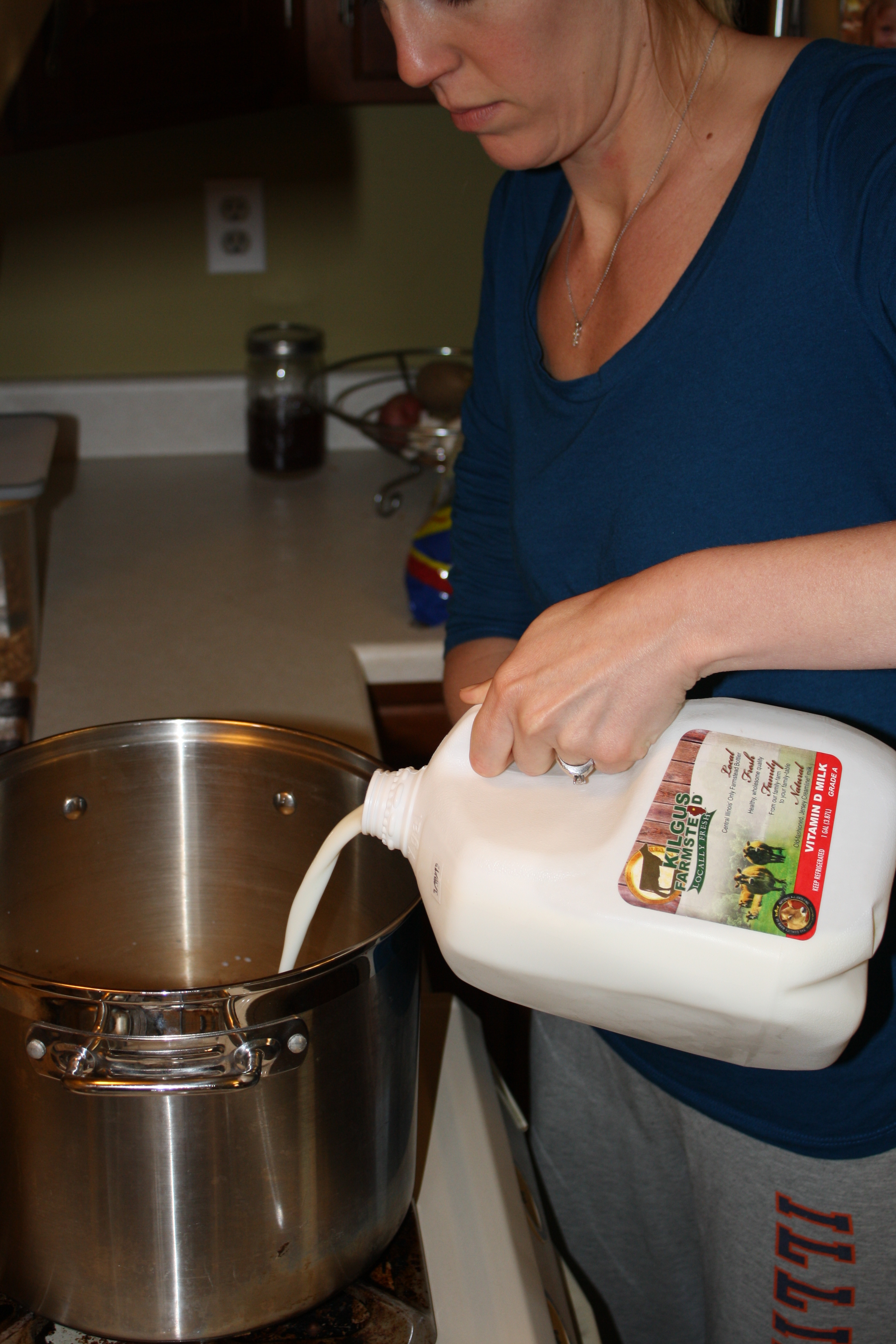
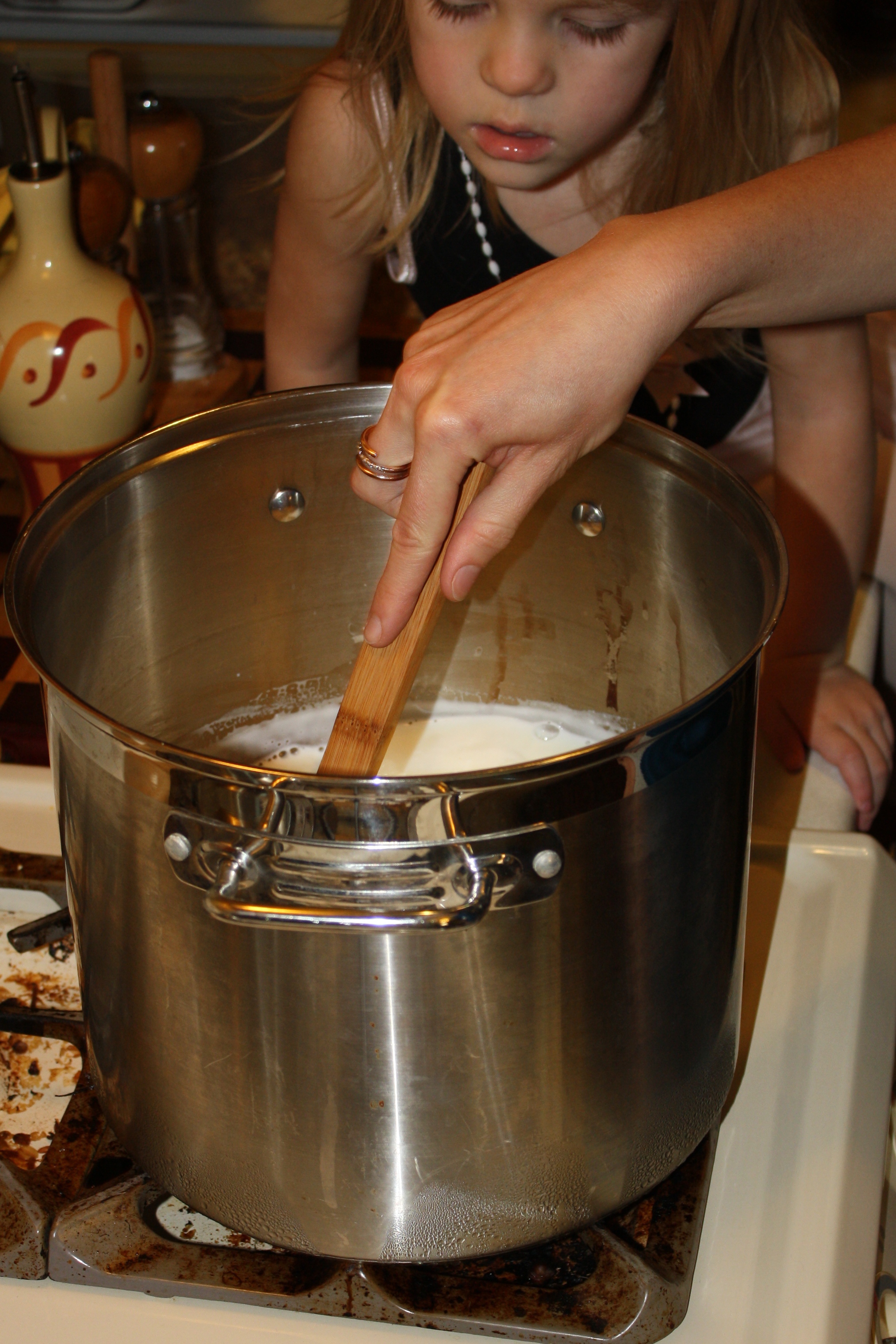
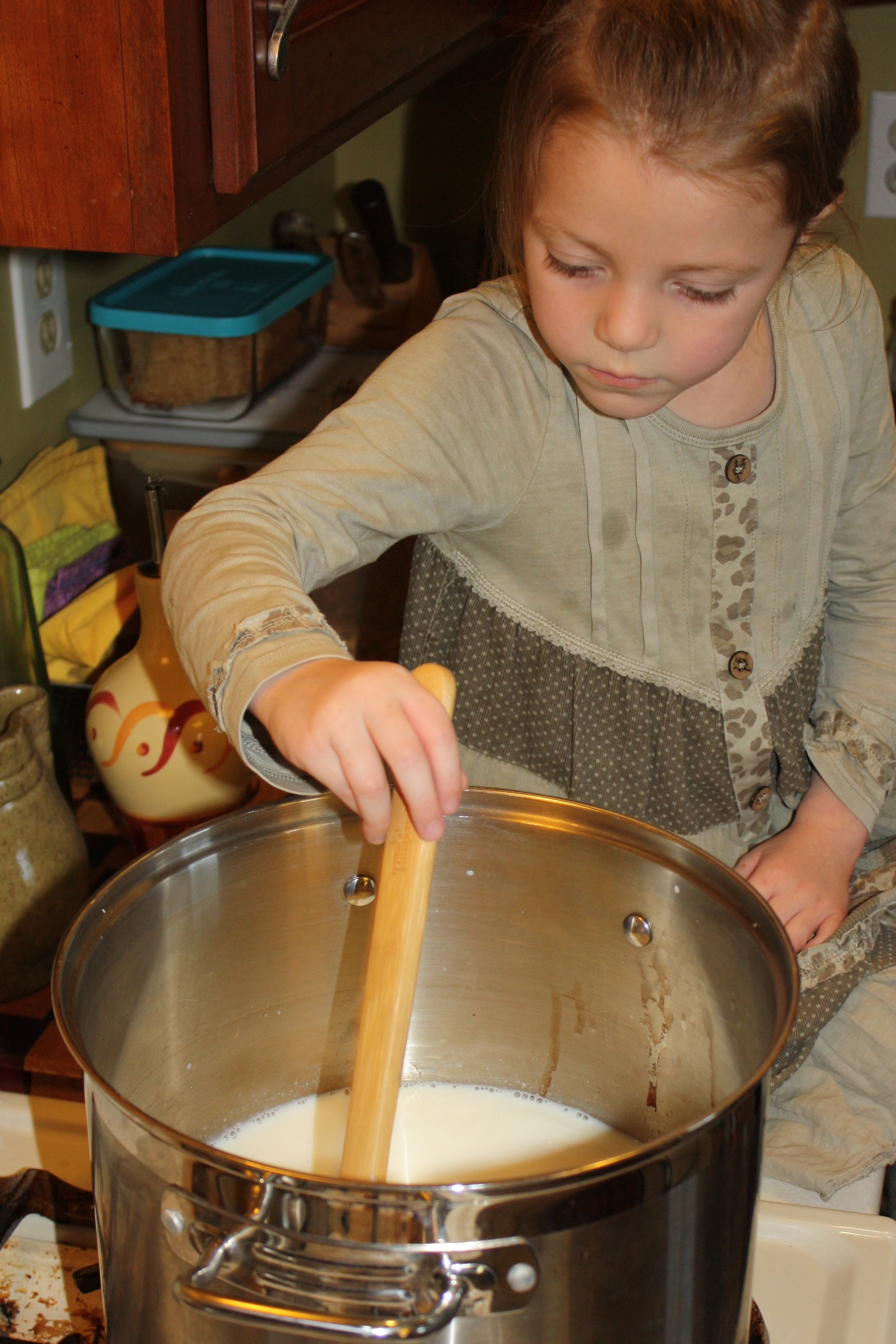
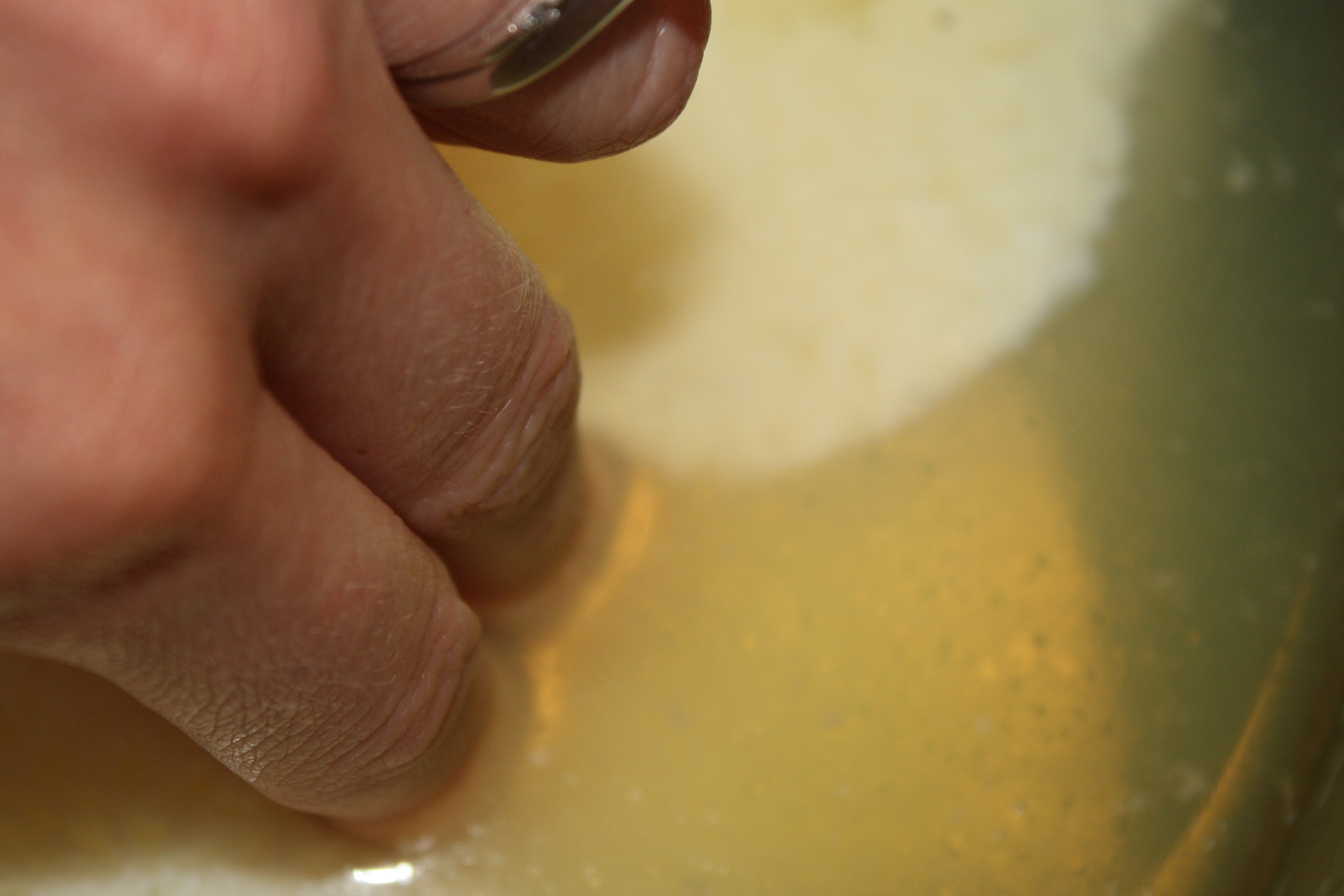
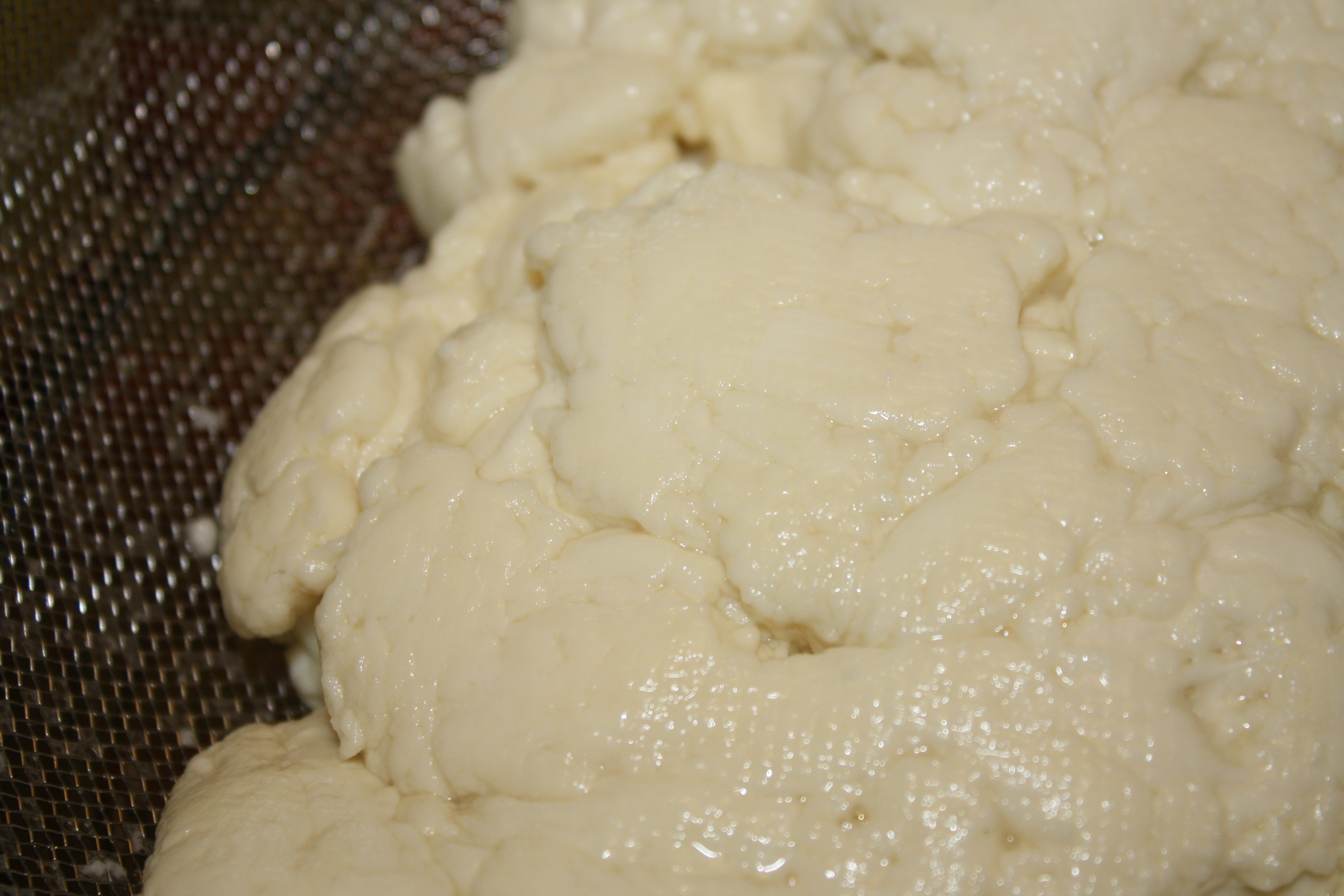
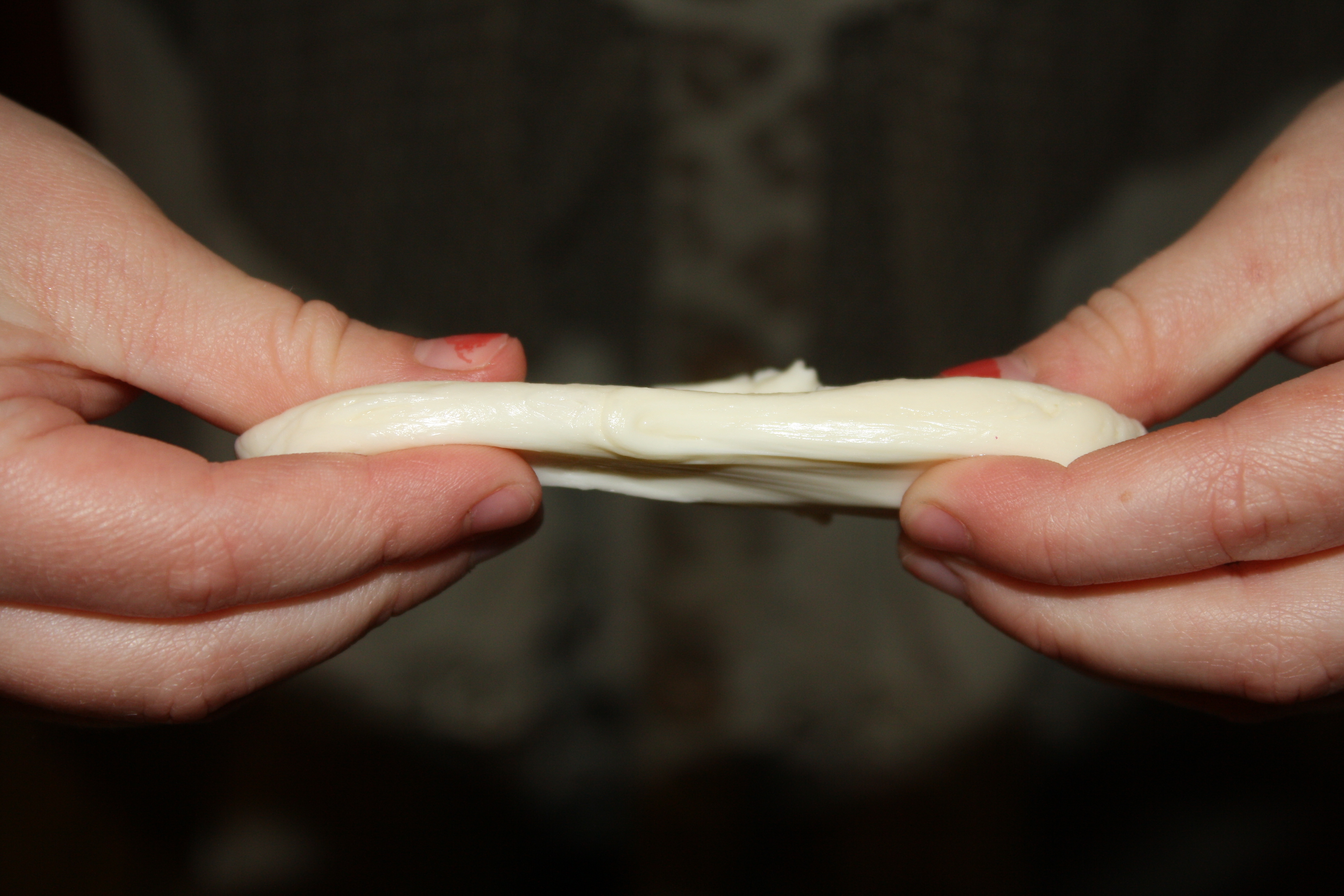
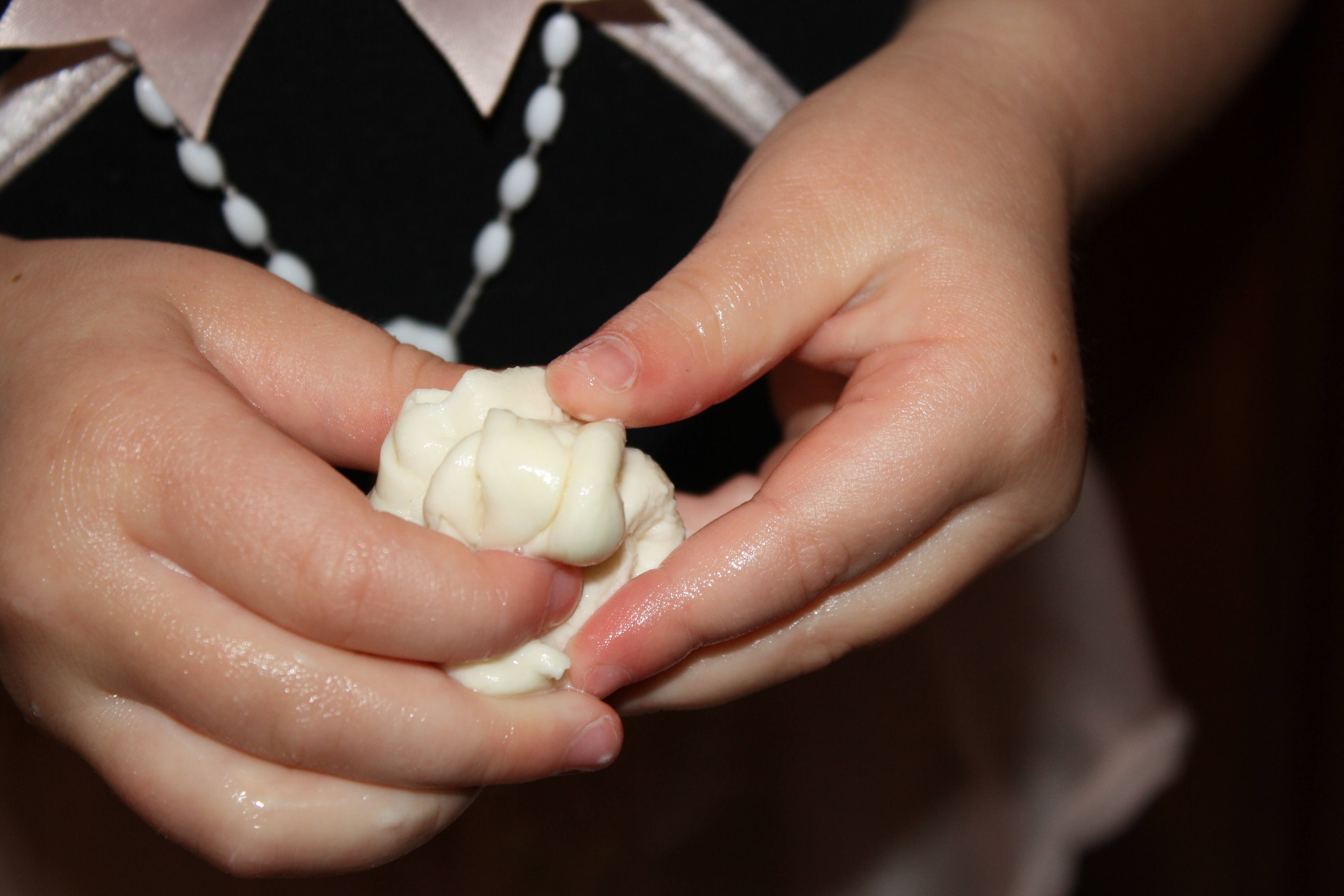
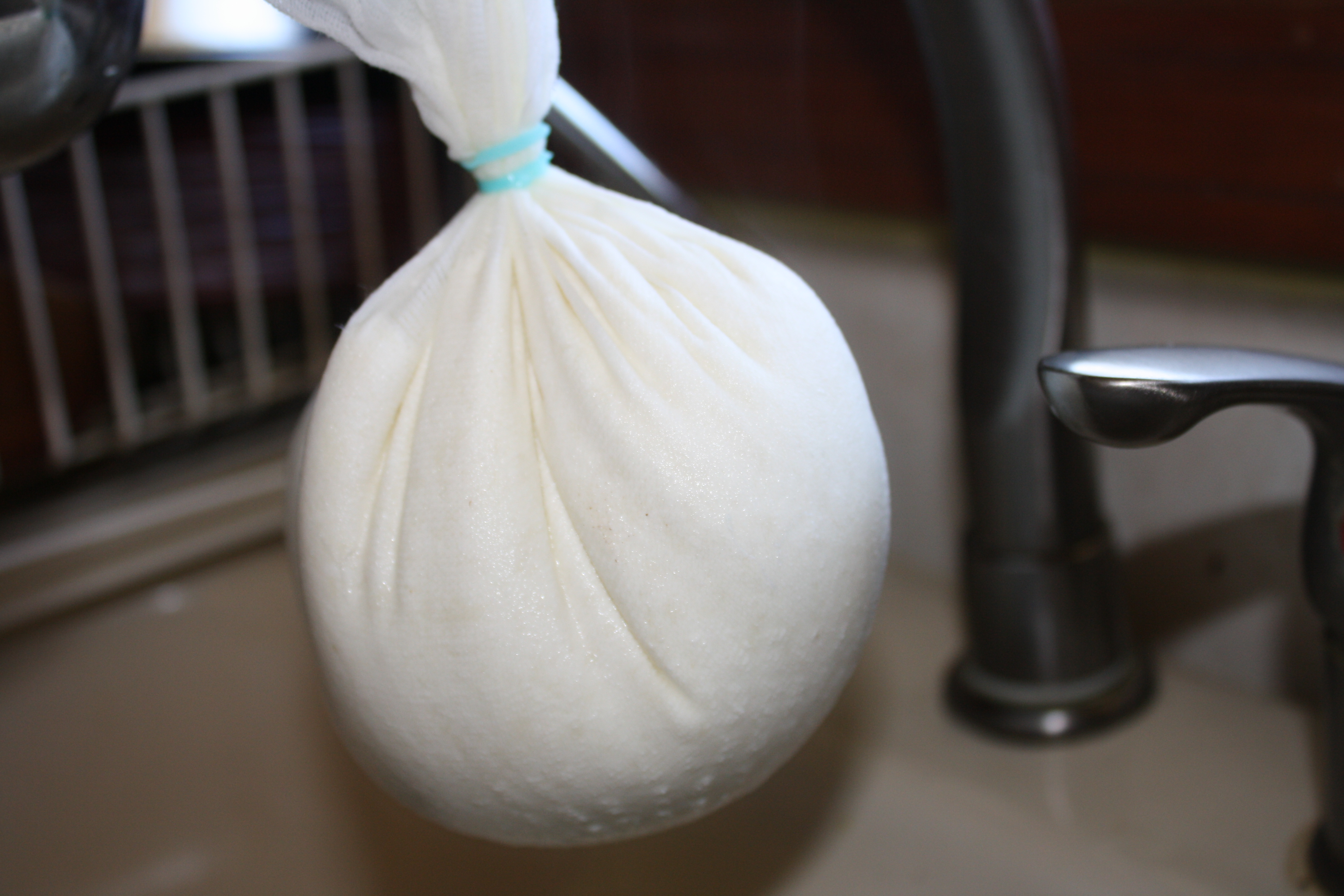
Yesterday we decided it had been far too long since we had made cheese, so we ventured to our local, natural grocer where we are able to purchase milk from a local source.  We then busted out our New English Cheesemaking Supply Company cheese kit and got to work.

Here we are making a batch of ricotta cheese:

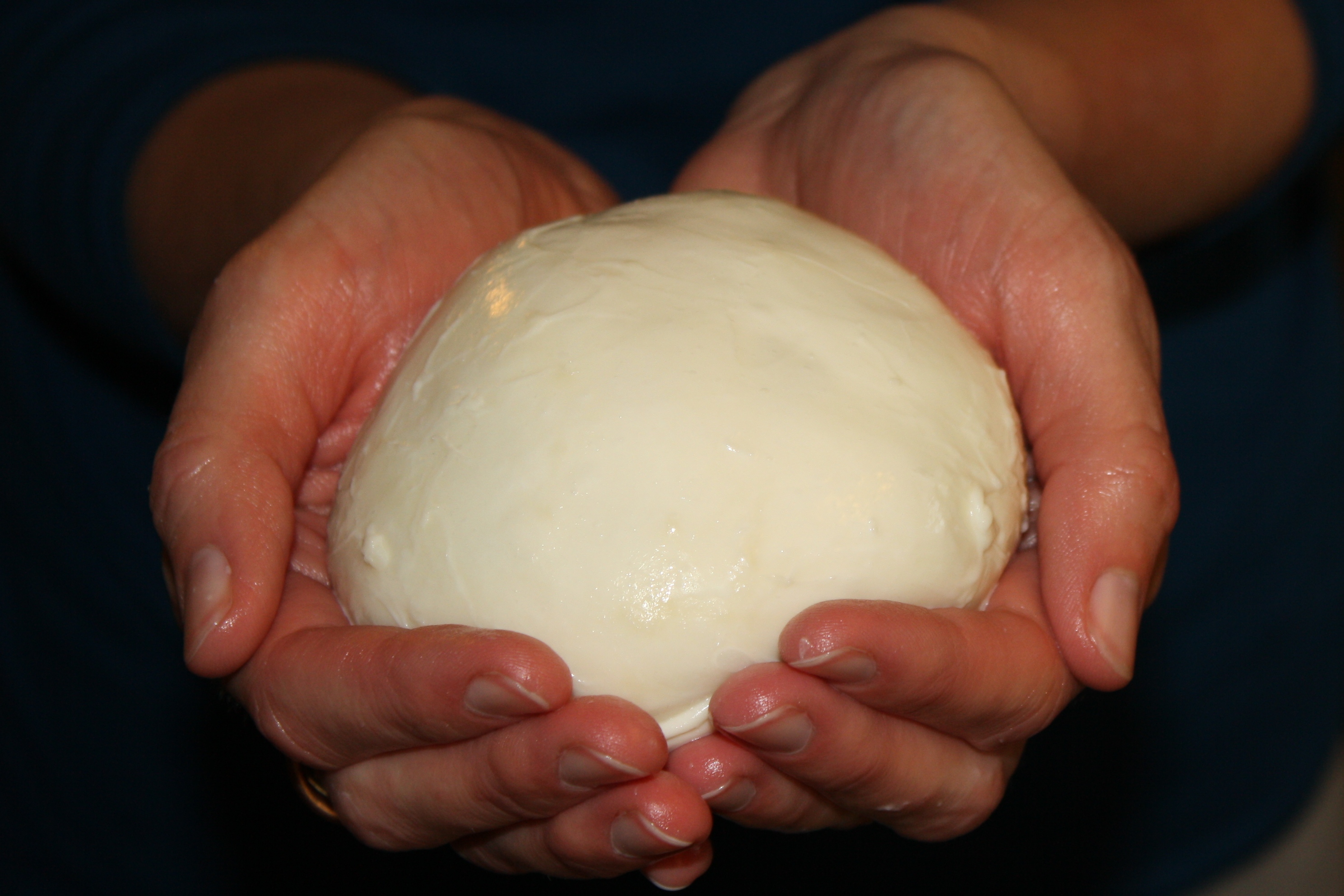
And here we are making mozzarella:

Hopefully Great Grandpa Untersee was looking down on us yesterday and smiling.

Spring Soup

Anyone who knows me will tell you that I have a bit of a crush on Jamie Oliver.  In fact, this year our Thanksgiving meal featured all dishes we gathered from various Jamie Oliver cookbooks.  I am just in love with his fresh approach to food, and that is why I find myself constantly reaching for one of his recipes time and time again when it comes to feeding my family.

My all time favorite cookbook of his is Jamie at Home:  Cook Your Way to the Good Life.  The cookbook is broken down by season, and also explains how he grows the many vegetables highlighted in the recipes.

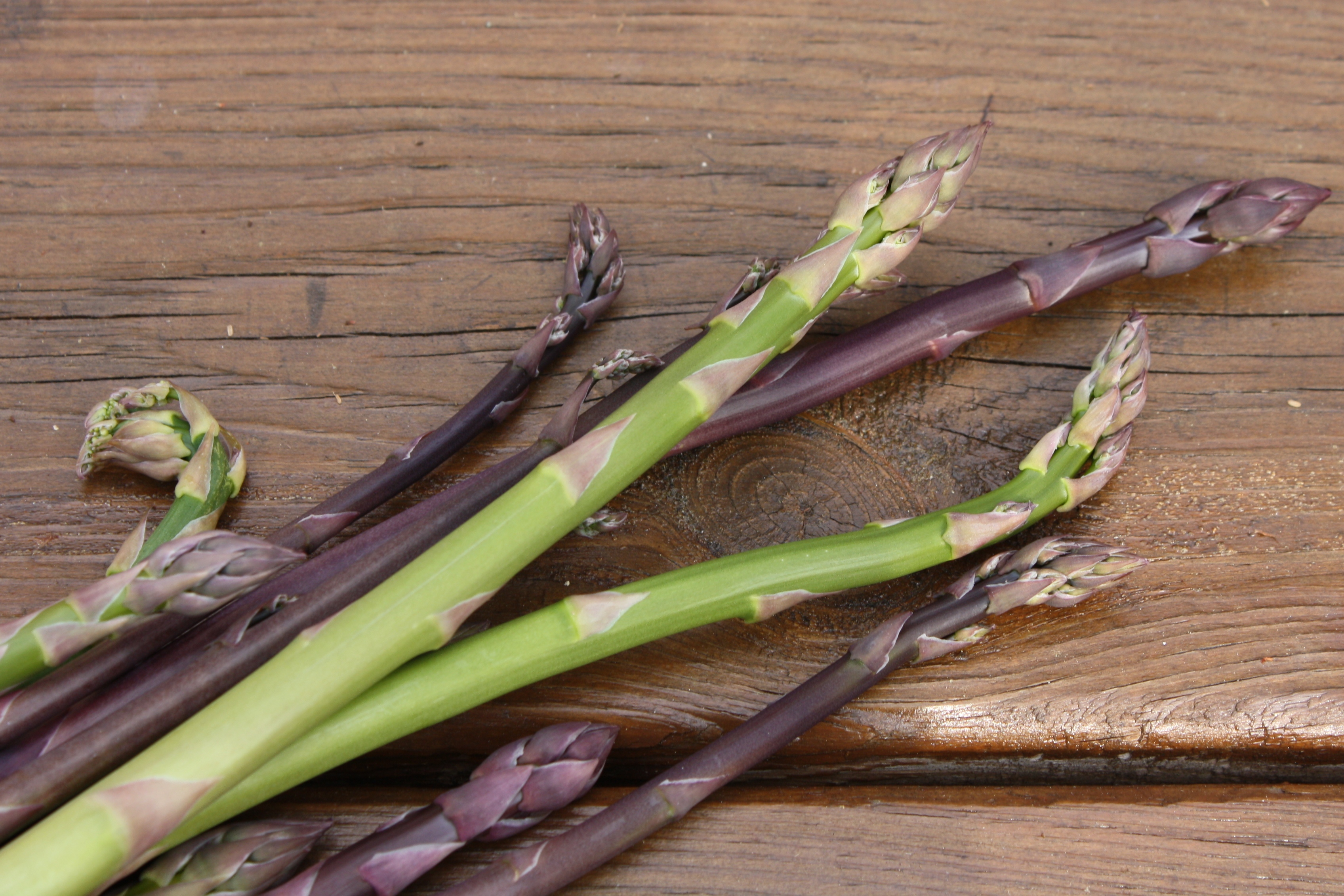
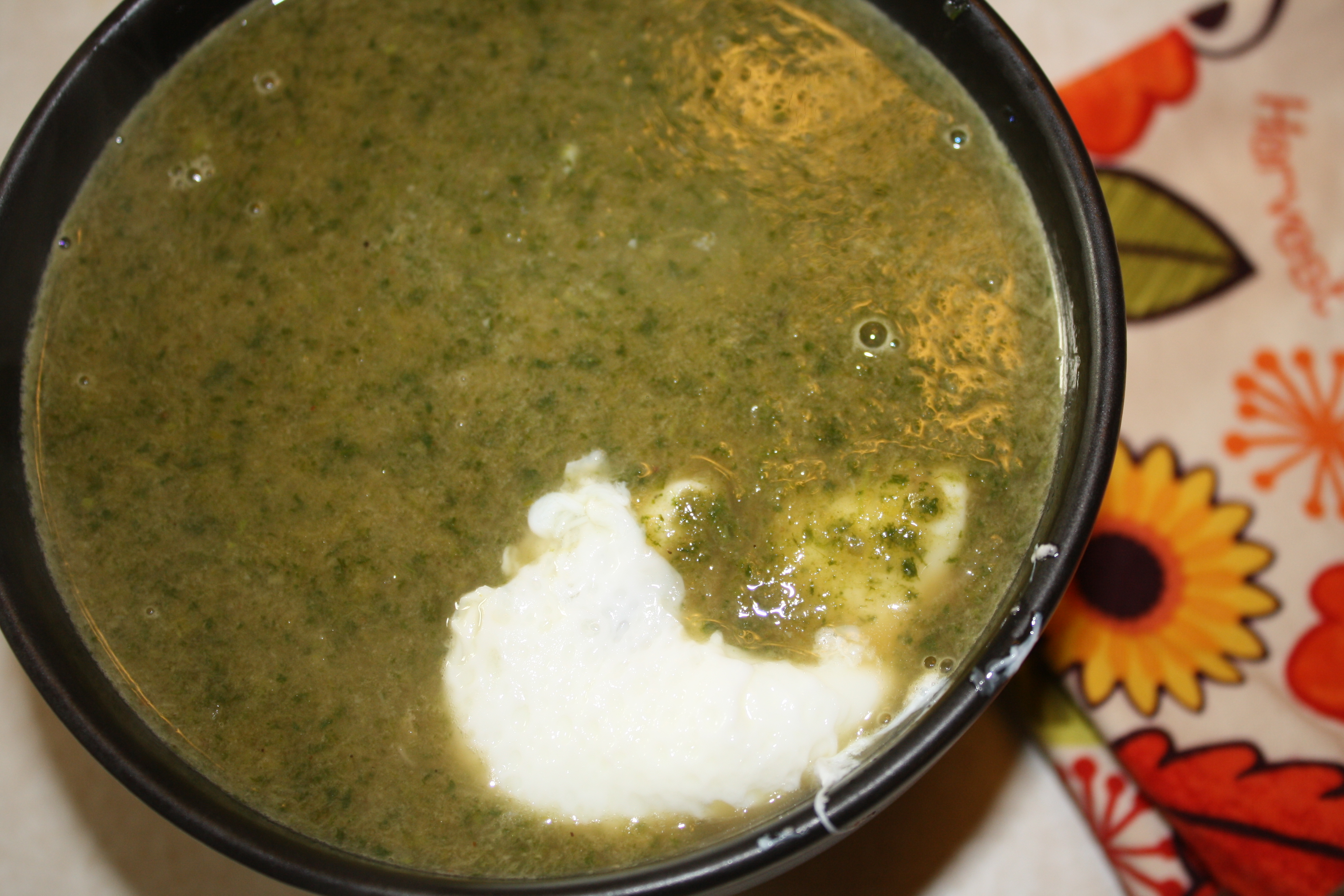
Yesterday, when I looked out my kitchen window and saw all of those asparagus sprouts reaching out from beneath the soil, I knew it was time for my favorite spring soup.  The recipe below is an adaptation of a recipe from Jamie at Home by Jamie Oliver.

1 1/2 lbs. asparagus (chopped)

2 white or yellow onions (chopped)

2 leeks (chopped)

2 celery stalks (chopped)

3-4 tablespoons olive oil

1/2 lb fresh spinach

3 quarts stock (You can use any stock of your choice here, depending on your preference.  The soup I made last night featured pork stock.)

salt and pepper to taste

Put the olive oil in a large stock pot and heat over medium to high heat.  Then add your onions, leeks, and celery.  Cook until the veggies are tender, but not browning.  Add the chopped asparagus and spinach.  Stir a bit more until the asparagus is warmed and the spinach begins to wilt.  Then add your stock, cover the pot and turn down the heat.  Let the mixture simmer for about 10-15 minutes.  Take the lid off and run an immersion blender through the soup.  Salt and pepper to taste.

I normally then poach some fresh eggs and add those to the soup once it has been dished up.

Enjoy!


Breakfast for Dinner

Yesterday I decided to have an impromptu rummage sale, so by the time the sale ended and the left over items were boxed up, it was dinner time and I had nothing in my arsenal ready to go.  It was actually my oldest daughter who said, “I know Mom, we should have breakfast for dinner!  It is fast, and my favorite!”

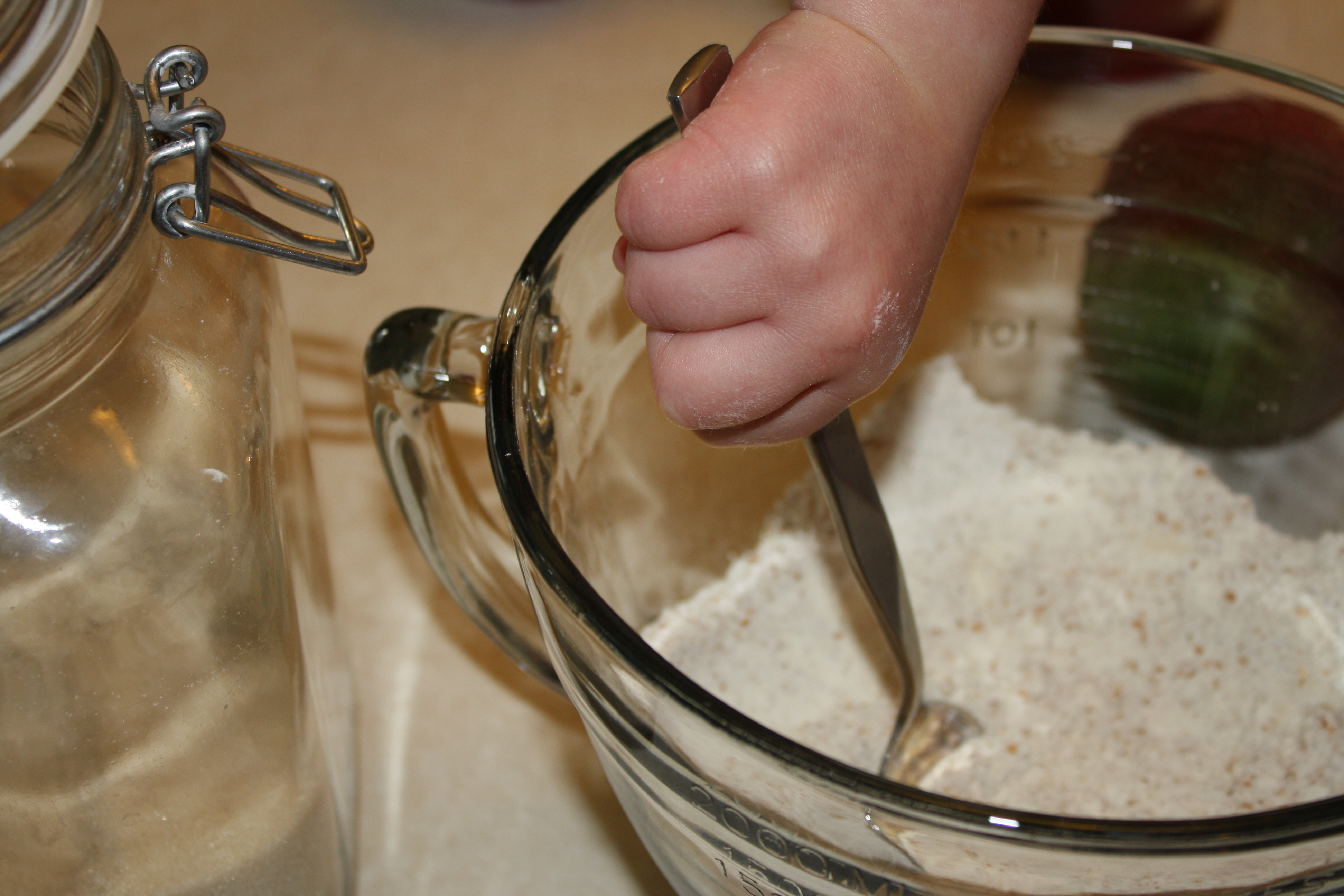
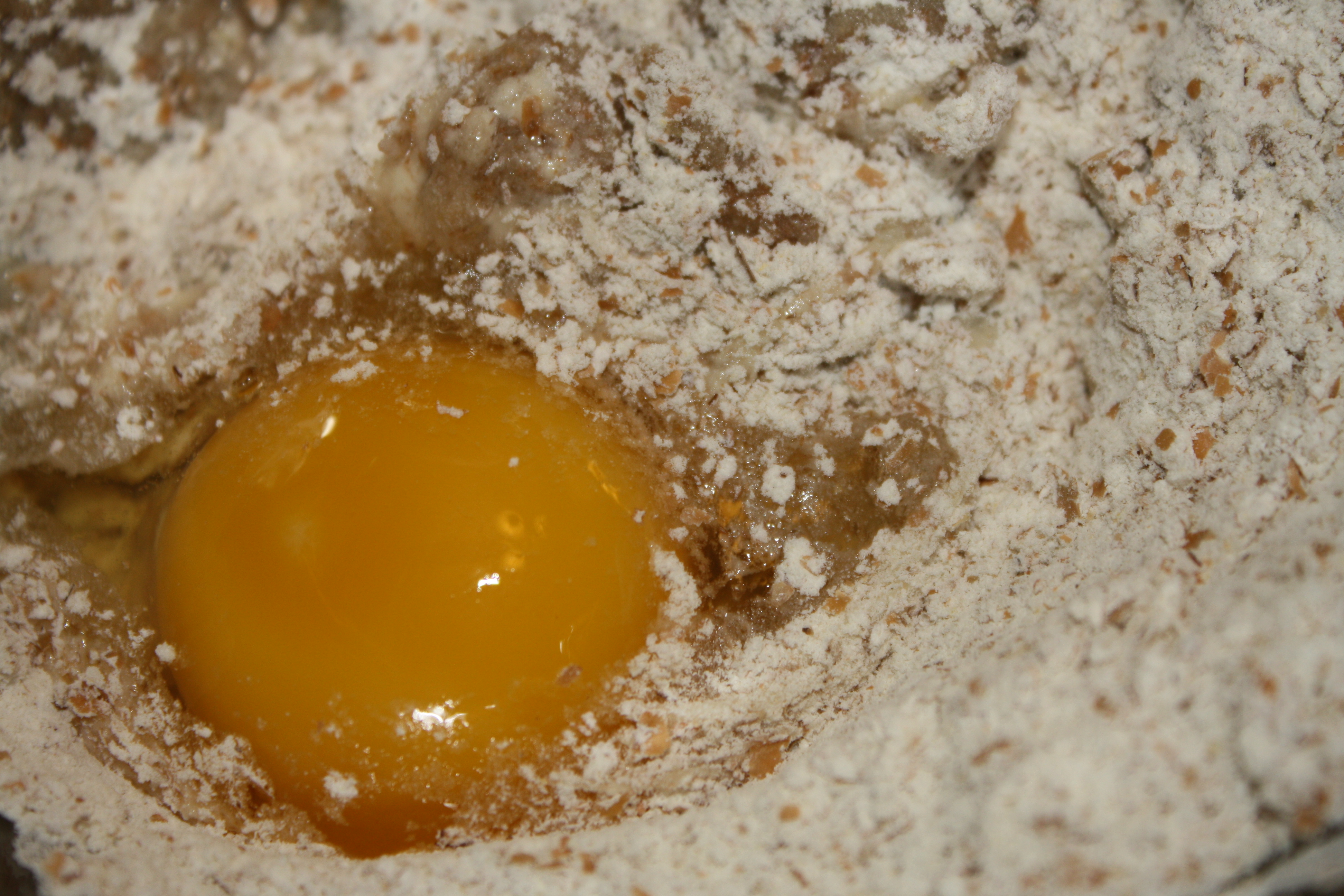
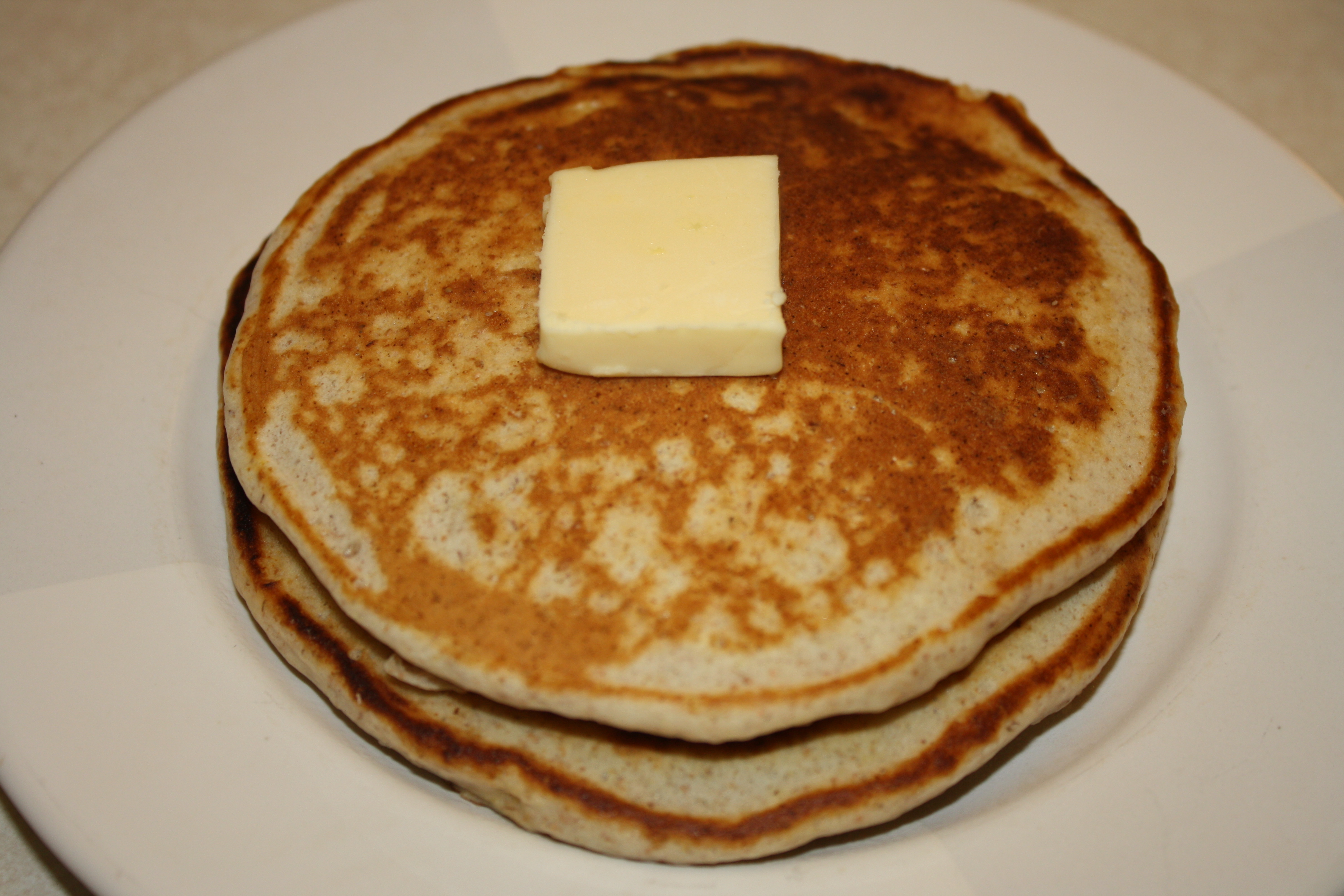
Well by golly that was a fabulous idea!  So breakfast it was:  pancakes, scrambled eggs and fruit salad.  I have come to adore my pancake recipe, and I wanted to share it with you today.  It takes under ten minutes from start to finish, so it is a perfect homemade dish to prepare when you are crunched for time.

1/2 cup all-purpose flour

1/2 cup whole wheat flour

2 tablespoons sugar

2 teaspoons baking powder

2 T oil (I use an organic canola)

1 egg

1 cup milk

Enjoy!