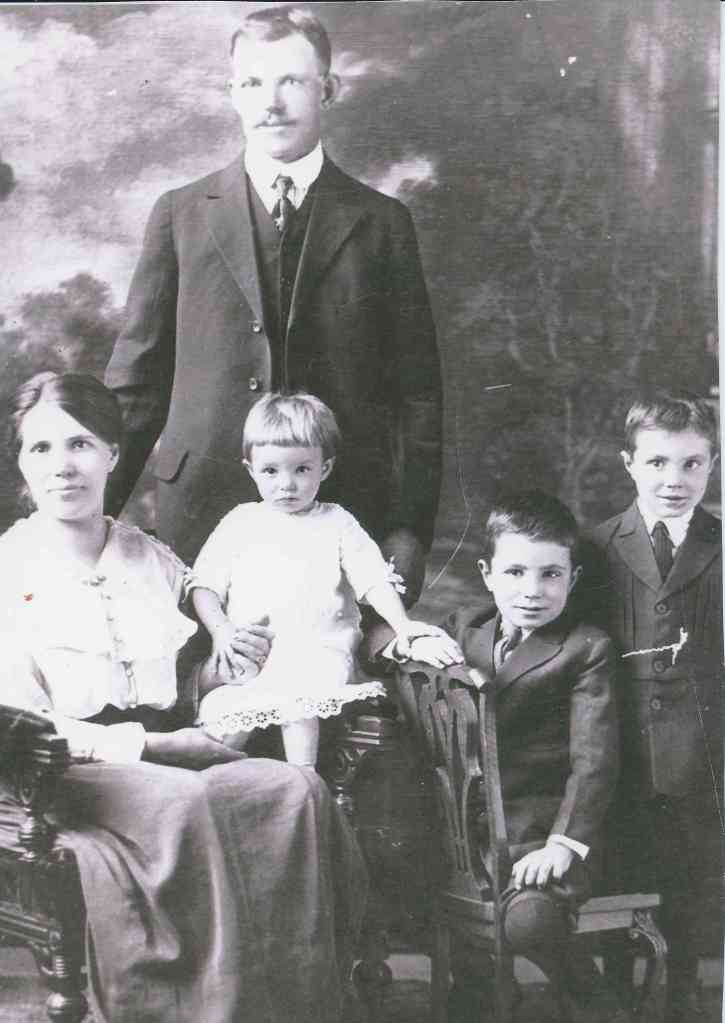
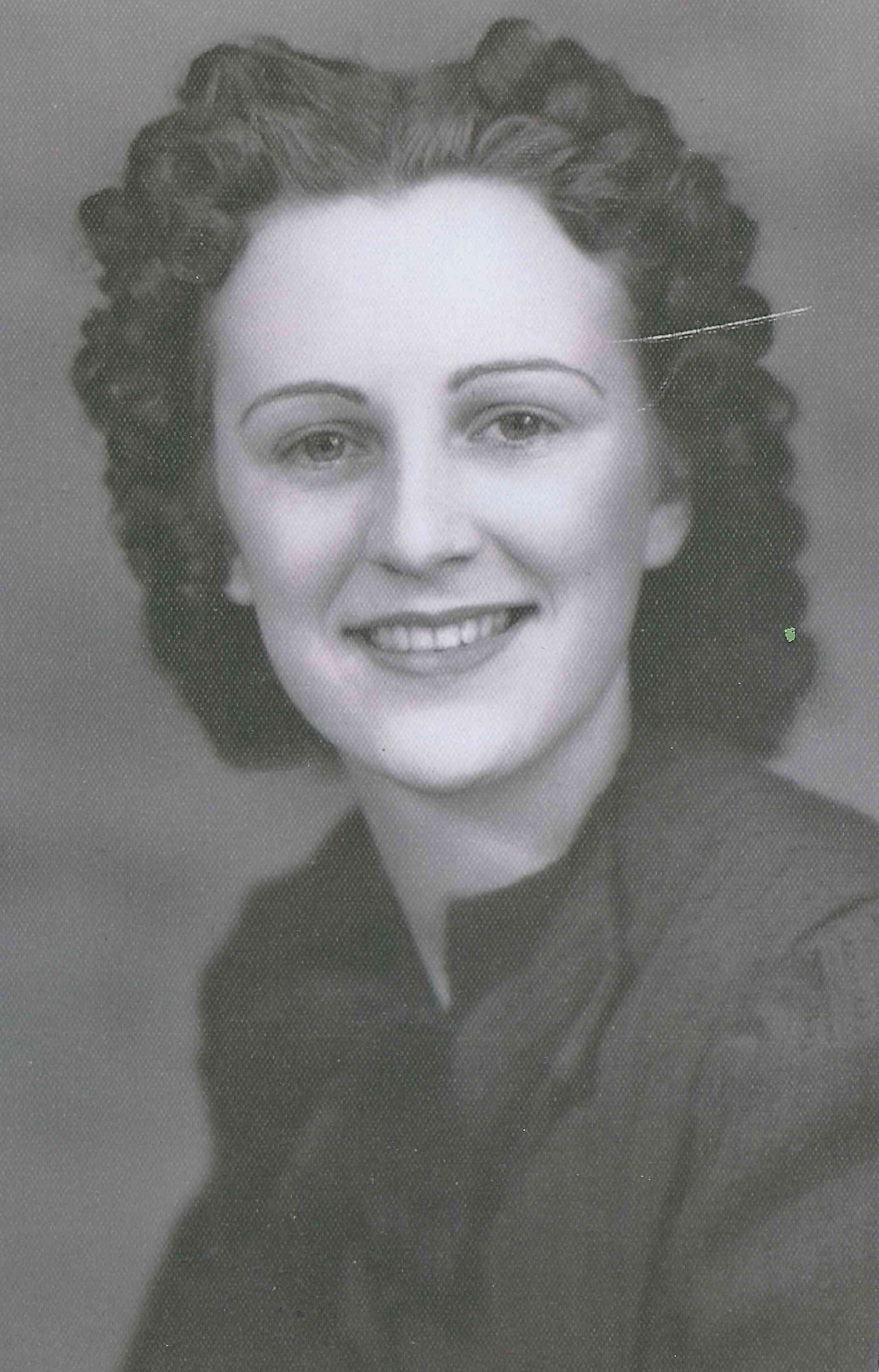
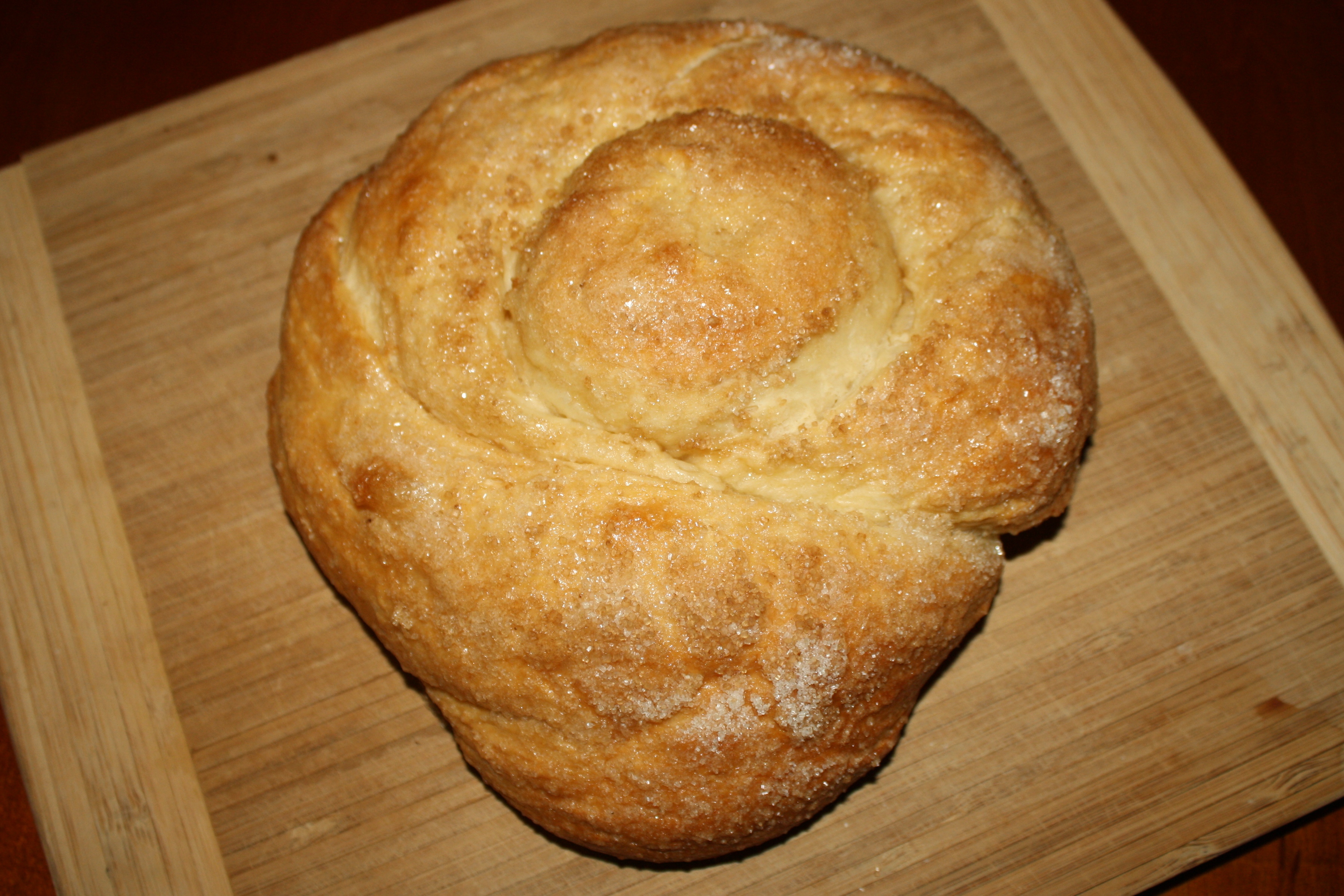
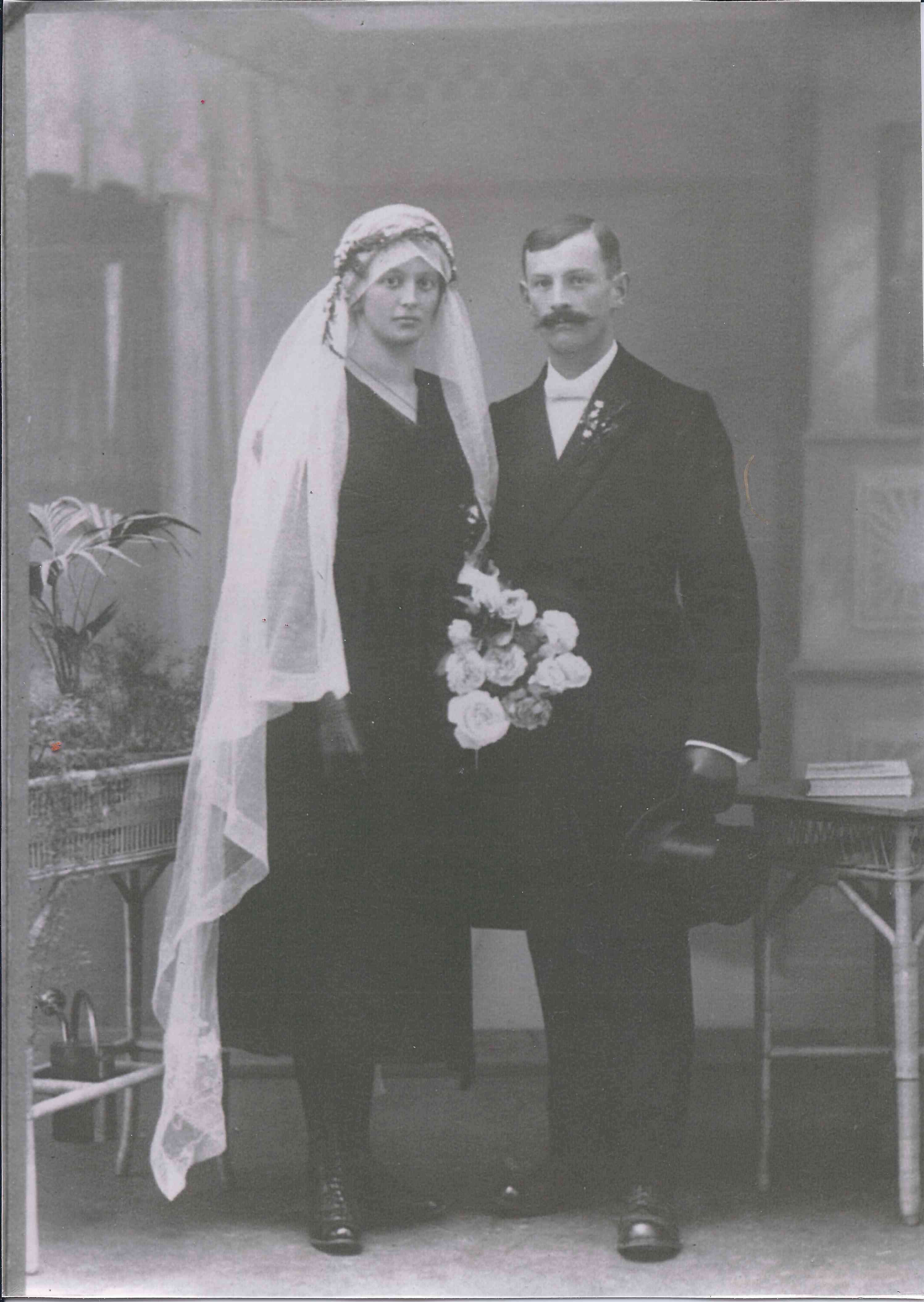
 We have many food traditions in our house, but the one that reigns supreme is my Nona’s fuasa recipe. My nona, Madeline Zanocco (the woman in the photograph on the left), emigrated to the United States from Vicenza, Italy. She had five children, the forth of which was my grandfather. My grandpa, Angelo Zanocco, decided to take on the role of rebel child in the family because he was only one of Madeline’s five children to marry a non-Italian. This is why I always chuckle when I think about the fact that it was my German grandmother, Adeline (in the photograph below), who taught me to bake her fuasa recipe, and thus carry on the family tradition of making Italian Easter Bread every spring 🙂
 I have been making (and eating) fuasa on Easter Sunday from as far back as I can remember. The sweet crunchy goodness of the bread is synonymous in my mind with the holiday celebration. Now that both Nona and my grandmother Addie have both passed on, I have made a point of continuing with the fuasa tradition each Easter. I have made fuasa with my girls from the first year of their lives (My oldest can be seen in the picture below from 2007, making fuasa for the first time when she was only six months old.), because I find so much value in passing on our family food culture to the next generation.
 And when I say I will make fuasa each year without fail, I always think of the year when I decided to triple the fuasa recipe (that means I was making 15 loaves of bread), and my oven broke. I frantically called around to our friends in the area, but all were already away for the holiday weekend. So, I packed up by 15 loaves of dough, my hubby, and my 18 month old and drove to Illinois State University where my sister was attending college. From there I went to her friend’s apartment to bake. Yes, I was baking 15 loaves of bread, with a toddler, in a college kid’s apartment…while he was having a party! I’m not sure I was their favorite person that night 🙂 But the fuasa got done none the less.

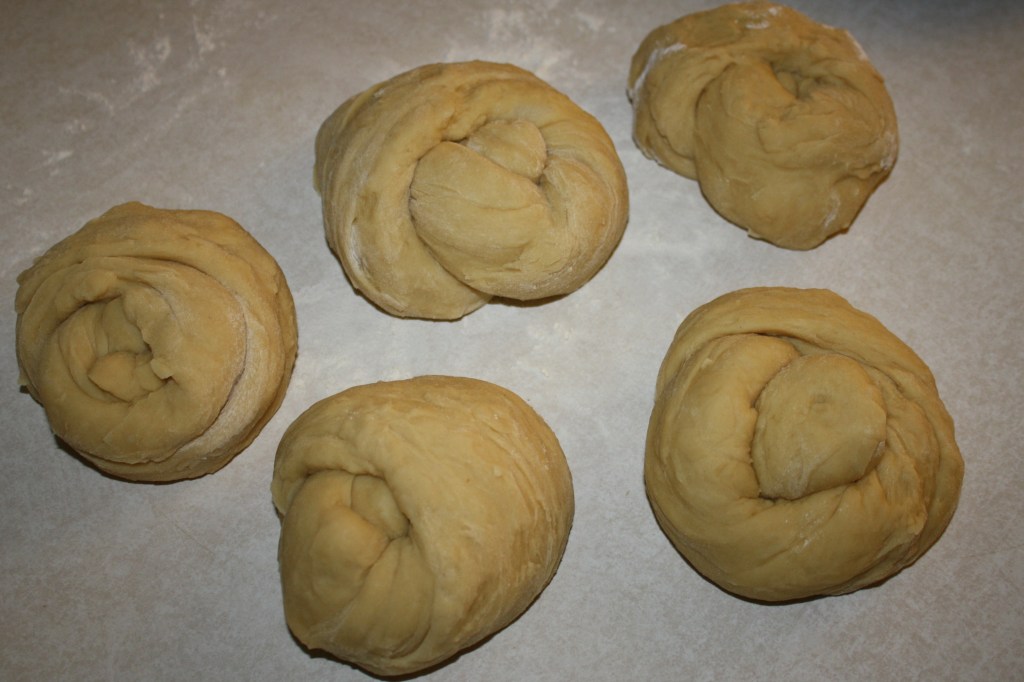 It has been so fun to see the girls take on more of an active role in the baking of the fuasa each year. It is truly my hope that they continue this tradition and pass it on to their little ones some day.
Nona’s Fuasa Recipe
2 yeast packets
2 cups milk (scalded then cooled)
1 1/2 cups sugar
2 teaspoons salt
8 egg yolks (save the whites to use on the tops of the loaves before baking)
1 1/2 sticks butter (melted)
9 cups flour
2 teaspoons vanilla
1 teaspoon almond extract
Stir yeast into warm milk. Set aside. Beat egg yolks, add sugar, salt and flavoring. Then add the melted butter. Next add the flour and milk mixture, alternating between each. Beat until smooth. Place on floured board and knead. Place in a large bowl, butter the top of the dough, cover with a damp towel and let rise until double in size. Knead dough again. Divide into five pieces, roll out and knot. Place in greased pans, butter the top of the dough, cover with a damp towel and let rise until double in size.
Beat the egg whites. Baste the top of each loaf with egg whites, then sprinkle with sugar. Bake each loaf for 20 minutes at 350 degrees and 15 minutes at 250 degrees. Enjoy!
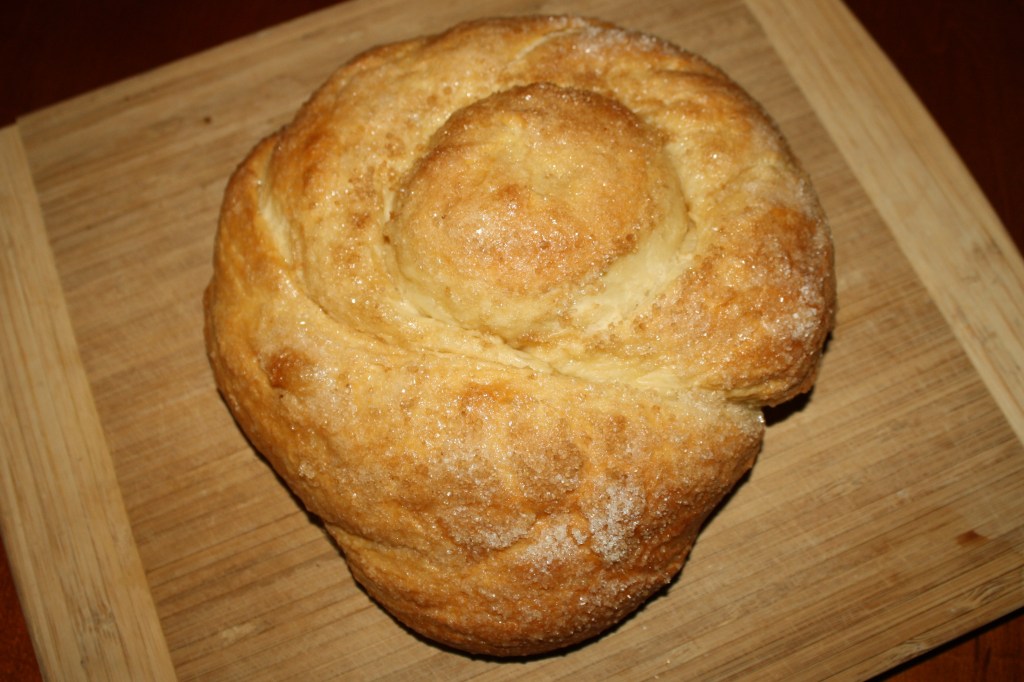 I wish each of you a very blessed Easter weekend!
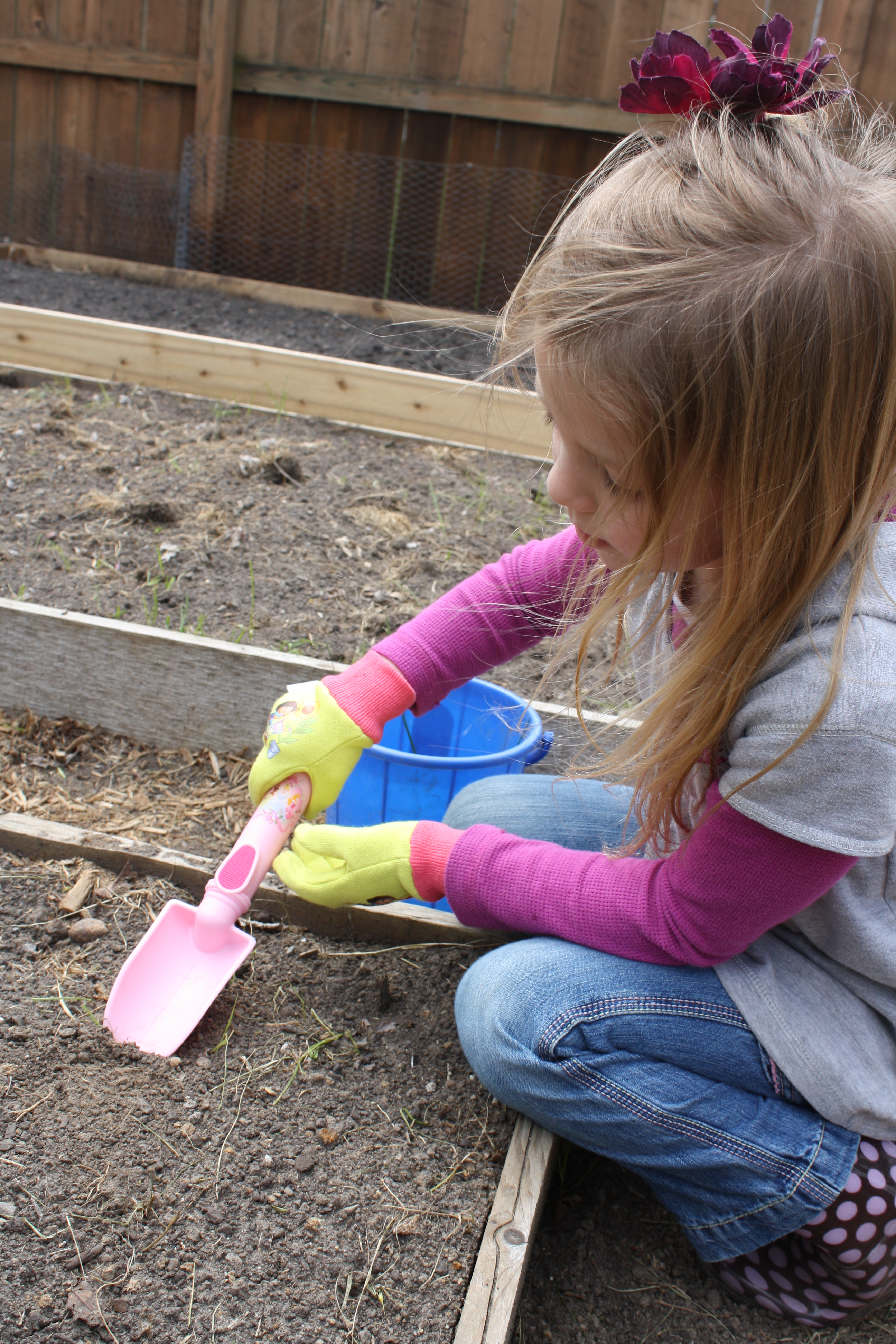
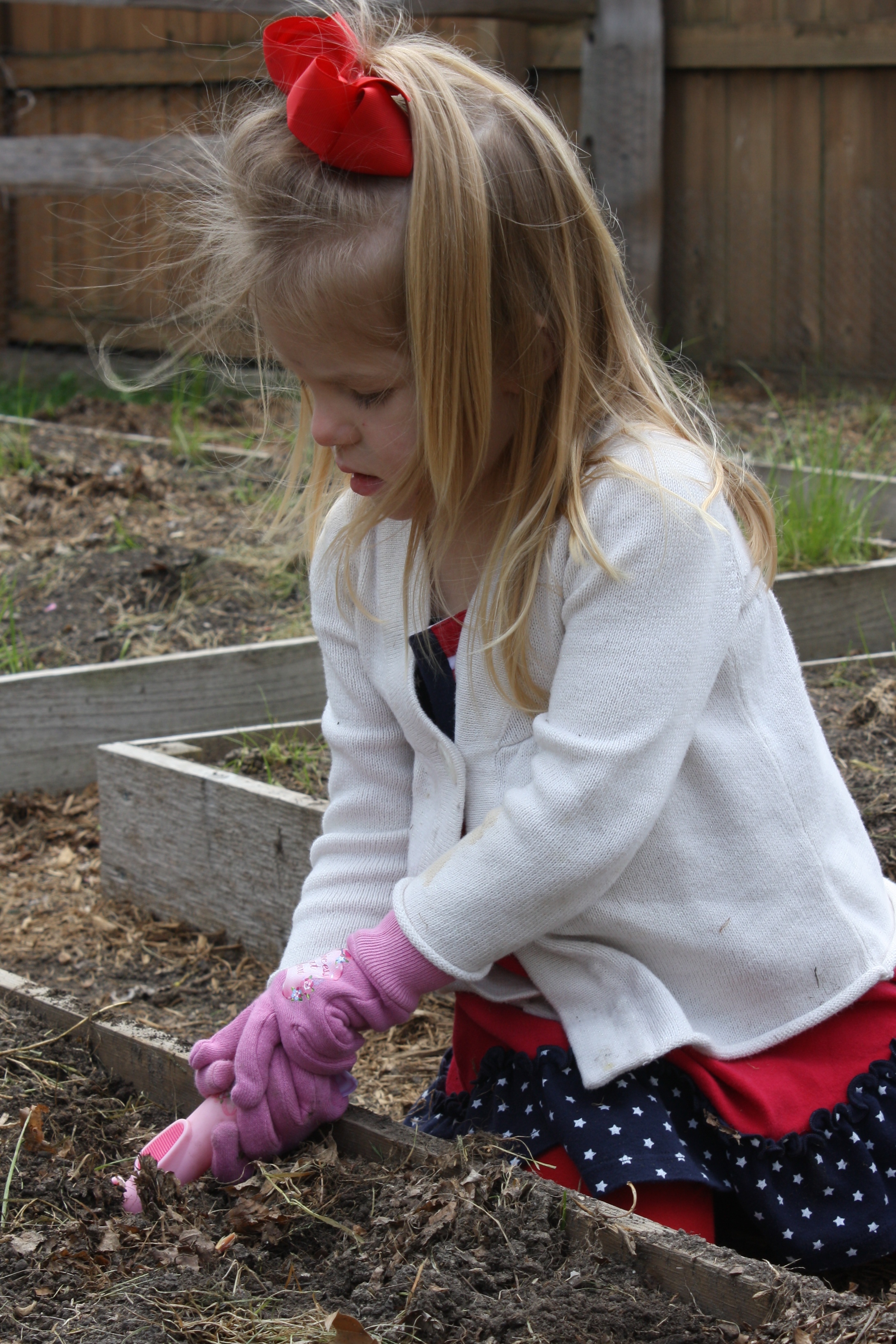

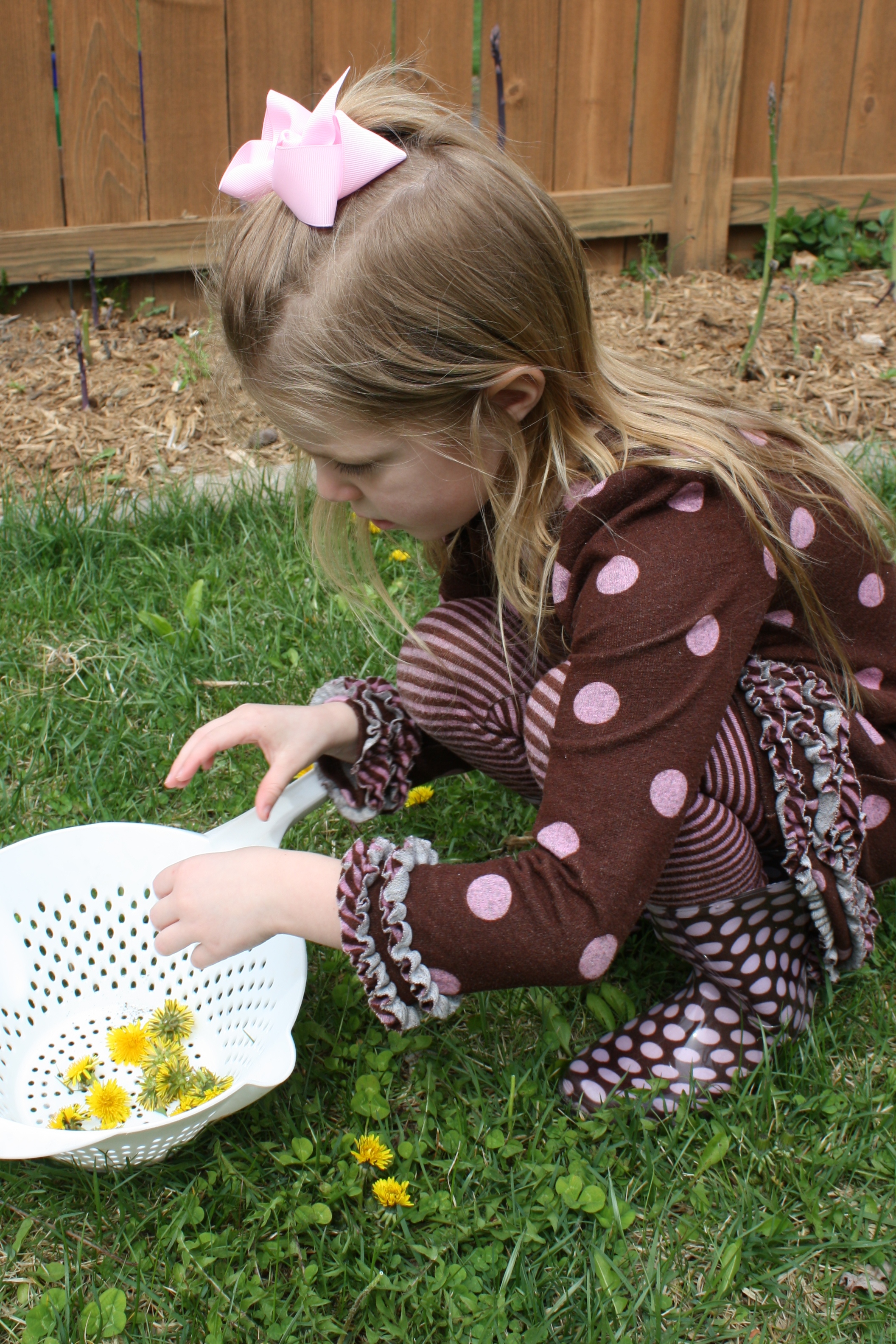
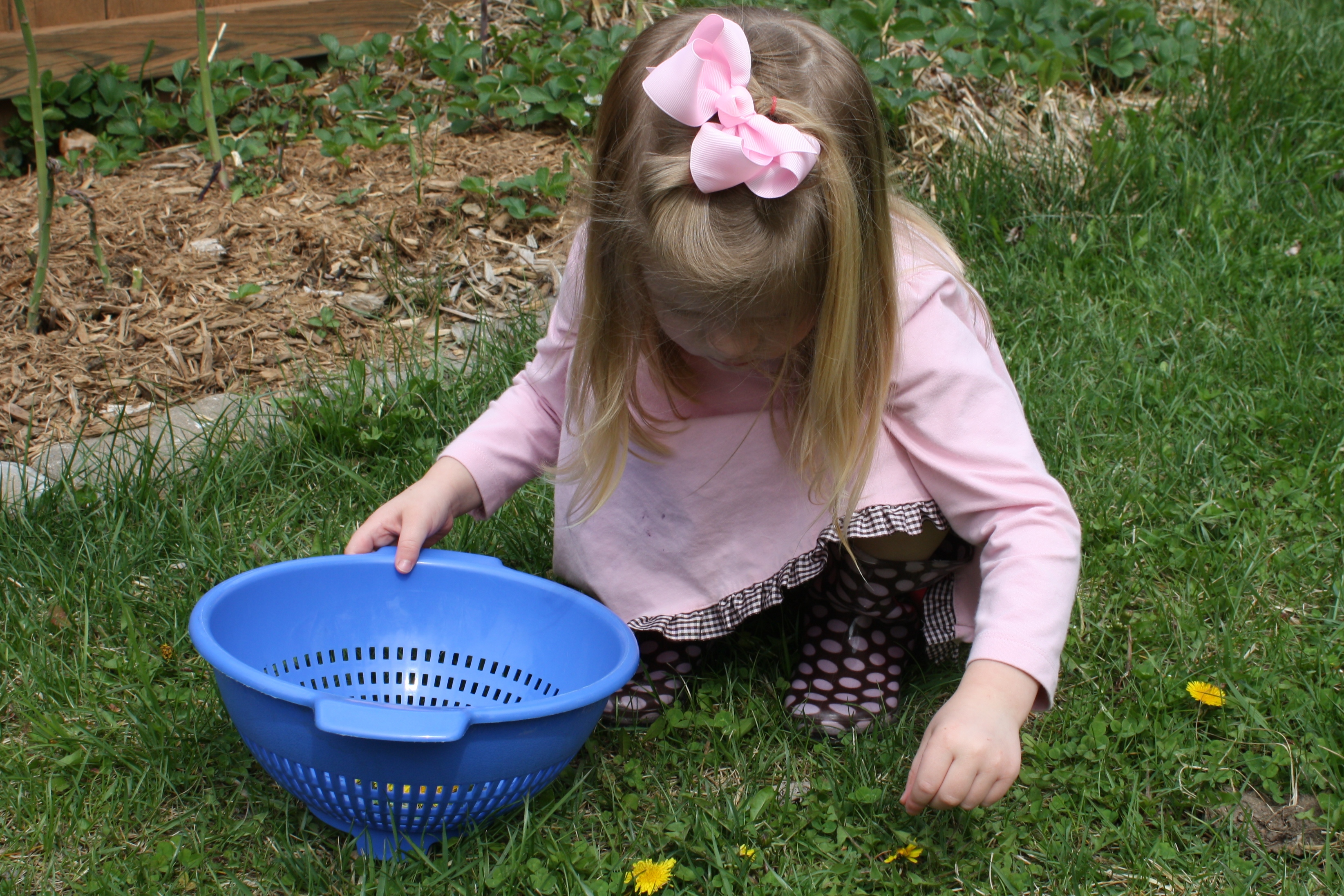
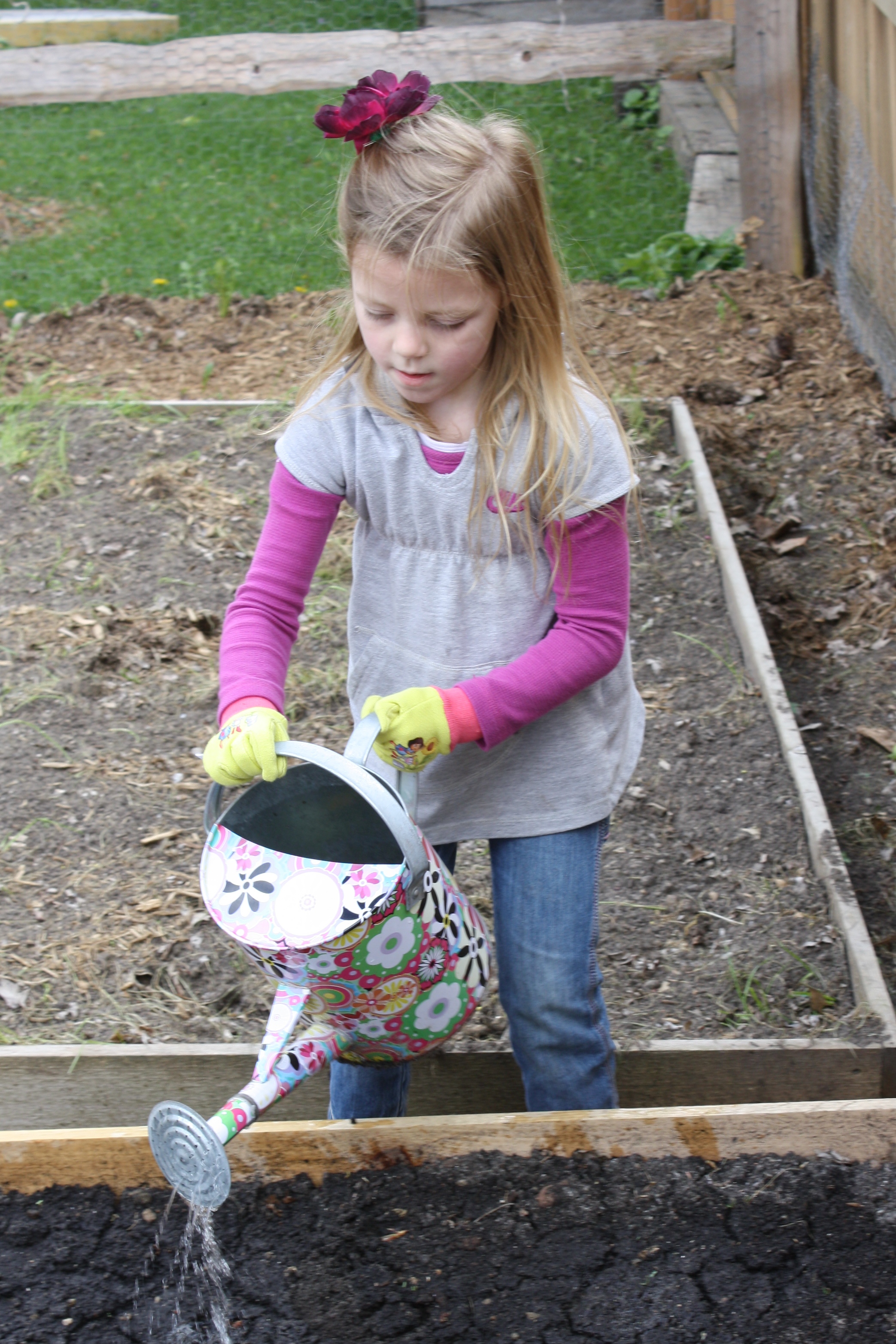 (A quick side note on “Gardener Number 2″…She is currently only wearing dresses because she said that jeans are not “girl clothes” 🙂 This summer should get quite interesting with all of the gardening this gal loves to do. Love her.)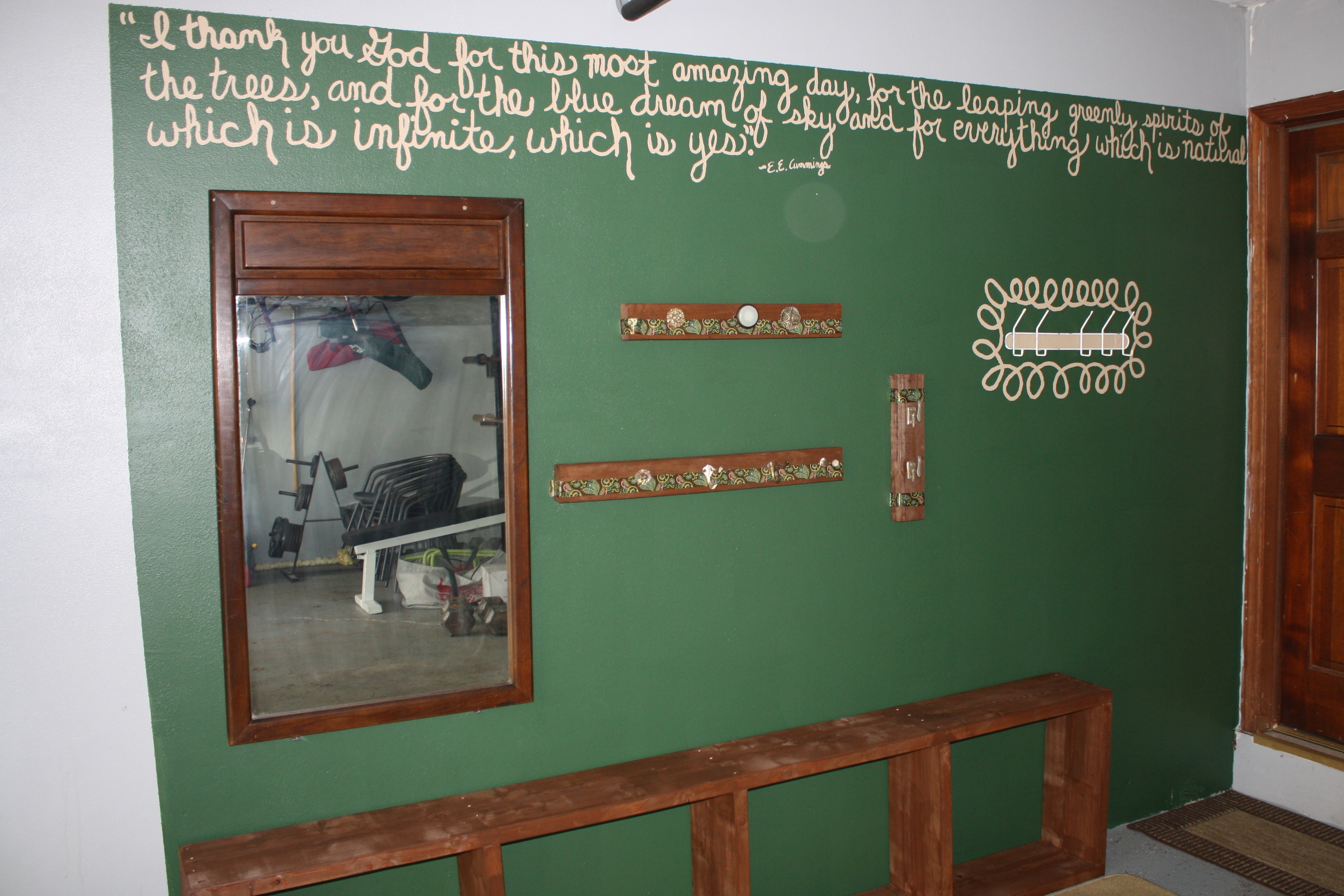
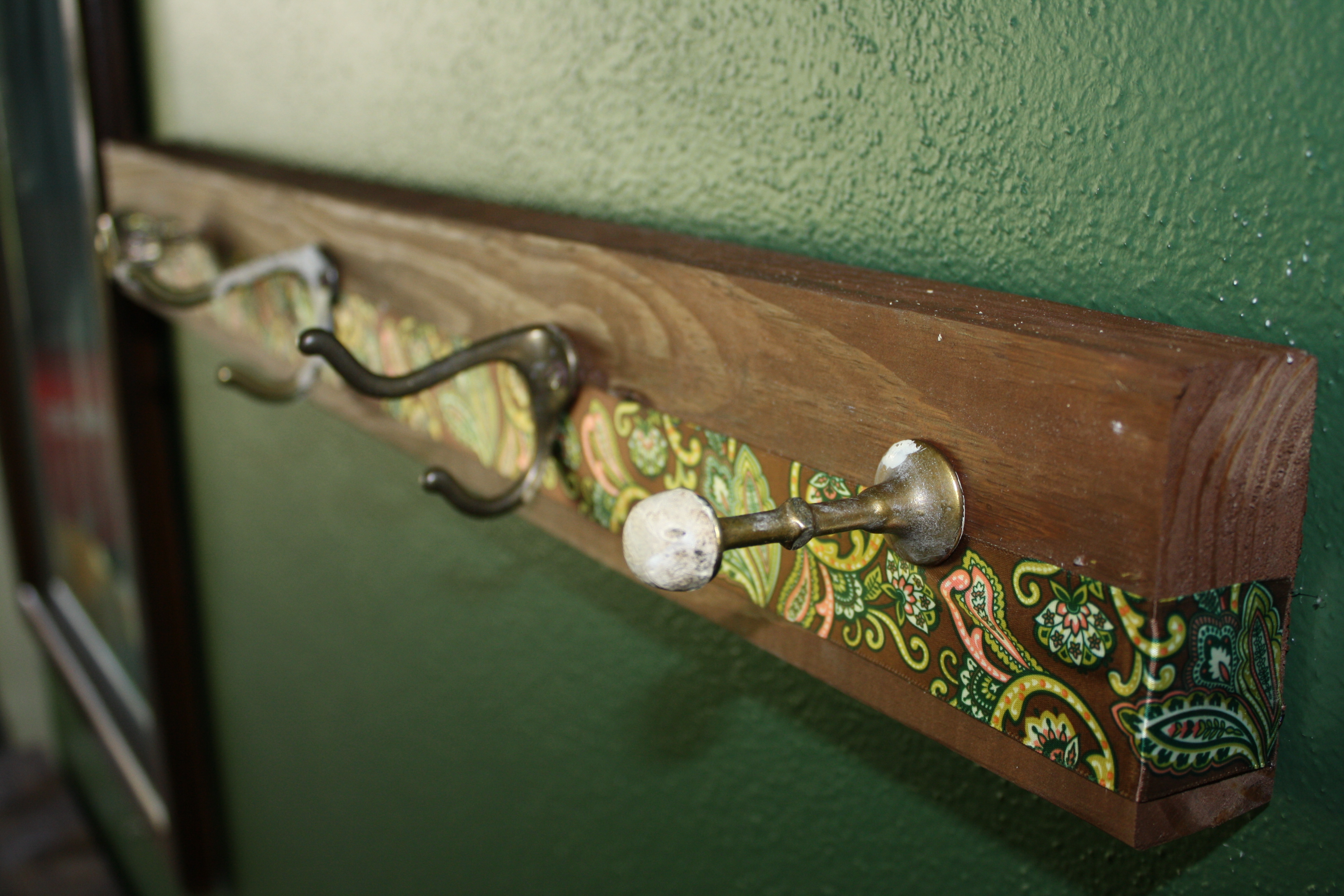









 Making of a Home