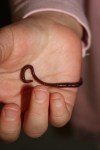
 “I do other things, some of which are really quite extraordinary,” the Earthworm said, brightening.
“Such as what?” asked James.
“Well,” the Earthworm said, “Next time you stand in a field or in a garden and look around you, then just remember this: that every grain of soil upon the surface of the land, every tiny little bit of soil that you can see, has actually passed through the body of an Earthworm during the last few years.”
“It’s not possible!” said James.
“My dear boy, it’s a fact.”
“But what’s the point?”
“What do you mean, what’s the point?”
“Why do you do it?”
“We do it for the farmers. It makes the soil nice and light and crumbly so that things will grow well in it. If you really want to know, the farmers couldn’t do without us. We are essential. We are vital. So it is only natural that the farmer should love us.”
Roald Dahl, James and the Giant Peach
Yesterday was a cloudy, dreary day, so the girls and I found ourselves snuggled in bed reading for much of the afternoon. My five year old recently became obsessed with having chapter books read aloud to her, and our piece of the day yesterday was James and the Giant Peach by Roald Dahl.
While reading, I had to smile because the two small girls lying next to me never cease to amaze me. When I came to the above passage, my five year old said to me, “Oh Mom, James must be joking with the Earthworm because everyone knows that worms make soil! It is like our worm compost bin.” And then she rolled her precious little eyes at the silliness of the whole idea that this character is playing at the fact that he doesn’t know of the important role of worms.
Sadly enough though, we as a modern culture have completely forgotten about the important role of the earthworm, and his amazing ability to enrich our soil. We have moved so far past our agrarian roots that many people today are like James and ask, “But what’s the point?”
Here in our household we love the worms, love them. In fact my youngest calls the worms in our compost bin her pets! We have had an outdoor worm bin for about three years now, but always struggled when it came to keeping those little fellas alive when the cold temps of our winters hit. So this year we set out on a mission to bring the worms and our compost inside.
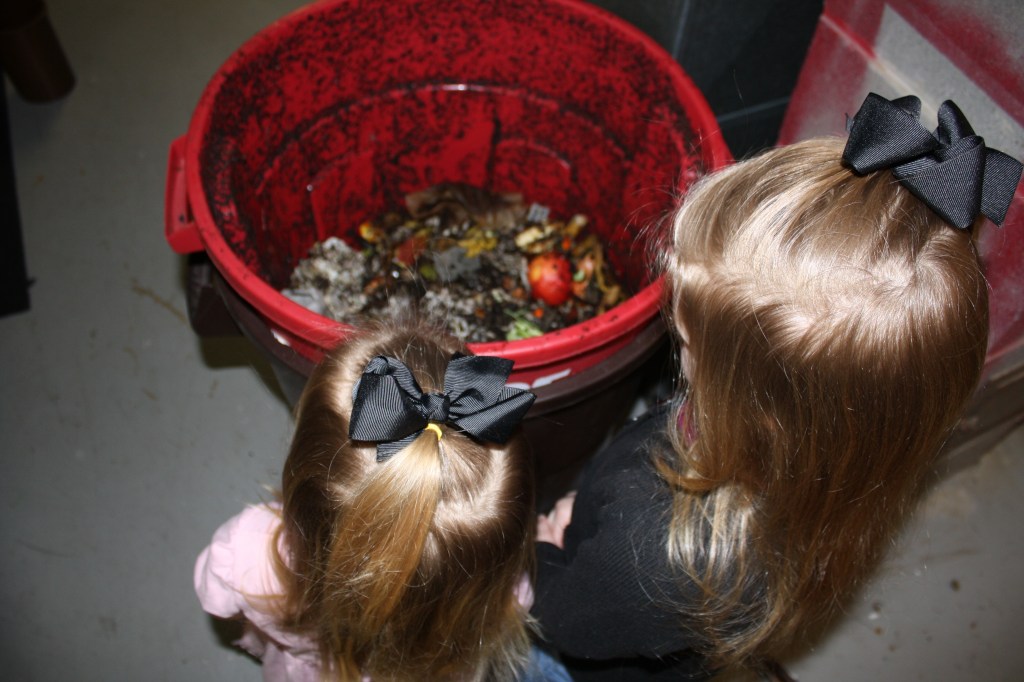 My goal was to still be able to create amazing compost (by letting our little red wigglers do their work), while avoiding any nasty odor and mess. It took a little bit of trial and error, but we finally found something that seems to be working quite well. Here’s what we did:
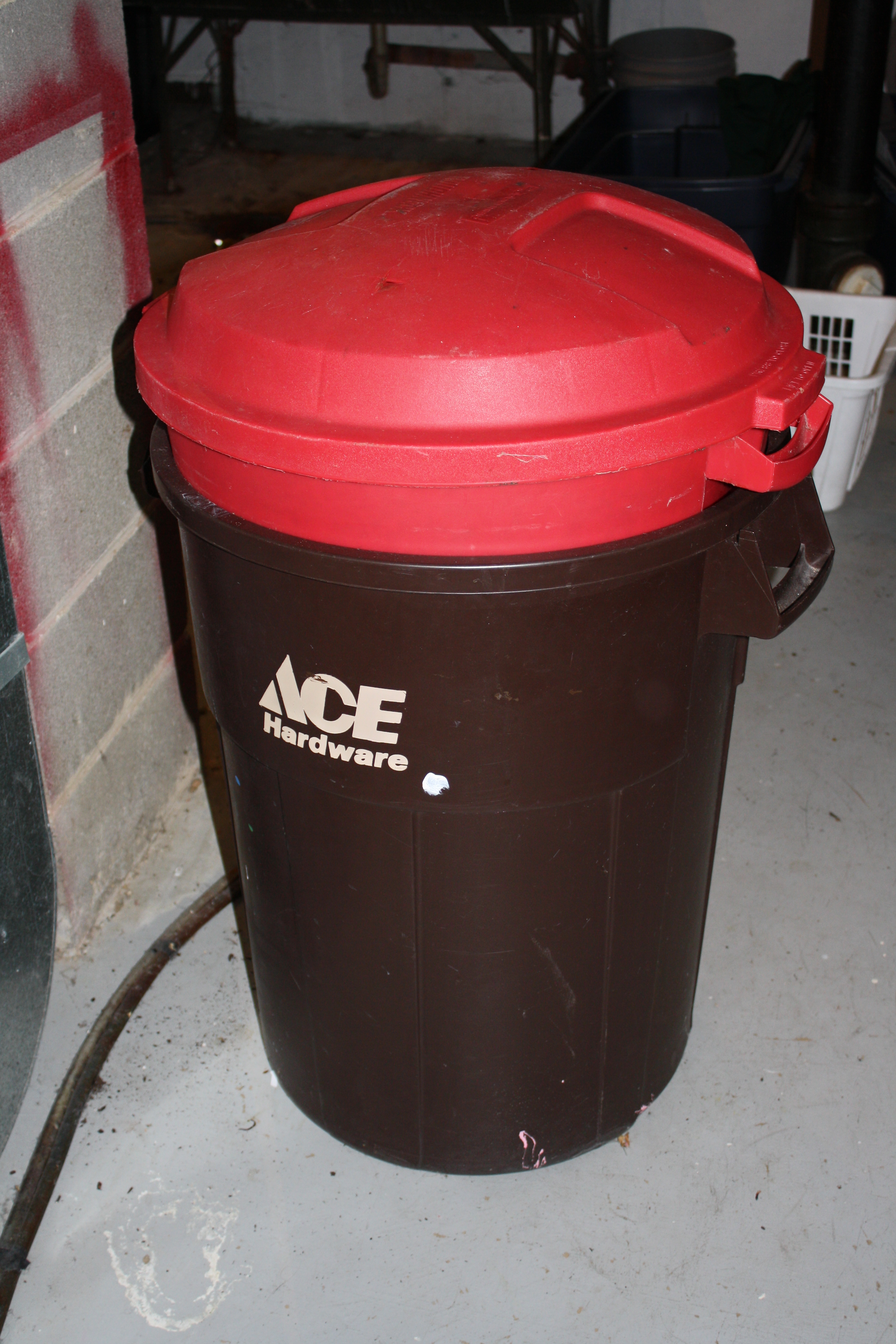
- I took a large plastic garbage can from my local hardware store and set it in an open space in my basement.
- I then put 3 bricks in the bottom of this garbage can. (This bottom bin will act as a collection reservoir for any liquid that drains away from the compost. We have had our bins set up for just over 2 months now and have not had to empty the bottom can yet.)
- Then I took a second plastic garbage can (with a tight fitting lid), and flipped it over upside down.
- I took the largest drill bit I had and drilled about 20 holes in the bottom of the can. I also drilled holes around the bottom 4 inches on the sides of the can.
- I then nested the can with the drilled holes inside the other can with the bricks in it.
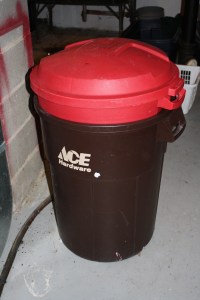
- Next I shredded all of my utility bills from last year and poured all of that shred into the can. [This step is very important and will help to keep the bin from smelling gross. You need to be sure to balance out your green matter (nitrogen) and your brown matter (carbon).]
- Then I added some veggie scraps, egg shells and coffee grounds.
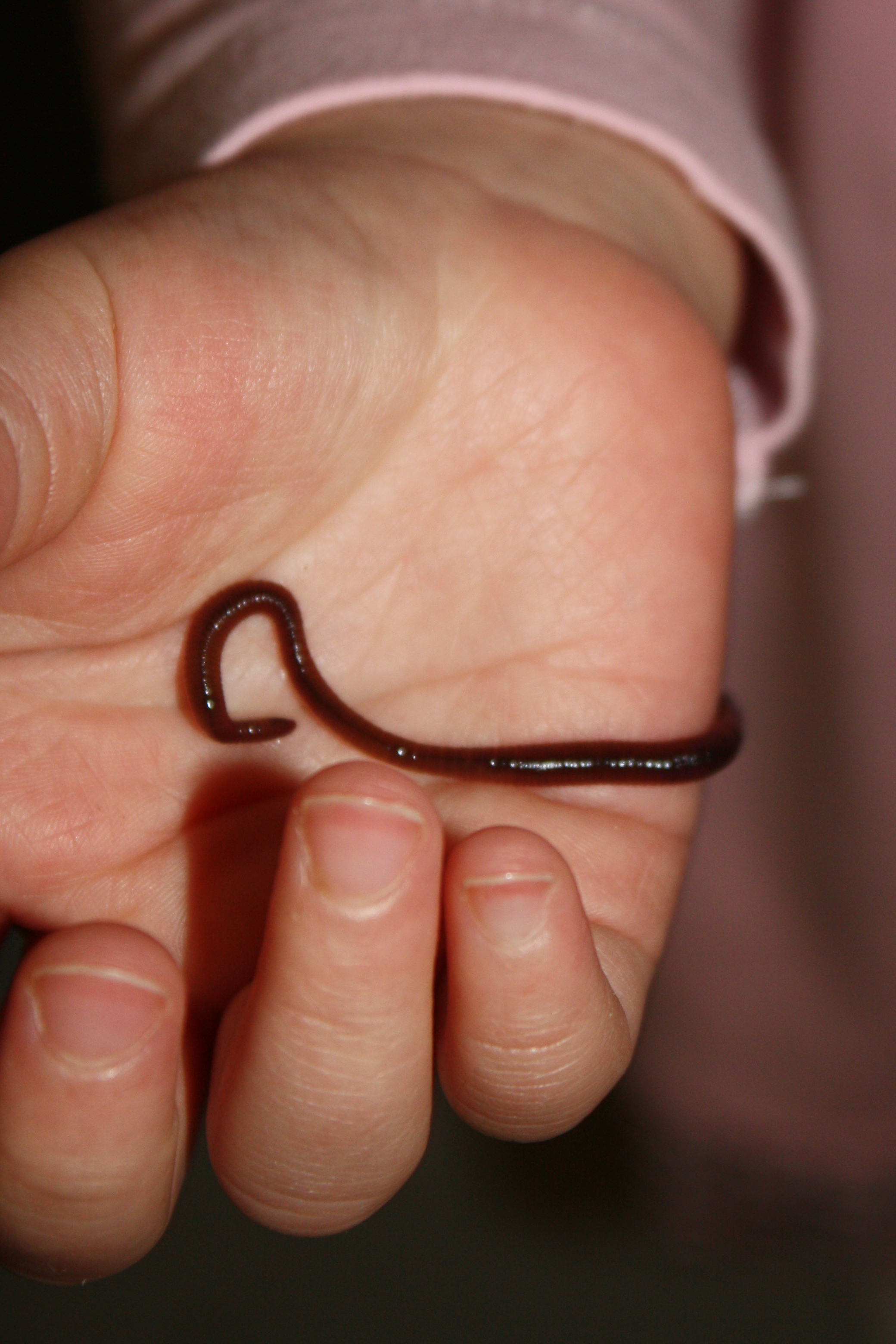
- Next we added our worms. (The worms you want to get are red wigglers. They can be purchased on any number of websites, but I would recommend talking with a local farmer. These little guys reproduce like crazy and many farmers would be willing to just pass some along to you. We actually purchased some of our worms while we were visiting Growing Power, an amazing urban farm in Milwaukee, Wisconsin. More about this amazing place in an upcoming post!)
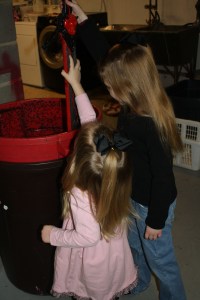
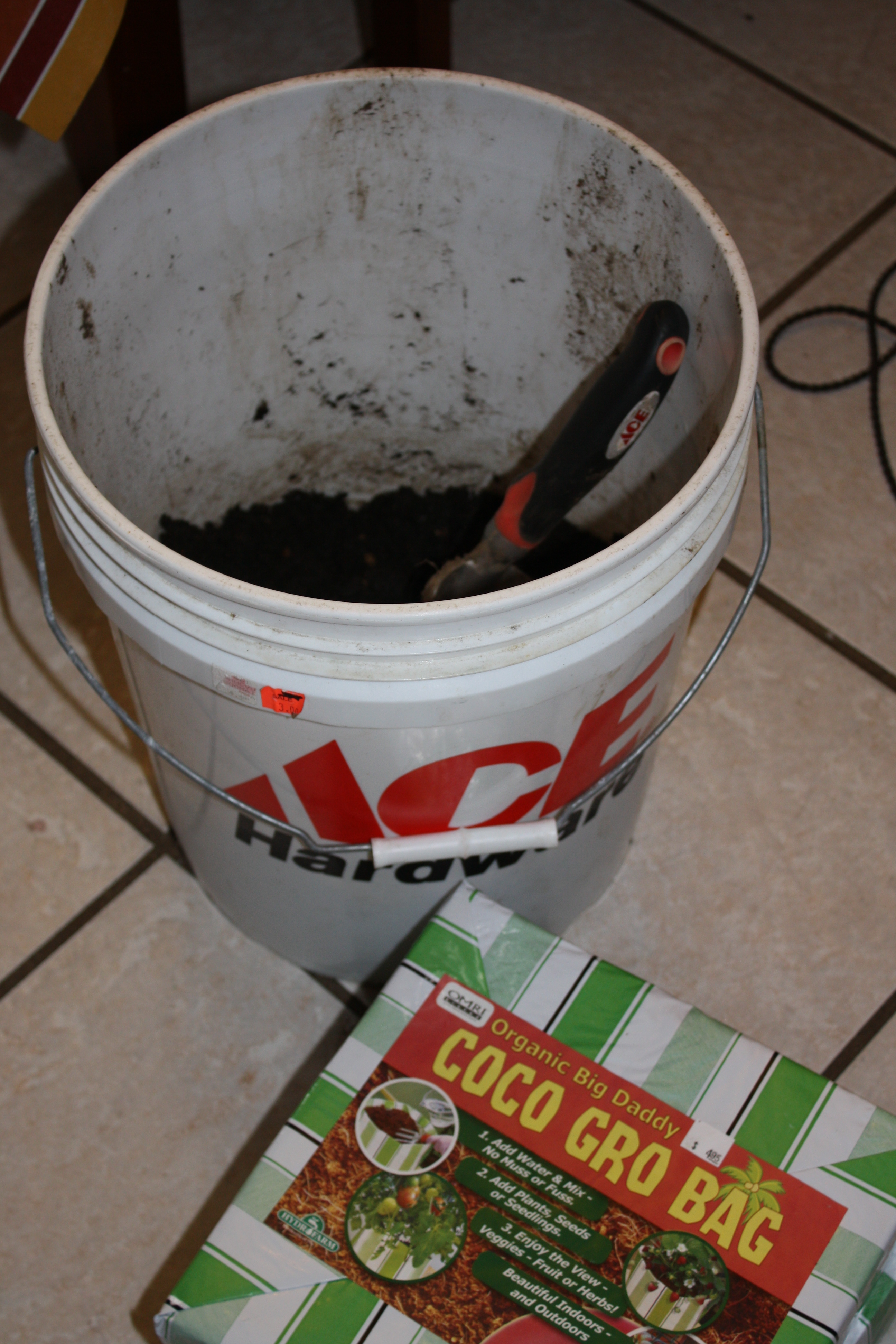
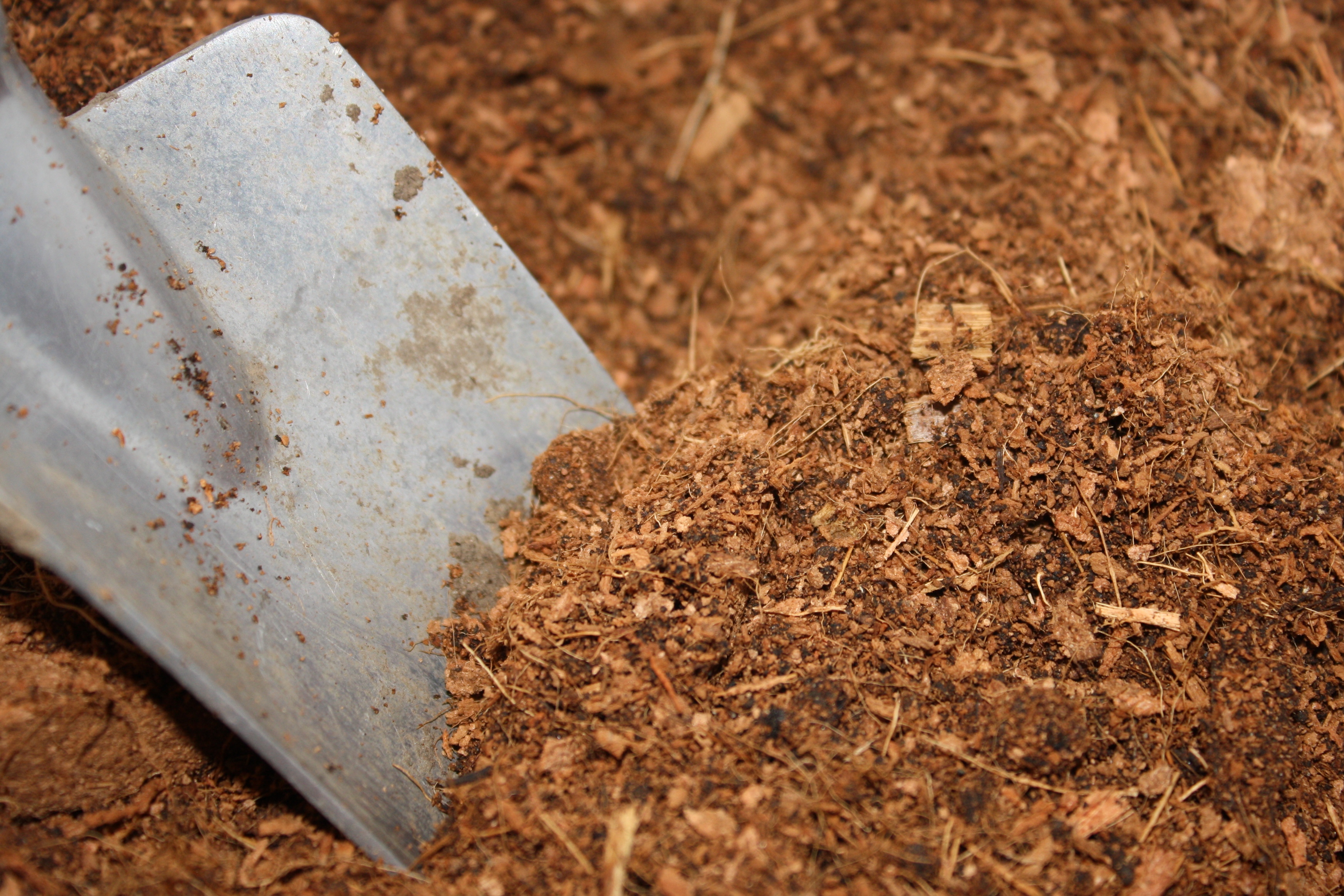
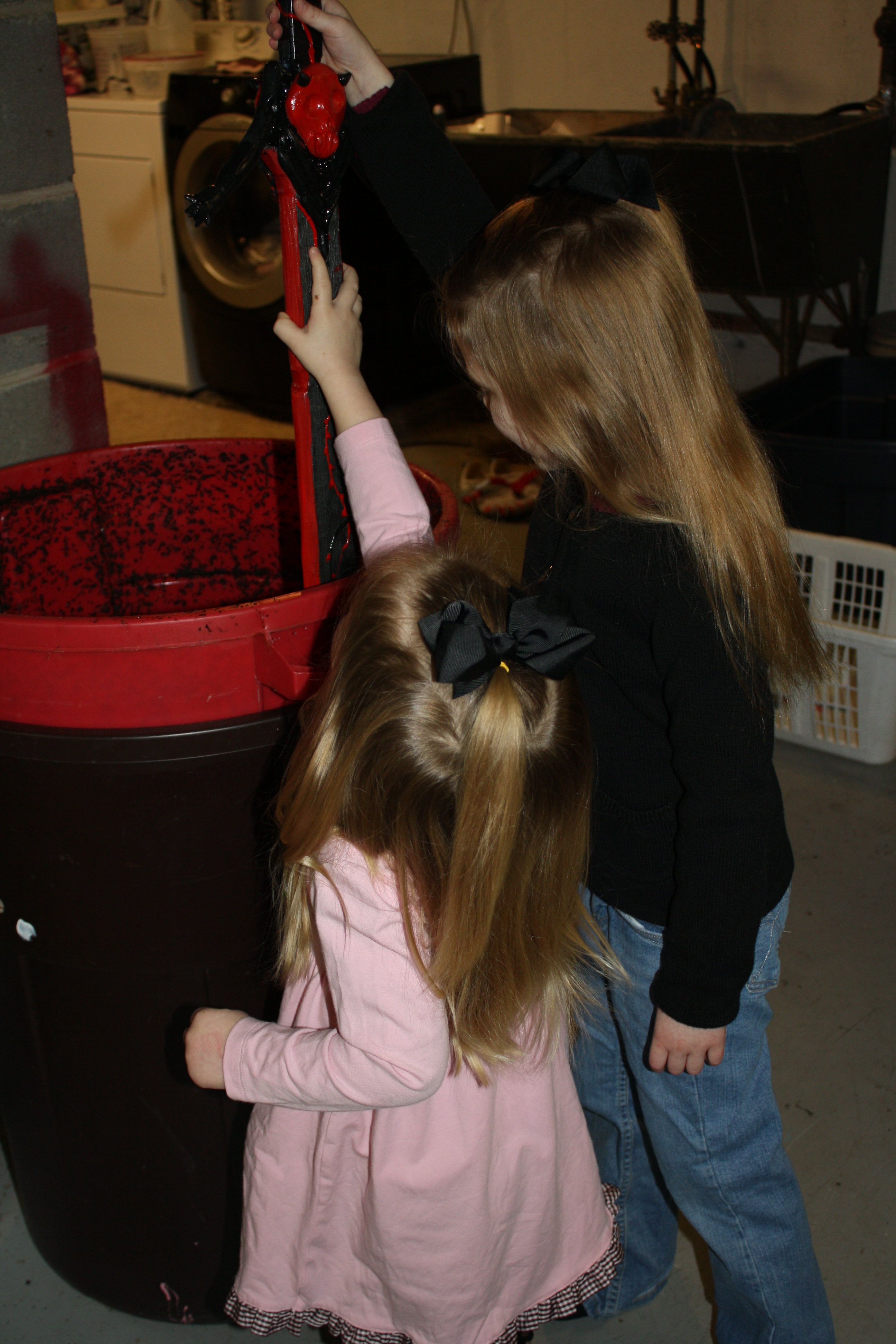
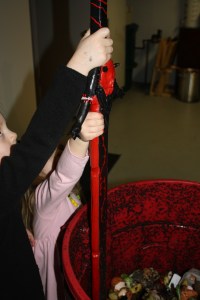 After adding your worms, give everything a good stir. (As you can see we have quite the interesting stir stick…ha! One of my husband’s students made this lovely piece for him, and we are putting it to good use.)
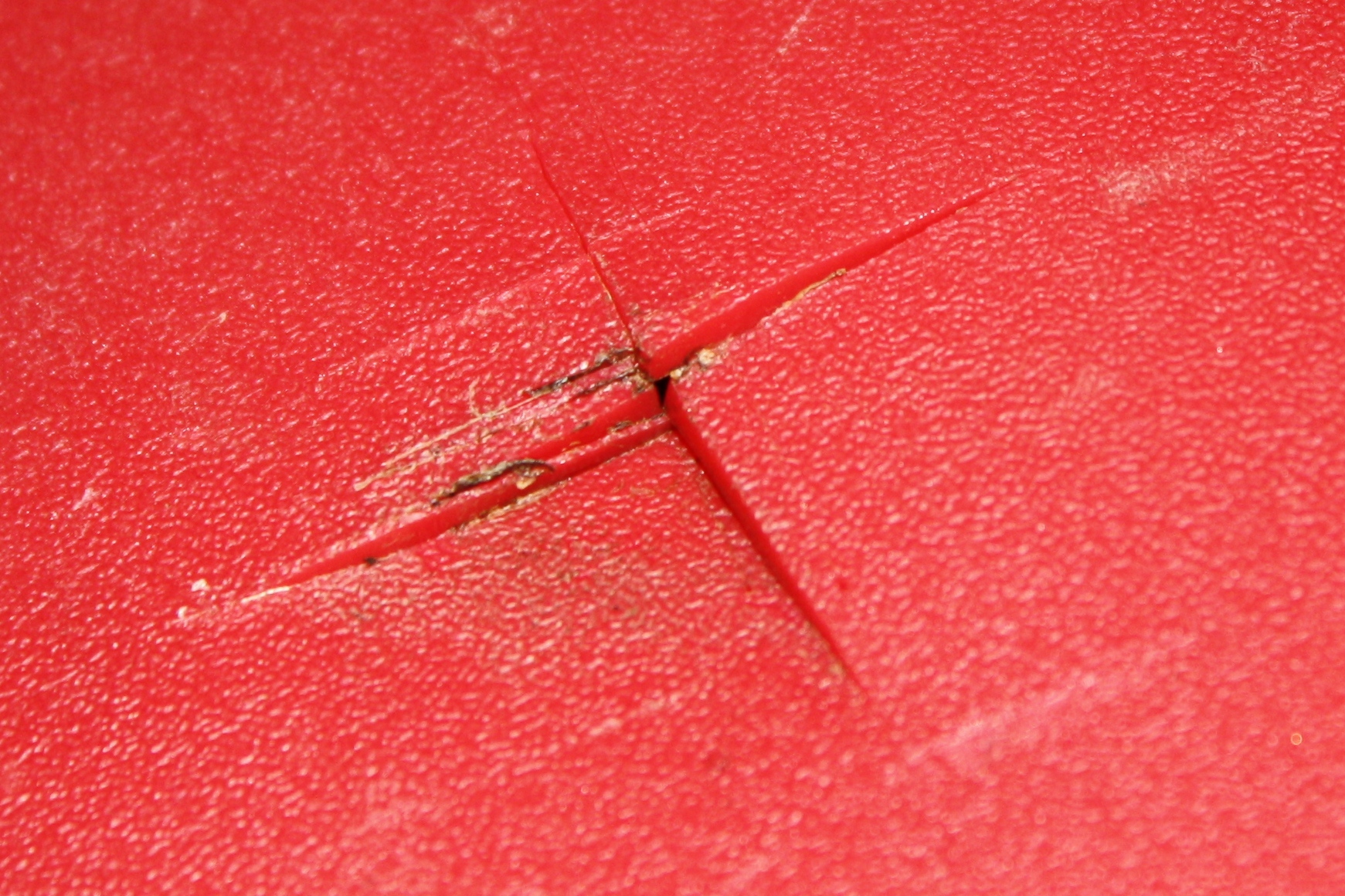
- Lastly, fit the lid on the can tightly. I took a utility knife and cut two vents in the top of the lid. They are just large enough so a bit of air can get in, but small enough so that no little critters can get in.
Items you CAN put in your compost bin:
- Veggie and fruit scraps
- Egg shells
- Coffee grounds and coffee filters
- Stale bread (just be sure there is no dairy in it/on it)
- Tea leaves and tea bags (you will want to pop out the staple if there is one)
- Any cardboard (without a wax finish)…Egg cartons, toilet paper rolls, paper towel rolls, etc.
- Any paper/newspaper (without a gloss finish)
Items you CANNOT put in your compost bin:
- Any animal product/protein (including dairy)
- Plastic
- Staples
Please feel free to leave a comment if you have any questions! I would be happy to offer any additional assistance. Have fun!
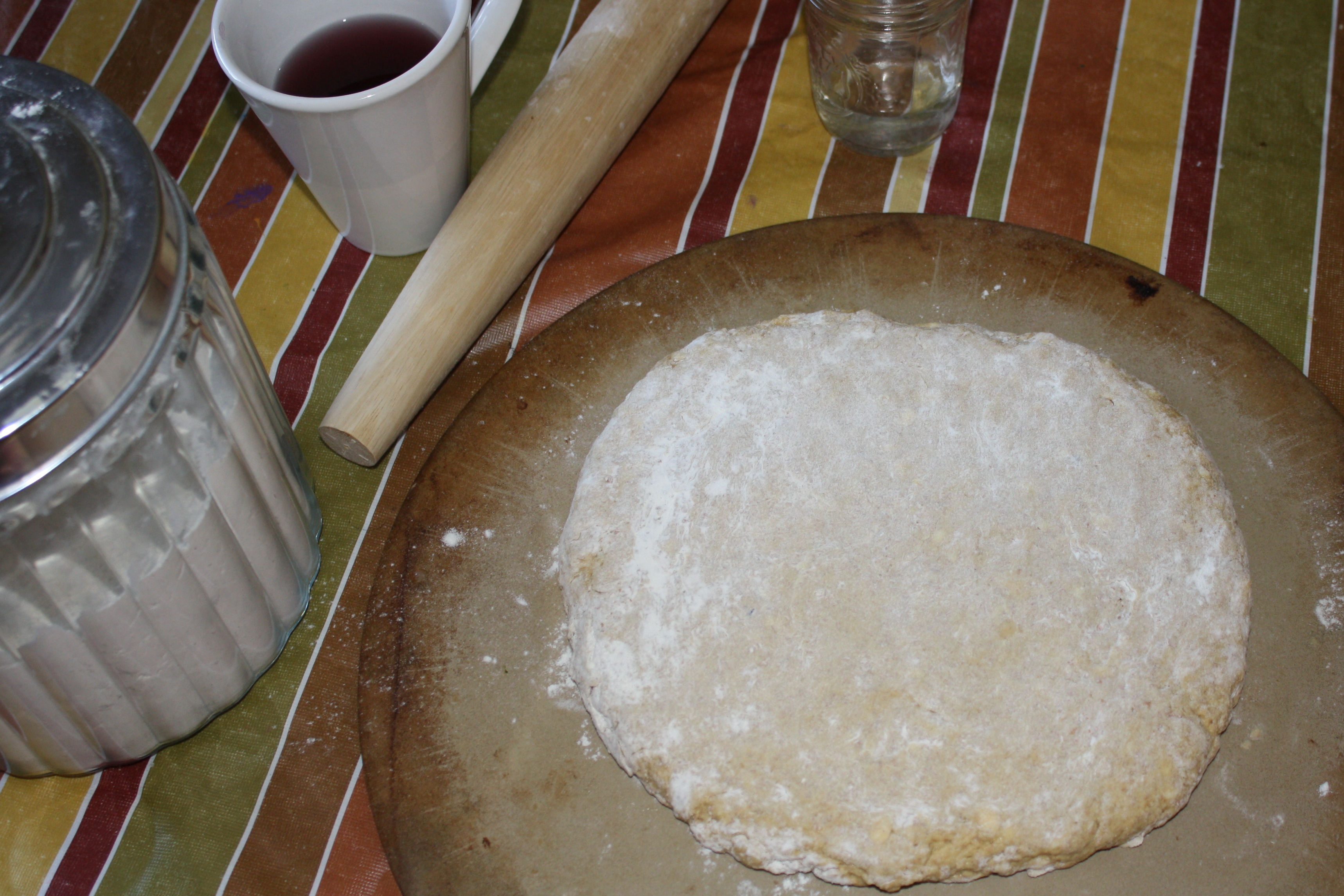
 Turn dough out onto a lightly floured surface and flatten into a circle.
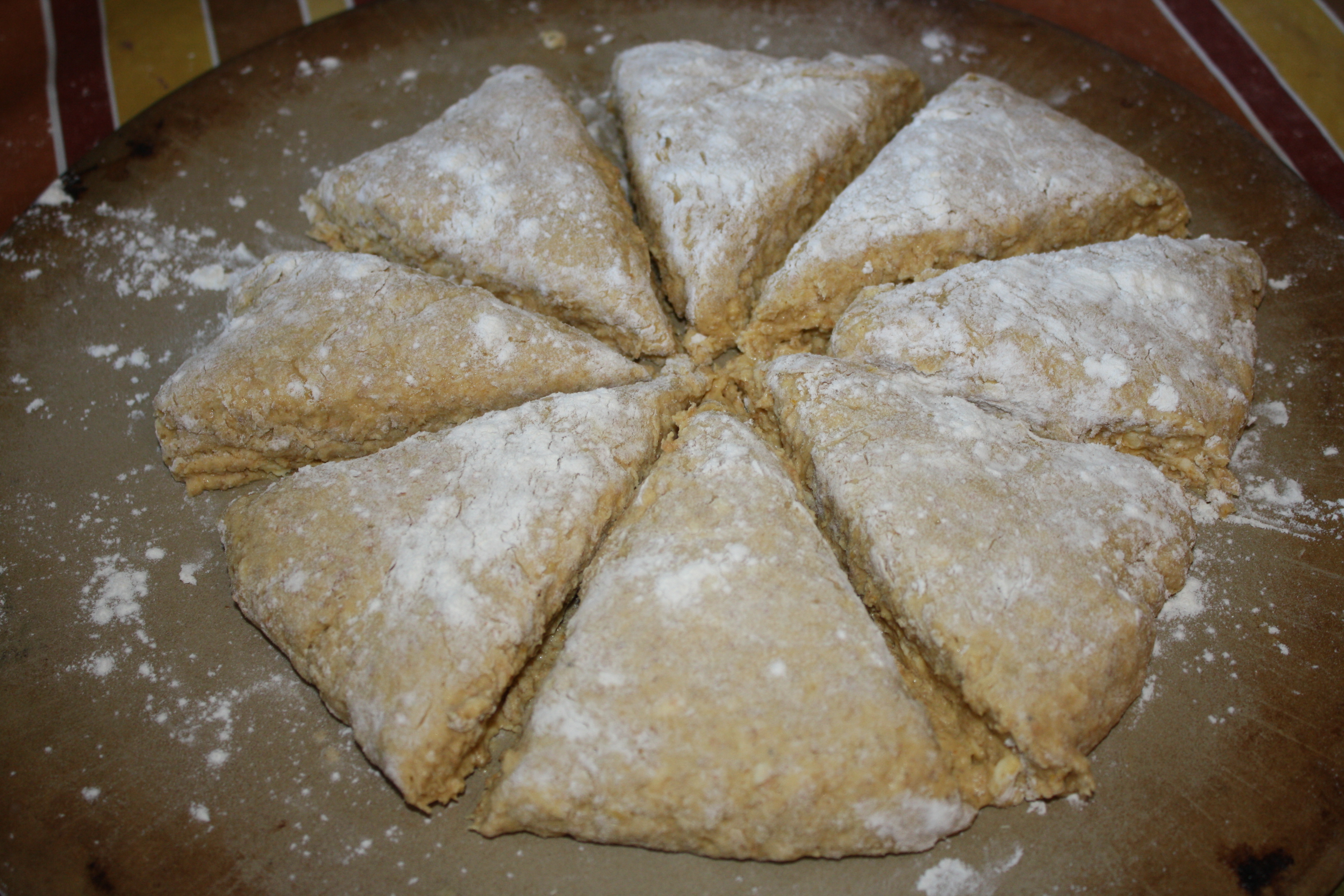
  Then cut the dough into wedges. Separate the wedges as much as possible.
 Brush the wedges with a bit of additional pumpkin puree and sprinkle with additional cinnamon and sugar.
 Bake at 400 degrees for 12-14 minutes. Serve warm. Enjoy!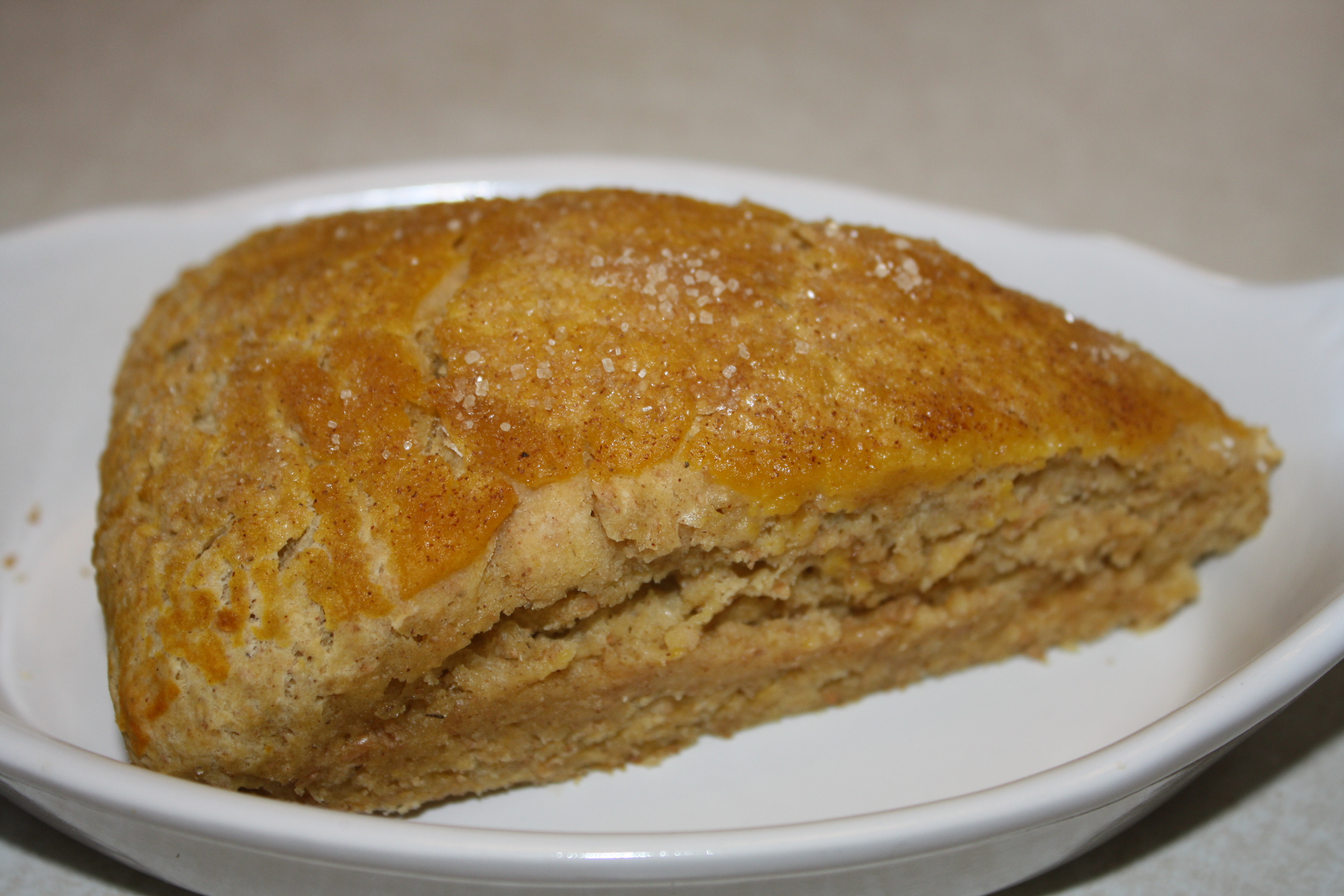




 Making of a Home